Today we’re looking at the dyslexia, particularly in relation to its affect on children, including under-fives. Following are the answers to a series of the most commonly asked questions about the condition.
Q: What is Dyslexia?
 A: Dyslexia is categorised as a Specific Learning Difficulty (‘SpLD’) in the UK. Most notably, it adversely affects a person’s ability to read because of a general difficulty in learning or interpreting letters, words, and often other symbols. Indeed, it was originally referred to as word blindness. There are other ways dyslexia affects people, though, and we’ll come to those in more detail later.
Q: What Causes Dyslexia?
A: The exact cause of dyslexia is unknown, however it tends to run in families, so is most likely to be a genetic issue, i.e. passed down through parents’ genes. It affects the way the brain processes language and this can even be seen brain imaging tests.
Q: Can You Become Dyslexic, or Grow Out of It?
 A: As it’s a genetic issue, people are born with the condition. Symptoms may begin to show as a child matures during early learning and beyond. As it is something that’s inherent in their physiology, it is not something people can ‘grow out’ of. It is a lifelong issue. It can be managed, of course, with various approaches available to mitigate its effects as far as possible.
Q: Is Dyslexia Linked With Intelligence?
A: No. There is no recognised link between a person’s intelligence and dyslexia. Many dyslexic children are indeed highly intelligent, even gifted in some areas, but sufferers cover the whole range of the intelligence spectrum.
Q: What Are the Early Signs of Possible Dyslexia?
A: Early signs of possible dyslexia may include the following:
- Someone with dyslexia may describe written letters and words as ‘jumbling up’ or even visibly moving so as to totally confuse their meaning.
- This often extends to more than just reading, though; some dyslexic children also jumble up words when speaking out loud. This difficulty can impede the speed and depth of their overall speech development.
 They may also have trouble remembering words.
- Dyslexic children will find learning the alphabet tricky. Because of this, they will not seem interested in attempting to do so and will also have difficulty with writing and spelling.
- Pronunciation may also be affected. Dyslexic people may switch around syllables without realising. For example, they might say ‘topato’ instead of ‘potato’ and so on.
- The concept of words rhyming may be lost on dyslexic children. So, they may even have trouble learning simple nursery rhymes.
- Dyslexia can even affect the speed that children develop fine motor skills. Interestingly, this can extend to difficulty tapping out a regular rhythm on a drum or other percussive instrument.
- Dyslexic children may also have trouble remembering the order of things like days of the week, number facts (2 plus 2 equals 4 etc.).
- Taking this a step further, dyslexic children may find following a string of multiple-step instructions tricky to remember. If given in separate instructions one at a time, however, there is no problem.
- Dyslexic children may also be great at answering questions verbally in class, but poor when asked to do so in written form.
However, just because a child exhibits any of the above symptoms, it does not necessarily mean they are dyslexic. It should also be noted that symptoms of dyslexia vary enormously from person to person. Only a proper test, by a professional, will ensure a correct diagnosis. We’ll come to that later.
Q: How Else Will Dyslexia Affect My Child?
 A: Being unable to easily read will hold children back. If they have trouble reading, they will have trouble reading text books for any of the topics at school. Some classroom and test situations will become more stressful for them as a result.
Difficulty writing, spelling and with grammar will also hold them back and may even make them stand out amongst their peers at school. This could make them feel inferior, even if they’re highly intelligent, and in turn lead to lower self-image and self-confidence.
Such impacts can sometimes also go on to affect whether a dyslexic person later goes on to study in further education. Possible lower grades and degraded communication skills could then go on to impact their life in the workplace once they become adults. As such, dyslexia can be a real vicious circle unless mitigated.
Q: Can Dyslexia Affect Mathematics?
A: Yes it can. Indeed, estimates suggest that up to 90% of dyslexic children have some kind of problem with maths. Because numbers are characters just like letters, they too can get jumbled from the perspective of the dyslexic child. Memorising number facts can also be problematic. This can all make mathematical tasks extremely difficult for some, but by no means all, of those affected by the condition.
Q: How Can Children with Dyslexia be Helped?
A: There are many ways that early years, teaching and other professionals can help children with dyslexia; in fact there is a whole raft of possible measures available. A few examples include:
 One-to-one help from a teacher, teaching assistant or specialist;
- Allowing extra time to take notes and complete tasks;
- A system of teaching that might include multiple senses (e.g. sight, touch and hearing together);
- A different structure to learning and lesson plans, with instant feedback from the supervising adult;
- Modification of assignments to allow for the difficulties associated with dyslexia;
- Simple measures like ensuring that a school child has correctly written down sufficient notes for an assignment, before they leave the lesson;
- Breaking larger tasks down into a set of individual single tasks, to make them easier to follow;
- Encouraging a child to verbalise is also sometimes fruitful, including for mathematical tasks.
- Concentrating on phonic skills in a highly structured way, using small, methodical steps;
- Repetition is also important;
- Reading together, particularly when it’s fun rather than a chore;
- Any external dyslexia therapist/professional should also try to work in tandem with nursery, pre-school or school setting professionals.
- Other possible help can come in the form of audio recordings, audio books, computer text readers and word processing programmes.
These represent just a fraction of the ways in which adults can help children with dyslexia. Special Educational Needs (SEN) support at early years settings and schools, however, is key, particularly if introduced from a young age.
Q: How Can Nurseries Like Treetops Help Dyslexic Children?
 A: Childcare professionals will be on the look-out for any signs of possible dyslexia (see the list of possible signs earlier in this article). Parents can do the same and, because the condition is thought to be inherited, this is particularly important if one or more of the child’s parents is dyslexic. Signs can be hard to spot, but the earlier the condition is recognised, the sooner the child can be helped. If any signs of possible dyslexia are suspected, supervising adults and childcare professionals can initially monitor the child’s progress going forwards. They can also assess the child against benchmarks for the same age or peer group in case it’s just a temporary blip in their learning progress.
Individual support from childcare and teaching professionals at nursery, pre-school or school can be given where a child is thought to be struggling and dyslexia is suspected. A special educational needs co-ordinator (SENCo) at the setting can recommend any measures or interventions that may help the child. An alternative teaching approach can be a part of that if required for the individual. Often, however, the symptoms of dyslexia are not so obvious until children are older i.e. are attending school and reading/writing significantly more.
Q: How Can Dyslexia be Properly Diagnosed?
A: If the presence of dyslexia is unclear, parents can consult with a GP to ensure the problem is not caused by something else, e.g. poor eyesight, ADHD or some other condition. Once dyslexia is strongly suspected, an in-depth professional assessment can be arranged to discover whether dyslexia really is the issue. Learn more about how a professional dyslexia assessment can be arranged here.
An Outstanding Nursery in Willesden, Near Harlesden & Kensal Green
 If you live or work in north west London and have any concerns about your under-five’s learning and development, Treetops Nursery School would be happy to discuss your child’s needs and possible attendance at this excellent nursery. We are one of the most popular nurseries/pre-schools in Willesden, near Willesden Green, Harlesden and Kensal Green. We certainly bring out the very best in children under our care and also have wonderful facilities. For these reasons, the nursery is in very high demand, so do express an interest at the earliest opportunity if you are thinking of applying for a childcare place here:
 Following up from our post last month about
  Have you sat down with your child and forewarned them what’s going to happen, when, how and why? Put their mind at rest so they’re mentally well-prepared, ahead of time.
 It’s also great if you and your child have already visited the school previously, for example during an open day or evening.
 As a parent, you’ll need to know where to go and at what time. That’s the case for both drop-off and pick-up. Ensure you know whether the first day is going to be the same as a ‘normal’ day.
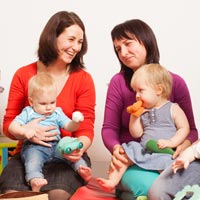 Going from living a life at home with the family to suddenly being thrust into a new environment full of strangers would be daunting enough for anyone. It’s especially true, though, for under-fives starting at nursery or pre-school. So, the key is to prepare children for the change and, of course, for the nursery/pre-school to be very welcoming and accommodating. Here, we’ll take a look at some of the things that will help toddlers and preschoolers transition as smoothly as possible.
 Once you’ve selected
  Helping toddlers with toilet training, personal hygiene, speaking, communicating, following rules, tidying up after themselves, hanging up their coat, fastening shoes, packing their backpack and suchlike will also help them with their self-confidence once they start nursery. If they are a little more independent and able when they start, they will naturally also be a little more self-confident and relaxed at the new setting.
 Our childcare professionals have many years of childcare experience, so helping children settle in is second nature to us. Rest assured, we will ensure that your child has fun, feels relaxed and is safe at all times. We will ensure that this milestone in their lives goes as smoothly as possible and that their time at the nursery/pre-school is a resounding success.
 In short, allowing a young child the tools, time and guidance to play regularly will help them with many elements of their learning and development — and that’s critical. Indeed, that’s why good nurseries, pre-schools and childcare settings encourage children to learn in large part through play.
 Firstly, it’s fun for them and is an essential part of a happy childhood;
 Play also keeps children mentally fit as it stimulates their senses, brains and sense of adventure;
 All in all, play fosters both physical development and mental development in children. Doing so sets them up with improved physical and cognitive abilities as well as incredibly important life skills. Combined, this also sets under-fives up beautifully for school-readiness when they leave pre-school.
 guidance and links. Your child will fall into one of 4 possible categories:
 Socio-economic background matters too:
 More and more parents are bringing up youngsters as vegetarians these days, so we thought we’d put together a rough guide to raising babies, toddlers and preschoolers as vegetarians. When doing so, certain considerations will need to be made, including ensuring that meals are nutritious, containing all the necessary food groups, vitamins and minerals needed by the very young.
 The good news is that formula milk that’s suitable for vegetarians is available. Parents may ask their midwife or health professional for any recommendations in regard to types or brands, particularly if one formula milk disagrees with the baby. However, whichever brand and type is chosen, the formula milk must be formulated for the baby’s specific age. This is usually obvious on the product label.
 From around the age of 6 months, your baby will usually start the process of weaning off of milk and begin to eat solid foods, albeit given in puréed or liquidised form initially. This is when parents then need to be mindful of their child’s nutritional needs and this is even more pertinent when bringing up a child as a vegetarian.
 Well, tofu and other soya products will contain good quantities of protein.
 Iron is essential for growing children and can be found in many of the foods mentioned above. That said, it’s worth mentioning that some foods block the absorption of iron. Such foods include tea as well as whole grains and legumes containing ‘phytates’, dairy products containing ‘casein’ and eggs and dairy products that contain particular forms of calcium. The simple solution to many of these is as follows: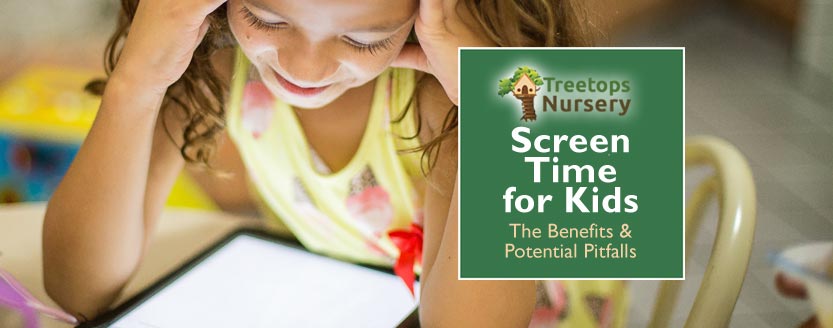
 Of course, that can be the case. What’s more, such handheld screens are a great way for parents to keep children entertained when perhaps they need to get on with other things. Electronic handheld devices also teach children about technology and introduce them to IT; essential skills for them to master in this day and age. Even games can be educational, with some designed to improve children’s numeracy etc. while at the same time being enormous fun. The key, though, is for parents to ensure that children are looking at the right content and not for extended periods of time. Ideally, it should be content that’s informative — i.e. content that will teach them something new, introduce them to new topics and allow them to make discoveries that will educate them. So, the content needs to be chosen and curated by parents — not the child.
 There are some tools available to help parents accomplish this. While we don’t endorse any particular online safety application over any other, applications like
  Hundreds of scientist and medical professionals around the world are convinced that handheld devices like mobile phones and tablets are potentially harmful to humans, especially unborn children, when connected to Wi-Fi. They say that this is due to the ‘RF wireless radiation’ that the devices emit when connected to the web (etc.). What’s more, they appear to have some compelling science and research to back up their claims.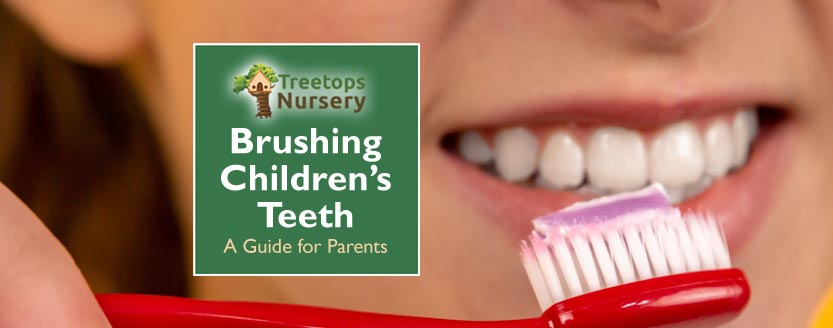
 Parents, guardians or carers should start brushing children’s teeth the moment teeth first appear, even when it’s only one or two teeth initially showing through. This is typically around the age of six to ten months when, for most babies, the lower incisors are first to appear. It varies enormously, though, with some babies even being born with one or more teeth. For teething babies, of course, you need to be more gentle with brushing than you would be for an older child, because their gums will probably be sore. Hence, there are some guidelines to follow in that regard. That’s exactly where this article comes in as we explain the accepted best practice for brushing infant teeth.
 The same general approach can be used for children aged 3 or over, except toddlers may stand, so long as their head can still rest against you so that it’s kept stable and relatively still while brushing takes place. As mentioned in the preceding section, a pea-sized amount of toothpaste can be used for this age group.
 As well as regular brushing of teeth and dentist check-ups, there are many additional measures that can protect children’s teeth. These really all come down to one thing; avoiding added sugar. So …
 The more obvious additional health and safety concerns include the following:
 This guide was brought to you by the childcare team at