

 Are you a parent who wants to continue studying in higher education, but may struggle to afford childcare costs? If so, we have some great news for you. Student Finance England offers eligible students, who are also parents, a generous grant for their child’s childcare. This may allow them to continue with higher education in the knowledge that their child is being looked after by childcare professionals while they study. It can make a real difference, allowing parents to concentrate on studying and potentially increase household income once they graduate their courses.
Today, we’ll take you through the rules around eligibility for the childcare grant and explain how much is available.
The childcare grant for students is in addition to other student finance.
Eligibility Rules for Student Parents
 To be eligible, the following rules apply:
- The parent’s child(ren) must be under the age of fifteen, or under seventeen if they have special educational needs.
- The child(ren) concerned must be financially dependent on the applicant.
- The student/parent also has to be eligible for undergraduate student finance based on household income (even if they don’t claim it).
- They can’t already be receiving a postgraduate loan.
- They must be a permanent UK resident.
- They must be studying full time.
- They, or their partner, must not also be claiming Tax-Free Childcare or the childcare element of Working Tax Credit or Universal Credit.
- They or their partner must not be in receipt of childcare funding from the NHS.
A few rules also apply in relation to the childcare provider that receives the funding:
- The childcare provider cannot be related to the applicant or child(ren) if the childcare provision is at home.
- They should be officially recognised in the UK as a childcare provider, i.e. be registered with Ofsted or on the General Childcare Register.
The childcare grant does not need to be paid back.
How Much Do You Get?
 The Childcare Grant for students is worth up to 85% of the cost of your childcare while you’re studying in further education.
If you have one child, it can amount to up to £183.75 a week or 85% of your childcare costs if lower. If you have two or more children, then it’s worth up to £315.03 a week or, again, 85% of your childcare costs if that’s lower. You will have to cover the remainder. (Figures are correct for the academic year 2022-23; figures for 2021-22 are £179.62 and £307.95 respectively).
You don’t receive the grant directly; it’s effectively paid to the childcare setting itself (after all, it’s a grant specifically for childcare). Part of the mechanism for payments to the childcare provider is the setting up of a Childcare Grant Payment Service (CCGPS) account. You’ll receive instructions explaining how to set one of these up once your application for the childcare grant has been approved. Then later, Student Finance England sends funds to the account. Once the course has commenced, you will need to approve payments to the childcare provider on a weekly basis. It is then paid directly to them. Should any funds remain once the academic year is complete, this will be returned to Student Finance England.
How You Apply
Applications for Student Childcare Grants are most commonly made online. You apply for a Student Childcare Grant as part of your application for the standard undergraduate student finance (start here).
They can also be made using a paper form if the student finance application has already been made by the time you apply, or in the event that you later claim for an additional child. Once filled in, the paper application can be sent to Student Finance England, PO Box 210, Darlington, DL1 9HJ or alternatively send it to them via your Student Finance Account.
Treetops Nursery Provides High Quality Childcare in Willesden, North West London
 We hope the guide to Childcare Grants for students is useful. If you are a student living or intending to study in North West London, Treetops Nursery can certainly help with your childcare needs while you study. We’re Ofsted registered and are officially a Good Nursery, so your child(ren) will be in good hands. We’re a nursery and pre-school in Willesden, NW10 and are also very near to Harlesden, Kensal Green and Willesden Green. So, we may be very convenient if you are living in Willesden or in North West London, or are studying for an undergraduate course at a college, university, university-linked hospital or other higher education setting in the region — there are many. Please contact us for more details or to apply for a nursery place for your baby or child under five:

 Treetops Nursery adheres to the Early Years Foundation Stage (‘EYFS’) framework. This is a structured approach to learning and development for under-fives and is prescribed, by the UK Government, for childcare settings such as ours. It covers 7 key areas of focus for learning and development, which are explained concisely on
  Goals for Communication & Language, a prime area of focus within the EYFS framework, include performance against benchmarks for attentive listening, responding appropriately to what they’ve heard, speaking skills, good use of English and self-expression skills.
 Goals for physical development, the third of the prime focus areas of the EYFS, centre around gross and fine motor skills. For their gross motor skills, goals are set for skills like negotiation around spaces and obstacles, appropriate movement skills for doing so, suitable balance, strength and coordination skills. With regard to fine motor skills, goals are set around things like the ability to appropriately hold and use writing instruments and tools, and demonstrating accuracy when doing so.
 These include understanding numbers, counting, recognising patterns within numbers and number systems, comparison and comprehension of quantities, recalling number bonds and recognition of odds, evens, etc.
 Many new parents ask themselves whether they should send their baby, toddler or under-five child to nursery/pre-school. What exactly are the benefits to the child? Well, studies have shown that there are clear benefits for children if they attend a good nursery or pre-school in their early years. That good aspect is crucial, though, and as a good nursery ourselves (
 First, though, let’s clarify what makes a good nursery superior to a mediocre one. To give just a few examples, a good nursery will educate children under their care — they don’t simply babysit them because parents are at work. They’ll nurture children’s wellbeing, their learning and their development. They’ll create a learning and development programme that’s tailored to the strengths, weaknesses and interests of each individual child. A good nursery will set personal goals and continually assess the child’s progress, actually in partnership with parents. They’ll help every child to achieve personal bests in every area of a good Early Years curriculum. They’ll also do everything they can to help each child become school-ready by the time they leave, so they can move on seamlessly to Reception Year at primary school. Along the way, a good nursery, like Treetops, will help children in a huge number of ways, becoming more able, more self-confident, more independent, well-mannered, knowledgeable, aware of what’s right and wrong, able to socialise with others in an appropriate way — and so much more.
 When a child gets a good educational grounding during their early years, their behaviour around others is also seen to improve, with better self-regulation, less problems with peers and fewer emotional issues. A 2002 study (Sammons et al.) found that the benefits could be seen from as young as two.
 The most far-reaching benefits of a good early years education were found to be for children from disadvantaged backgrounds. The 2020 impact study by the DfE found the following:
 Benefits for Families & the Nation
 Did you know that you can grow vegetables, salads and herbs at home, almost free of cost? You don’t need seeds and you don’t even need a garden! Today we’ll explain how you and your child can help the household with an almost endless supply of potentially free, home-grown fresh produce, all year round. Children will have enormous fun with this amazing activity, whilst learning new skills and gaining important knowledge along the way. Even better — you all get to eat the produce once the home-grown ‘crops’ are ready! And it should save money for the household.
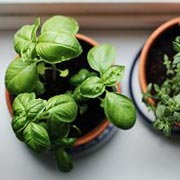 One of the many beauties of this activity is that you don’t need to buy any seeds or plants specifically for the task. You are going to show your child how to regrow small off-cuts of vegetables and herbs that you would already have bought as part of your weekly shop. To explain, some of the parts that you’d normally discard can actually be used to grow new vegetables — lettuce, for example. And, for herbs, there’s an easy and free way to grow new plants from small cuttings of shop-bought herbs that you may have purchased anyway (basil or parsley, for example). Using this approach, you could grow your own vegetables, salads and herbs and, in theory, never have to buy any again! We’ll explain later, in more detail. First, we’ll look at what you and your child will need for your plants to grow in.
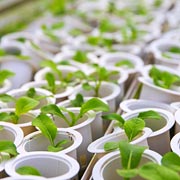 If your household already has flower pots or seed trays, then great. If not, there’s not even any need to buy them if you simply recycle things like empty egg cartons, used yoghurt pots, margarine tubs, the plastic trays from ready meals and suchlike. So long as they’ll hold some earth/compost and some holes are pierced in the bottom for drainage (this is best if done by an adult, for safety), then you’re almost good to go.
 Now for the really clever, fun part! Instead of throwing away the ‘root’ part — that you’d normally cut off and discard — from the bottom of vegetables like onions, celery, garlic cloves, beetroot and lettuce, your child should save them, because that’s the part that will regrow if you encourage it. Show your child how to safely cut off and save a section about an inch deep, containing that ‘root’ section, from the bottom of used vegetables from your ordinary, weekly shop. Green onions, spring onions, lemon grass, various types of lettuce, Swiss chard and carrots are all additional examples of vegetables that have this bottom root section that can be harvested for later regrowth. Ginger too, but this takes significantly longer to regrow.
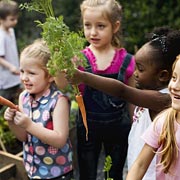 The compost should be kept moist as the vegetable regrows into another one that can, again, be harvested to eat as part of a healthy meal.
 Herbs like basil, coriander, parsley, rosemary are also easy to regrow. When you’ve used most of them from your weekly shop for meals, save a few clippings from left-over stems. Clipping length will be different depending on the herb used. For example, basil clippings should be about 4 inches (100mm) long and rosemary clippings should be 2 to 3 inches (50-75mm) long. You may need to experiment a bit at first, so save a few different lengths if unsure initially.
 Another way to regrow shop-bought vegetables is to see if they have seeds inside. Tomatoes and peppers are great examples of these. So, when you’re next using them up for meals, get your child to save the seeds from things like peppers (you’d normally discard these anyway) and some seeds from a tomato — each one contains many. These too can be used to grow brand new plants and vegetables for next to nothing. It’s a little more advanced and they need more room, though. The best time to harvest tomato seeds is between summer and autumn, then plant them in spring if they’re intended for the garden.
  It’s similar for marrows, courgettes, pumpkins and squashes, although those need significant space (they’ll want to spread out), so may be more suitable outside once they begin to grow significantly.
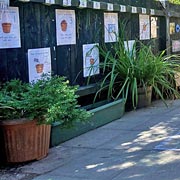 Children will love looking after these living things and seeing them grow or regrow. They will learn so much along the way and will have a great sense of achievement when successful. Once they’ve succeeded in producing something they can eat (… and potentially regrow again) they’ll probably want to do it more and try different things. The result, of course, is also fresh produce, which is rich in vitamins and nutrients and good for family health. Children will have been entertained, they’ll understand nature better and they’ll learn skills like patience and being responsible too. A key lesson is also to learn from mistakes — something we all have to do. What’s more, this natural activity for children may even save money for the household. All in all, it’s a great activity from every perspective.
 A: Dyslexia is categorised as a Specific Learning Difficulty (‘SpLD’) in the UK. Most notably, it adversely affects a person’s ability to read because of a general difficulty in learning or interpreting letters, words, and often other symbols. Indeed, it was originally referred to as word blindness. There are other ways dyslexia affects people, though, and we’ll come to those in more detail later.
 A: As it’s a genetic issue, people are born with the condition. Symptoms may begin to show as a child matures during early learning and beyond. As it is something that’s inherent in their physiology, it is not something people can ‘grow out’ of. It is a lifelong issue. It can be managed, of course, with various approaches available to mitigate its effects as far as possible.
 They may also have trouble remembering words.
 A: Being unable to easily read will hold children back. If they have trouble reading, they will have trouble reading text books for any of the topics at school. Some classroom and test situations will become more stressful for them as a result.
 One-to-one help from a teacher, teaching assistant or specialist;
 A: Childcare professionals will be on the look-out for any signs of possible dyslexia (see the list of possible signs earlier in this article). Parents can do the same and, because the condition is thought to be inherited, this is particularly important if one or more of the child’s parents is dyslexic. Signs can be hard to spot, but the earlier the condition is recognised, the sooner the child can be helped. If any signs of possible dyslexia are suspected, supervising adults and childcare professionals can initially monitor the child’s progress going forwards. They can also assess the child against benchmarks for the same age or peer group in case it’s just a temporary blip in their learning progress.
 Following up from our post last month about
  Have you sat down with your child and forewarned them what’s going to happen, when, how and why? Put their mind at rest so they’re mentally well-prepared, ahead of time.
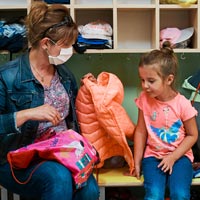 It’s also great if you and your child have already visited the school previously, for example during an open day or evening.
 As a parent, you’ll need to know where to go and at what time. That’s the case for both drop-off and pick-up. Ensure you know whether the first day is going to be the same as a ‘normal’ day.
 Going from living a life at home with the family to suddenly being thrust into a new environment full of strangers would be daunting enough for anyone. It’s especially true, though, for under-fives starting at nursery or pre-school. So, the key is to prepare children for the change and, of course, for the nursery/pre-school to be very welcoming and accommodating. Here, we’ll take a look at some of the things that will help toddlers and preschoolers transition as smoothly as possible.
 Once you’ve selected
  Helping toddlers with toilet training, personal hygiene, speaking, communicating, following rules, tidying up after themselves, hanging up their coat, fastening shoes, packing their backpack and suchlike will also help them with their self-confidence once they start nursery. If they are a little more independent and able when they start, they will naturally also be a little more self-confident and relaxed at the new setting.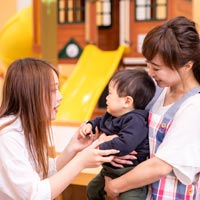
 Our childcare professionals have many years of childcare experience, so helping children settle in is second nature to us. Rest assured, we will ensure that your child has fun, feels relaxed and is safe at all times. We will ensure that this milestone in their lives goes as smoothly as possible and that their time at the nursery/pre-school is a resounding success.
 Even newborn babies should be encouraged to be active, in order to learn and develop their abilities through interaction and play. At this age, this is achieved largely through activities known collectively as Tummy Time. This is an incredibly important tool for their early development. Tummy Time pretty much describes the essence of the activities — i.e. time spent awake and active on their tummies during their first year.
 It helps them to build physical strength, particularly in their upper body, and helps them achieve various developmental milestones.
 Another important benefit of Tummy Time is that it helps babies avoid conditions like positional plagiocephaly (otherwise known as ‘flat head syndrome’) and positional torticollis (i.e. a twisted neck) because it allows them to change position more often.
 You can lie the baby on their tummy (while awake of course) on a soft blanket or rug on the floor. Get down low so you can interact with them and play games like peek-a-boo at their level.
 Encourage the baby to support their own weight on their hand and arms (almost like a ‘push-up’ kind of position) for short periods. This can initially be done by helping to support them with a hand, lifting them under their chest or tummy. They’ll soon catch on and help to push themselves up and support their own head more and more.







 guidance and links. Your child will fall into one of 4 possible categories:
 Socio-economic background matters too: