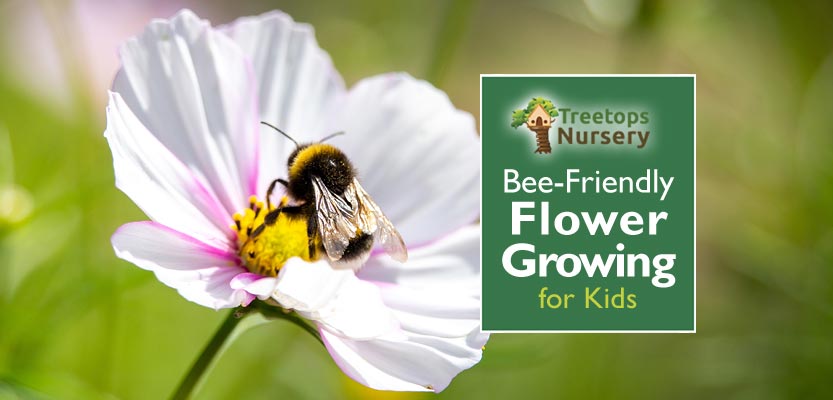
 Today, we follow up last month’s wildlife attracting guide for Under-5s with another, more specific, activity for children to undertake outdoors. This time, we outline easy-to-accomplish flower growing activities that children can enjoy, to attract bees and other friendly insects to the garden. While flowering plants can be purchased commercially ready-grown, we’ll concentrate today on ways children can grow wildlife-friendly flowers themselves, from seed. After all, it’s far cheaper, much more fun as an activity, teaches children more about nature and will also give them a greater sense of achievement. If it all goes well, the result will be some pretty flowers to brighten the place up as well as a host of charming and beautiful little creatures visiting. Children may get to see different types of bee perhaps along with butterflies, hover flies, ladybirds and probably many more wonderful creatures that might otherwise never have visited. Children will generally find flowers, bees and butterflies not only beautiful to look at, but also fascinating once they really start to look closely. After all, what’s not to love about stunning flowers and the cute, colourful pollinators that will visit them!
Sourcing Bee-Friendly Seeds
 Parents/guardians of under-fives will need to supervise which seeds to buy — or to harvest free of charge at the end of a previous season. If purchased, they’re inexpensive with seed packets typically costing as little as £1.99 from places like Suttons, garden centres and even online from some supermarkets. Look out for seeds that are marked as suitable for growing bee-friendly and/or butterfly-friendly flowers, or are simply suitable for pollinators. Typical examples include seeds for poppies, sunflowers, forget-me-nots, sedum, buddleia, nasturtium, daisies, cornflower, cosmos and calendula. Even herbs will grow fragrant flowers that’ll attract pollinators if you allow them to grow to maturity. Good examples include mint, basil and thyme, any of which would serve a secondary purpose of being useful to eat — another useful and educational benefit of this activity for young children.
Even easier are seed packets that contain mixed wildflower seeds. As the name suggests, these contain a real mix, resulting in multi-coloured flowers that’ll liven up flower pots, balconies or garden beds and attract a multitude of different pollinator visitors.
Fun-to-Grow Seeds Just for Children
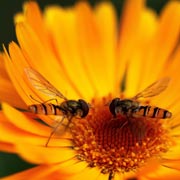 Suttons and other seed suppliers even offer whole ranges of bee-friendly flower seeds just for children. These include a ‘Bug Magnet’ flower seed kit for kids containing Calendula daisy seeds, 8 bug stickers and even a magnifying glass for closer inspection of the visiting bees, butterflies and insects. The price of that example is only £2.49 (price correct at time of writing — even cheaper if you’re a member). Sainsbury’s offers something completely different with their Bee-Friendly Flower Bomb Kits for little ones. Timing of this post is perfect too, as all these seeds can be sown during March, April and May, with flowers appearing anywhere from March to the end of September.
Sowing the Seeds
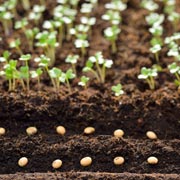 Commercially-supplied seeds will usually have instructions for sowing on the packets, so these can be followed easily. Generally speaking, though, there are a couple of main ways to sow flower seeds:
- The easiest way is for children to simply scatter seeds (spaced out according to individual instructions) onto some soft soil that’s been pre-prepared so it’s free of weeds. That might be, for example, in a flower bed, window box or in flower pots. The seeds can then be covered by a thin covering of sieved soil or compost and then slightly firmed down.
- Alternatively, children can sow the seeds in seed trays, flower pots, used yoghurt or margarine cartons or similar,
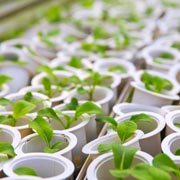 so long as whatever they use has drainage holes at the bottom (adults may need to supervise that part, for safety reasons). Drip trays will be needed underneath if this part is initially housed indoors. The earth used can be soil brought in from the outdoors or, of course, compost (suitable for seedlings and ideally peat-free as it’s better for the planet). Using this approach instead of the outdoor scattering approach will allow children to manually space out individual seeds more easily, once they’ve actually sprouted.
Either way, the soil should be kept moist over coming days/weeks, so children should check on progress daily.
Safety Notice
Read the seed packet because some seeds can be poisonous. Therefore, this activity should be undertaken only with the close supervision of a responsible adult. Children will need to be closely monitored when handling seeds and earth, and will need to take appropriate safety precautions, for example keeping hands away from the mouth and eyes and washing their hands with soap and water afterwards.
Along with regular watering, a suitable organic liquid feed will help to bring on some types of seedlings. However, as some liquid feeds can be poisonous, handling of it is best left to a supervising adult.
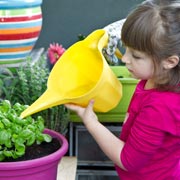 After about ten days to two weeks or so, seedlings should start to appear through the soil. Once they start to grow significantly, it may be necessary for children to ‘thin’ some of them out, by transplanting any that are cramped, so there’s only one plant every few inches. This will allow each plant to grow to a significant size in the coming weeks, free of overcrowding.
Once they’re mature, flowers should begin to appear and then it all starts to look rather beautiful. It may even be fragrant, depending on the plants chosen.
Along Come the Bees, Butterflies & More
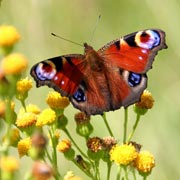 Once flowers are coming through, many types of delightful pollinators will soon follow. These are likely to include various types of bee, different kinds of butterfly, hover flies, ladybirds and potentially many other pollinators.
Children Learn from Nature
Children can then have educational fun taking a closer (but careful) look at the visiting creatures and perhaps even saying ‘hello’. Actually, it’s not a bad idea to encourage children to greet the visiting pollinators in this way because it demonstrates to children that each is a little being that deserves to live safely and be given space, peace and respect. Teaching children to recognise even the smallest creatures as individuals may also help to reduce the chances of children being fearful of them. 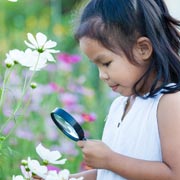 After all, little pollinators are generally very harmless, hard-working creatures who just want to go about their business in peace. They are, though, completely charming when you take the time to watch them and this is too easily missed by children if they’re glued to screens or kept indoors too much. Given the opportunity, children learn and benefit so much from nature, so this activity is very worthwhile one for under-fives and, indeed, for children of any age. Learning from/about nature also supports the ‘Understanding the World‘ aspect of the EYFS curriculum, which is so incredibly important to under-fives.
Looking for the Best Childcare Service in Willesden, NW10?
Or the best nursery or pre-school in Harlesden, Willesden or Kensal Green?
 Today’s guide was brought to you by Treetops Nursery, one of the best nurseries and pre-schools in the Willesden, Willesden Green, Kensal Green, Harlesden and NW10 areas of London. We’re independently rated by Ofsted as a Good early years provider in every category, so you know your baby, toddler or preschooler will be well looked after — and indeed will absolutely thrive — at Treetops Nursery. To register a place for your child, request a visit, ask a question or to find out more, please get in touch:
Next Time:
Next time, we’ll publish a wonderful guide to bird feeders that children can make at home.
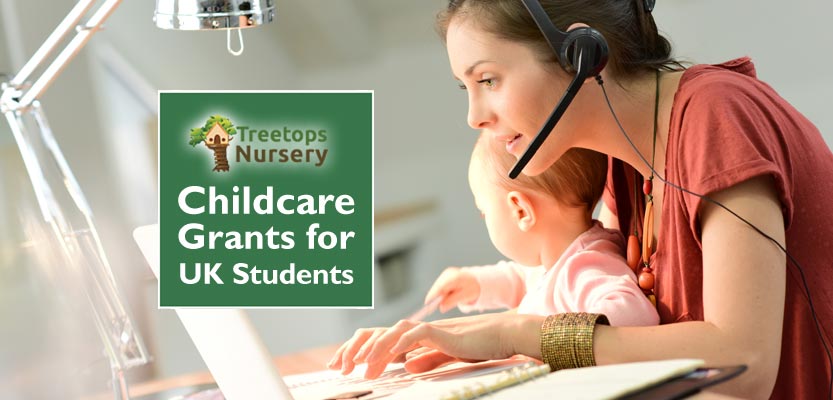
 Are you a parent who wants to continue studying in higher education, but may struggle to afford childcare costs? If so, we have some great news for you. Student Finance England offers eligible students, who are also parents, a generous grant for their child’s childcare. This may allow them to continue with higher education in the knowledge that their child is being looked after by childcare professionals while they study. It can make a real difference, allowing parents to concentrate on studying and potentially increase household income once they graduate their courses.
 To be eligible, the following rules apply:
 The Childcare Grant for students is worth up to 85% of the cost of your childcare while you’re studying in further education.
 Many new parents ask themselves whether they should send their baby, toddler or under-five child to nursery/pre-school. What exactly are the benefits to the child? Well, studies have shown that there are clear benefits for children if they attend a good nursery or pre-school in their early years. That good aspect is crucial, though, and as a good nursery ourselves (
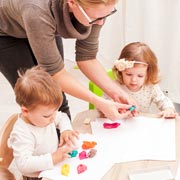 First, though, let’s clarify what makes a good nursery superior to a mediocre one. To give just a few examples, a good nursery will educate children under their care — they don’t simply babysit them because parents are at work. They’ll nurture children’s wellbeing, their learning and their development. They’ll create a learning and development programme that’s tailored to the strengths, weaknesses and interests of each individual child. A good nursery will set personal goals and continually assess the child’s progress, actually in partnership with parents. They’ll help every child to achieve personal bests in every area of a good Early Years curriculum. They’ll also do everything they can to help each child become school-ready by the time they leave, so they can move on seamlessly to Reception Year at primary school. Along the way, a good nursery, like Treetops, will help children in a huge number of ways, becoming more able, more self-confident, more independent, well-mannered, knowledgeable, aware of what’s right and wrong, able to socialise with others in an appropriate way — and so much more.
 When a child gets a good educational grounding during their early years, their behaviour around others is also seen to improve, with better self-regulation, less problems with peers and fewer emotional issues. A 2002 study (Sammons et al.) found that the benefits could be seen from as young as two.
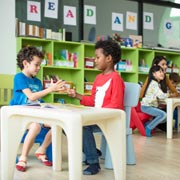 The most far-reaching benefits of a good early years education were found to be for children from disadvantaged backgrounds. The 2020 impact study by the DfE found the following:
 Benefits for Families & the Nation


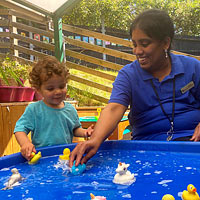 Equipment and facilities at the nursery are excellent, both indoors and outside. An excellent
 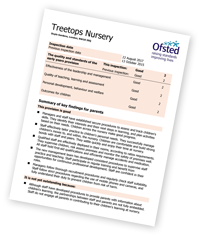 A Good Ofsted Report
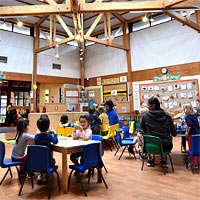 Children’s individual needs, including for those with special needs, are well catered-for at Treetops Nursery, Willesden. In fact, a learning and development programme is tailored to the needs, strengths, weaknesses and interests of each individual child. A ‘Key Person’ is also assigned to each child and this staff member continually monitors their progress, making changes to the tailored programme as appropriate as time goes by. Parents and carers are kept fully informed of children’s progress, including via a journal that is kept for each child. Parents are also free to add notes to the progress journal so a more complete picture is maintained for every child.