
 Today we take a look at some amazing baby facts, many of which may come as a surprise. Human babies are incredible in so many ways, but you may not be aware of just how incredible they really are …
1. One Born Every Minute?
That’s not even close! Did you know that, on average, a staggering 4.44 babies are born, somewhere in the world, every second? That equates to over 383,000 new babies coming into the world every single day and over 140 million new babies every year.
2. Babies Favour September
 Studies suggest that more babies are born in September than in any other month. In fact, the top four birth days are all in September with 9th September seeing the most babies born, followed in order by 19th, 12th and 17th September. With September being the first term of the year in the UK, it may come as no surprise that those September babies, being the oldest in the class, tend to be the smartest in their peer groups.
3. Short People Live Longer
Another study suggests that shorter people live longer than taller people, on average. With females being statistically shorter than males, it makes sense, then, that male babies will have lower life expectancies than females.
4. Foetuses have Gills, Fur & a Tail
While they’re foetuses, babies have fur, a tail and gills at certain stages of their development. The gills are slits found in the neck, called pharyngeal arches. These eventually develop into ear and jaw bones before the baby is born. Meanwhile, the tail becomes the child’s coccyx. In regard to having fur, some babies will lose theirs by the time they are born but others may shed it within the first few weeks following birth.
5. A Unique Smile
 Humans are just one species within a group of 200 primates that includes monkeys, apes and lemurs. Did you know, however, that baby humans are the only primate babies that smile at their parents? That’s unless other primates use some other way of smiling that’s unknown to us, of course — it’s possible!
6. Amazing Brain Growth
Just in the first year, babies’ brains will grow to twice the size, going on to triple from their birth size by the time the child reaches the age of 5. Scientists believe that as many as a million new brain connections are made every single second when you interact with your baby and up to three-quarters of every meal goes towards building the infant’s brain. It does not actually stop developing fully until the age of about 21.
7. Taste Super Powers
 While adults have about 10,000 taste buds on their tongues, new born babies have a staggering 30,000. What’s more, these are spread over their tongues, tonsils, the back of their throat and on the sides and roofs of their mouths. Despite this, it’s not until they’re around 4 months old that they begin to taste salt.
8. Babies Have Nearly 100 More Bones than Adults
While adults have 206 bones, babies are born with an incredible 300. This leads naturally to the question what happens to the missing 94?. Well, they don’t go missing, exactly. Instead, some of them fuse together to form a single bone by the time the individual is an adult. A good example is those that make up the skull, being made up of several separate bones when the child is born, but fusing into a single bone by the time they reach adulthood.
9. Are Babies Born Without Kneecaps?
 Well, kind of — they don’t have a bone kneecap when they’re born, but they do have one of sorts, made of cartilage. This hardens to form bony kneecaps by the time the child reaches between 2 and 6 years of age.
Such differences help make the baby more flexible and easier to pass through the birth canal when they’re born.
10. Newborns are Short-Sighted
 When babies are first born, they are short-sighted, only being able to focus on an area eight to fourteen inches away. This is great for seeing their mum, of course, but they have to rely on peripheral vision for more distant visual cues. In time, though, their distance vision will deepen and improve.
11.No Teardrops
Have you ever noticed that new babies don’t produce tears in their first few weeks? They may still ‘cry’ but it’s a tearless version until they’re roughly one month old.
12. Newborns Instinctively Hold Their Breath Underwater
 For obvious reasons don’t test this but, until they’re about six months old, babies have an automatic ability and instinct to hold their breath when under water. They even automatically adjust their pulse rate and outer blood vessels while they’re submerged.
13. Surprising Gestation Statistics
It’s not clear why, but there are some interesting statistics around the gestation period for different groups. Indian babies apparently stay in the womb for 6 days longer, on average, than white babies. And, in turn, white babies stay 5 days longer, on average, than black babies. That correlates to Indian babies spending an incredible 11 days longer in the womb than black babies. Another interesting statistic is that female babies spend a day longer in the womb than males.
14. The Origins of Memory
What’s your earliest memory? How old were you in that memory? Generally, people don’t recall anything before the age of three. It’s unclear whether this is because their memory synapses were not fully formed until then, or because they were not fluent from a language perspective until about that age.
15. The Wonders of Breast Milk
 Did you know that breast milk adapts itself to perfectly suit the infant drinking it? As the baby grows, the milk composition changes automatically, providing the exact calorific content that the infant needs.
What’s more, natural breast milk has all manner of additional benefits over formula milk. Incredibly, it reduces the risk of SIDS (Sudden Infant Death Syndrome) by an incredible 50% when taken for a minimum of two months. It also reduces the chances of babies and infants developing a range of diseases and allergies as well as passing on antibodies to the child.
The Highest Quality Childcare in Willesden
Treetops Nursery is a perfect choice if you are looking for outstanding nurseries or pre-schools in Harlesden, Willesden or Kensal Green.
 Treetops is graded by Ofsted as a Good Nursery — in every category. So, your baby, toddler or preschooler will be exceptionally well catered for at the childcare setting. Our nursery and pre-school is located in Willesden, London NW10 but is also conveniently near to Harlesden, Kensal Green and Willesden Green. So, if you live, work or require weekday childcare in any of those locations, you should consider Treetops for your childcare provision. We really give every child the very best start in life at this crucially important time in their lives. We do everything we can to nurture them so that they’re the very best version of themselves in readiness for school by the time they leave us at the age of five.
Please contact us if you’d like to register your child for a place at the nursery, or if you’ve like to visit the setting. We’re also always happy to answer any questions:
 Did you know that you can grow vegetables, salads and herbs at home, almost free of cost? You don’t need seeds and you don’t even need a garden! Today we’ll explain how you and your child can help the household with an almost endless supply of potentially free, home-grown fresh produce, all year round. Children will have enormous fun with this amazing activity, whilst learning new skills and gaining important knowledge along the way. Even better — you all get to eat the produce once the home-grown ‘crops’ are ready! And it should save money for the household.
 One of the many beauties of this activity is that you don’t need to buy any seeds or plants specifically for the task. You are going to show your child how to regrow small off-cuts of vegetables and herbs that you would already have bought as part of your weekly shop. To explain, some of the parts that you’d normally discard can actually be used to grow new vegetables — lettuce, for example. And, for herbs, there’s an easy and free way to grow new plants from small cuttings of shop-bought herbs that you may have purchased anyway (basil or parsley, for example). Using this approach, you could grow your own vegetables, salads and herbs and, in theory, never have to buy any again! We’ll explain later, in more detail. First, we’ll look at what you and your child will need for your plants to grow in.
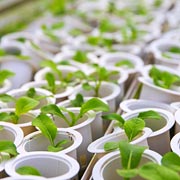 If your household already has flower pots or seed trays, then great. If not, there’s not even any need to buy them if you simply recycle things like empty egg cartons, used yoghurt pots, margarine tubs, the plastic trays from ready meals and suchlike. So long as they’ll hold some earth/compost and some holes are pierced in the bottom for drainage (this is best if done by an adult, for safety), then you’re almost good to go.
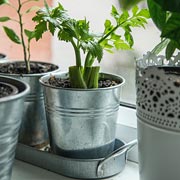 Now for the really clever, fun part! Instead of throwing away the ‘root’ part — that you’d normally cut off and discard — from the bottom of vegetables like onions, celery, garlic cloves, beetroot and lettuce, your child should save them, because that’s the part that will regrow if you encourage it. Show your child how to safely cut off and save a section about an inch deep, containing that ‘root’ section, from the bottom of used vegetables from your ordinary, weekly shop. Green onions, spring onions, lemon grass, various types of lettuce, Swiss chard and carrots are all additional examples of vegetables that have this bottom root section that can be harvested for later regrowth. Ginger too, but this takes significantly longer to regrow.
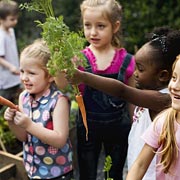 The compost should be kept moist as the vegetable regrows into another one that can, again, be harvested to eat as part of a healthy meal.
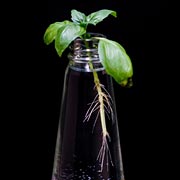 Herbs like basil, coriander, parsley, rosemary are also easy to regrow. When you’ve used most of them from your weekly shop for meals, save a few clippings from left-over stems. Clipping length will be different depending on the herb used. For example, basil clippings should be about 4 inches (100mm) long and rosemary clippings should be 2 to 3 inches (50-75mm) long. You may need to experiment a bit at first, so save a few different lengths if unsure initially.
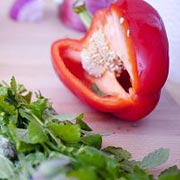 Another way to regrow shop-bought vegetables is to see if they have seeds inside. Tomatoes and peppers are great examples of these. So, when you’re next using them up for meals, get your child to save the seeds from things like peppers (you’d normally discard these anyway) and some seeds from a tomato — each one contains many. These too can be used to grow brand new plants and vegetables for next to nothing. It’s a little more advanced and they need more room, though. The best time to harvest tomato seeds is between summer and autumn, then plant them in spring if they’re intended for the garden.
 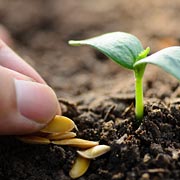 It’s similar for marrows, courgettes, pumpkins and squashes, although those need significant space (they’ll want to spread out), so may be more suitable outside once they begin to grow significantly.
 Children will love looking after these living things and seeing them grow or regrow. They will learn so much along the way and will have a great sense of achievement when successful. Once they’ve succeeded in producing something they can eat (… and potentially regrow again) they’ll probably want to do it more and try different things. The result, of course, is also fresh produce, which is rich in vitamins and nutrients and good for family health. Children will have been entertained, they’ll understand nature better and they’ll learn skills like patience and being responsible too. A key lesson is also to learn from mistakes — something we all have to do. What’s more, this natural activity for children may even save money for the household. All in all, it’s a great activity from every perspective.
 guidance and links. Your child will fall into one of 4 possible categories:
 Socio-economic background matters too:
 Babies are also more protected against asthma if they have been breastfed.
 Breastfeeding a baby reduces the chance of mothers developing Type 2 Diabetes.
 Our top 25 benefits of breastfeeding really only scratch the surface. Breastfeeding and breast milk have many more benefits including anything from saving money and being more convenient (nothing needs buying or preparing) to being better for the planet. With breast milk, there’s no packaging to throw away and it’s a totally sustainable food source, direct from nature. Incredible when you think about it.
 Last month, we mentioned what a huge topic formula milk is. So, in this post, we thought we’d explore all the different types of milk available to infants in the UK.
 Baby and infant formula milk comes ready-made in liquid form or as a powder that needs to be carefully and hygienically made up. The liquid variety is usually the more expensive of the two and needs to be used sooner, due to its shorter shelf life. Whichever is used, labels should be carefully checked to ensure suitability for the age of the particular baby/infant in question.
 Comfort Formula is another type of formula milk based on cows’ milk, but the milk proteins it contains are already partially broken down (partially hydrolysed). It is marketed as being easier for the infant to digest and, as such, a formula milk that will reduce the chance of constipation or colic. However, there is no evidence to back up such claims. It’s suitable from birth but parents should ask for advice from their Health Visitor or midwife before giving their baby this type of milk, and certainly not use it if their infant is allergic to cows’ milk.
 From the age of 1: your baby can move onto drinking whole pasteurised cows’ milk as their main drink (or alternatively sheeps’ or goats’ milk so long as it’s also pasteurised) as part of a healthy, balanced diet. It should not be given to children before they’re one because it does not contain enough iron.
 More and more parents are bringing up youngsters as vegetarians these days, so we thought we’d put together a rough guide to raising babies, toddlers and preschoolers as vegetarians. When doing so, certain considerations will need to be made, including ensuring that meals are nutritious, containing all the necessary food groups, vitamins and minerals needed by the very young.
 The good news is that formula milk that’s suitable for vegetarians is available. Parents may ask their midwife or health professional for any recommendations in regard to types or brands, particularly if one formula milk disagrees with the baby. However, whichever brand and type is chosen, the formula milk must be formulated for the baby’s specific age. This is usually obvious on the product label.
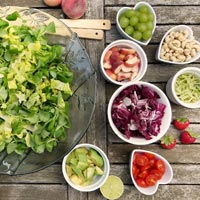 From around the age of 6 months, your baby will usually start the process of weaning off of milk and begin to eat solid foods, albeit given in puréed or liquidised form initially. This is when parents then need to be mindful of their child’s nutritional needs and this is even more pertinent when bringing up a child as a vegetarian.
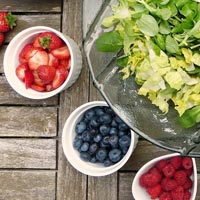 Well, tofu and other soya products will contain good quantities of protein.
 Iron is essential for growing children and can be found in many of the foods mentioned above. That said, it’s worth mentioning that some foods block the absorption of iron. Such foods include tea as well as whole grains and legumes containing ‘phytates’, dairy products containing ‘casein’ and eggs and dairy products that contain particular forms of calcium. The simple solution to many of these is as follows:
 Parents, guardians or carers should start brushing children’s teeth the moment teeth first appear, even when it’s only one or two teeth initially showing through. This is typically around the age of six to ten months when, for most babies, the lower incisors are first to appear. It varies enormously, though, with some babies even being born with one or more teeth. For teething babies, of course, you need to be more gentle with brushing than you would be for an older child, because their gums will probably be sore. Hence, there are some guidelines to follow in that regard. That’s exactly where this article comes in as we explain the accepted best practice for brushing infant teeth.
 The same general approach can be used for children aged 3 or over, except toddlers may stand, so long as their head can still rest against you so that it’s kept stable and relatively still while brushing takes place. As mentioned in the preceding section, a pea-sized amount of toothpaste can be used for this age group.
 As well as regular brushing of teeth and dentist check-ups, there are many additional measures that can protect children’s teeth. These really all come down to one thing; avoiding added sugar. So …
 The more obvious additional health and safety concerns include the following:
 This guide was brought to you by the childcare team at

 Less likelihood of developing cardiovascular disease including hyperlipidemia1;
 Higher physical activity and physical fitness levels are associated with improved cognitive performance (e.g., concentration, memory) among students.3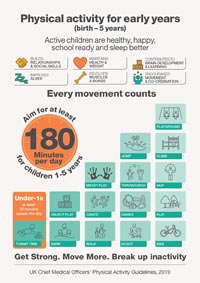
 Knowing how important it is, we take exercise very seriously at Treetops Nursery in Willesden. However, we ensure that it’s always fun and exciting, so that children enjoy it, naturally. Physical movement and active play are all part of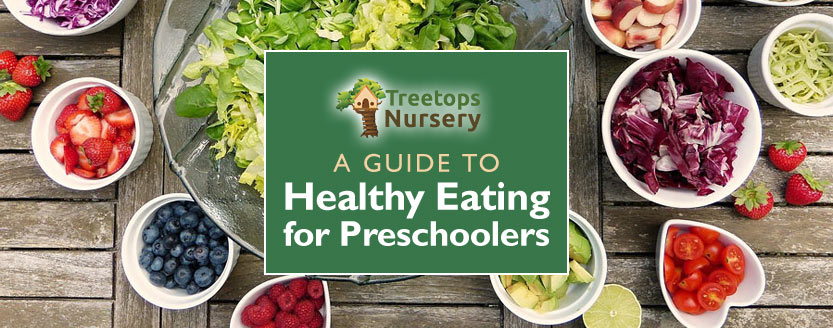
 Healthy, Balanced Meals for Children
 The Benefits of Healthy Eating for Children
 What Should Children be Eating & Drinking?
 Portion Sizes
 Healthy Eating at the Nursery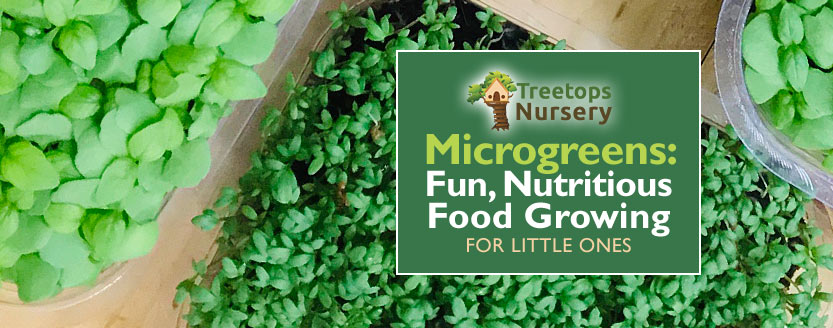
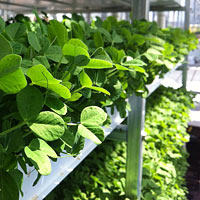 There is one class of edible plant that can be grown all year round and is perfect for kids to grow indoors, for example on a windowsill. Some types of this food will sprout in as little as a week. What’s more, it’s tasty and highly nutritious. Growing it is super-easy and a perfect way to keep kids entertained, educated about nature and eating healthily. It’ll also be a welcome addition to mealtimes for the whole household.
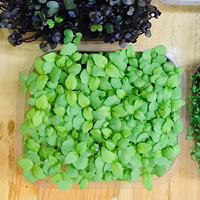 Here are just a few examples of plants that make suitable microgreens and can easily be grown by children indoors:
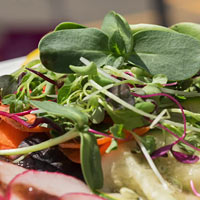 Fennel — just 10 days after first sprouting, leaves from young fennel seedlings will give a pleasant aniseed tang to dishes like pasta salads, risottos, soups and even stuffing.
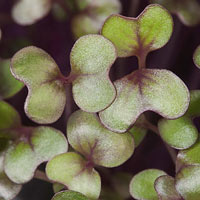 Red Cabbage micro leaves have one of the highest Vitamin C concentrations of any microgreen. They also contain Vitamin K, potassium, beta-carotene, calcium, magnesium and antioxidants. As with many of the microgreens, many top chefs use them as an attractive and tasty garnish. They can be sprinkled over soups, salads, grilled vegetables, stews and cooked meats. After sowing, they take only days to appear.
 Your child will need to fill the chosen containers with compost, not quite to the top. Tap it to level the soil, then pat it down just a little to firm it. Some gardeners also indent the compost where the seeds will go. The seeds then need to be carefully placed or lightly sprinkled into the indented areas. It’s important that your child spaces the seeds out so there is no clumping, otherwise significant problems can occur (the crop might get diseased or even completely fail). The seeds don’t need to be covered but a light dusting of sieved compost will keep them in place while allowing light to get through. The seeds then need to be lightly watered. It’s best for your child to do this part outside, just to avoid potential mess indoors, taking care not to over-water nor to wash the seeds away. A way to water them indoors is to simply stand the vessels in some shallow water for 30 to 60 minutes, so the compost naturally draws up the moisture.
 Once rinsed, the tender young micro leaves can be enjoyed in meals by the whole family. They’ll add often exquisite tastes and textures to meals as well as adding much-needed vitamins and minerals to the family diet. That’s even more important for growing toddlers and preschoolers, of course. And, throughout the growing journey, the children will absolutely love seeing the new shoots grow into young plants. They will have learnt new skills, had great fun getting to know more about nature and have a real sense of achievement. Chances are, too, that they will love the taste of the micro leaves.