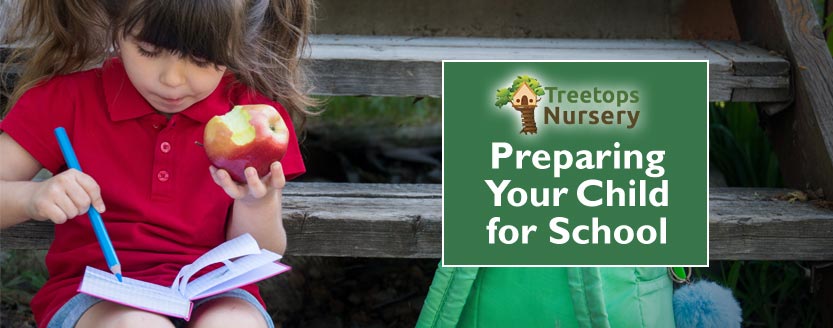
 Following up from our post last month about preparing children for nursery, we’ll now take a look at preparing them for school as they approach the age of five. Preparing them well will pay dividends on many levels, not least to make it as stress-free for them as possible. Foresight and preparation will also help them transition smoothly.
Any good nursery or pre-school will, of course, help your child to prepare for starting school. Indeed, attending a good nursery/pre-school is one of the best ways to ensure that your child is well-prepared, in readiness for school, so they can hit the ground running from day one. At Treetops Nursery School in Willesden, ensuring they are ‘school-ready’ by the time they leave us is one of our key goals.
Aside from educational and learning factors, how can parents help prepare their children for School? We’ll explore some of the options.
How Parents Can Prepare Children for School
There are quite a few ways in which parents can help children prepare for the start of Reception Year at school:
 Have you sat down with your child and forewarned them what’s going to happen, when, how and why? Put their mind at rest so they’re mentally well-prepared, ahead of time.
- Make sure you ask them if they have any worries or concerns. Allay any fears with common sense advice and ensure they know who to speak to at school if they have an issue.
- Make it sound like a new adventure! Focus on the positives. Explain how exciting school will be. For example, there will be new friends, new activities, new games and new, exciting opportunities.
- Tell your child which of their existing friends will be starting at the same school. If there aren’t any, try to reach out to another parent whose child is starting on the same day and arrange a play date for the two. Having a friendly face there from day one will really help them settle in.
- Ensure your child gets sufficient sleep in the run-up to starting school. In the one or two weeks prior to starting, it is a good idea to get them used to getting up, getting dressed and eating breakfast at a particular time. Doing so will help their body clocks adapt in readiness. In the evening, of course, they should be going to bed at a sensible time so they get enough sleep. The last thing they will need is to feel unable to stay awake in their first week of school.
- Most schools have a prospectus, brochure or website. Take a look through these together. Point out interesting and exciting aspects of the new school. Find answers to any questions your child asks and be positive.
- Tell them about your first day or week at school, assuming it wasn’t awful, of course. It’s OK to mention if you were a little apprehensive, but that it all turned out well in the end and you made some excellent new friends etc.
 It’s also great if you and your child have already visited the school previously, for example during an open day or evening.
- Try to ensure that your child can take care of some of their personal needs independently. For example, in respect of the use of the toilet, hygiene, tying shoe laces, dressing and eating.
- Social skills will also help them. So, a knowledge and confidence in their own communication abilities, social skills, table manners, understanding of right and wrong and so on will stand them in good stead.
- Encourage them to have a desire to learn. So, give them an insight into all the amazing things they can discover about the world – and themselves – if they delve a little deeper and have an inquisitive nature.
Parents Themselves Must Also Be Prepared
It’s also important, of course, for parents to be prepared.
 As a parent, you’ll need to know where to go and at what time. That’s the case for both drop-off and pick-up. Ensure you know whether the first day is going to be the same as a ‘normal’ day.
- Ensure your child knows who will be collecting them and drill them about safety in this regard.
- Ask the school, well ahead of the start, what safeguarding process they have in place in regard to picking up your child at the end of the day. There may be details you need to know on arrival.
- Ensure that your child’s uniform, if applicable, and any equipment like sports kit is ready for your child to take. Does everything fit? Are clothes labelled?
- Make sure you know what equipment your child will need. Ensure he/she knows where it is e.g. in a rucksack, bag or pencil case.
- Does your child need a packed lunch and/or any snacks? You need to find out.
- Do you have all the necessary contact details of the school or staff? Do they have yours?
- Is everything prepared and ready so that your child is not late on the day? Have you timed the route at the appropriate time of day, so you know how long the journey will take? Turning up late will cause unnecessary stress, including for your child.
It almost goes without saying, of course, that enrolling your child in a nursery or pre-school setting well before they’re five will help them educationally, developmentally and in terms of preparedness for reception year.
Are you Looking for a Good Nursery in Willesden, Harlesden or Kensal Green?
 Treetops is a wonderful nursery and pre-school in Willesden, conveniently close to Willesden Green, Harlesden and Kensal Green. It is one of the most popular nurseries in north west London, with high demand. For this reason, do get in touch as early as possible if you are interested in a childcare place your baby or child at the setting:
 Going from living a life at home with the family to suddenly being thrust into a new environment full of strangers would be daunting enough for anyone. It’s especially true, though, for under-fives starting at nursery or pre-school. So, the key is to prepare children for the change and, of course, for the nursery/pre-school to be very welcoming and accommodating. Here, we’ll take a look at some of the things that will help toddlers and preschoolers transition as smoothly as possible.
 Once you’ve selected
  Helping toddlers with toilet training, personal hygiene, speaking, communicating, following rules, tidying up after themselves, hanging up their coat, fastening shoes, packing their backpack and suchlike will also help them with their self-confidence once they start nursery. If they are a little more independent and able when they start, they will naturally also be a little more self-confident and relaxed at the new setting.
 Our childcare professionals have many years of childcare experience, so helping children settle in is second nature to us. Rest assured, we will ensure that your child has fun, feels relaxed and is safe at all times. We will ensure that this milestone in their lives goes as smoothly as possible and that their time at the nursery/pre-school is a resounding success.
 In short, allowing a young child the tools, time and guidance to play regularly will help them with many elements of their learning and development — and that’s critical. Indeed, that’s why good nurseries, pre-schools and childcare settings encourage children to learn in large part through play.
 Firstly, it’s fun for them and is an essential part of a happy childhood;
 Play also keeps children mentally fit as it stimulates their senses, brains and sense of adventure;
 All in all, play fosters both physical development and mental development in children. Doing so sets them up with improved physical and cognitive abilities as well as incredibly important life skills. Combined, this also sets under-fives up beautifully for school-readiness when they leave pre-school.
 Even newborn babies should be encouraged to be active, in order to learn and develop their abilities through interaction and play. At this age, this is achieved largely through activities known collectively as Tummy Time. This is an incredibly important tool for their early development. Tummy Time pretty much describes the essence of the activities — i.e. time spent awake and active on their tummies during their first year.
 It helps them to build physical strength, particularly in their upper body, and helps them achieve various developmental milestones.
 Another important benefit of Tummy Time is that it helps babies avoid conditions like positional plagiocephaly (otherwise known as ‘flat head syndrome’) and positional torticollis (i.e. a twisted neck) because it allows them to change position more often.
 You can lie the baby on their tummy (while awake of course) on a soft blanket or rug on the floor. Get down low so you can interact with them and play games like peek-a-boo at their level.
 Encourage the baby to support their own weight on their hand and arms (almost like a ‘push-up’ kind of position) for short periods. This can initially be done by helping to support them with a hand, lifting them under their chest or tummy. They’ll soon catch on and help to push themselves up and support their own head more and more.
 guidance and links. Your child will fall into one of 4 possible categories:
 Socio-economic background matters too:
 Of course, that can be the case. What’s more, such handheld screens are a great way for parents to keep children entertained when perhaps they need to get on with other things. Electronic handheld devices also teach children about technology and introduce them to IT; essential skills for them to master in this day and age. Even games can be educational, with some designed to improve children’s numeracy etc. while at the same time being enormous fun. The key, though, is for parents to ensure that children are looking at the right content and not for extended periods of time. Ideally, it should be content that’s informative — i.e. content that will teach them something new, introduce them to new topics and allow them to make discoveries that will educate them. So, the content needs to be chosen and curated by parents — not the child.
 There are some tools available to help parents accomplish this. While we don’t endorse any particular online safety application over any other, applications like
  Hundreds of scientist and medical professionals around the world are convinced that handheld devices like mobile phones and tablets are potentially harmful to humans, especially unborn children, when connected to Wi-Fi. They say that this is due to the ‘RF wireless radiation’ that the devices emit when connected to the web (etc.). What’s more, they appear to have some compelling science and research to back up their claims.
 Parents, guardians or carers should start brushing children’s teeth the moment teeth first appear, even when it’s only one or two teeth initially showing through. This is typically around the age of six to ten months when, for most babies, the lower incisors are first to appear. It varies enormously, though, with some babies even being born with one or more teeth. For teething babies, of course, you need to be more gentle with brushing than you would be for an older child, because their gums will probably be sore. Hence, there are some guidelines to follow in that regard. That’s exactly where this article comes in as we explain the accepted best practice for brushing infant teeth.
 The same general approach can be used for children aged 3 or over, except toddlers may stand, so long as their head can still rest against you so that it’s kept stable and relatively still while brushing takes place. As mentioned in the preceding section, a pea-sized amount of toothpaste can be used for this age group.
 As well as regular brushing of teeth and dentist check-ups, there are many additional measures that can protect children’s teeth. These really all come down to one thing; avoiding added sugar. So …
 The more obvious additional health and safety concerns include the following:
 This guide was brought to you by the childcare team at



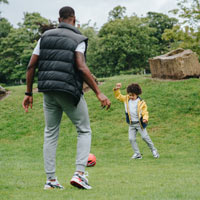
 Less likelihood of developing cardiovascular disease including hyperlipidemia1;
 Higher physical activity and physical fitness levels are associated with improved cognitive performance (e.g., concentration, memory) among students.3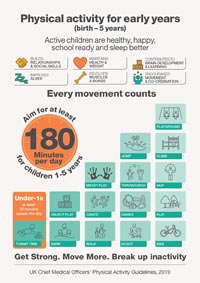
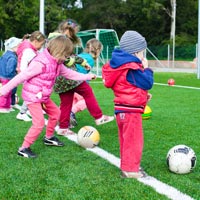 Knowing how important it is, we take exercise very seriously at Treetops Nursery in Willesden. However, we ensure that it’s always fun and exciting, so that children enjoy it, naturally. Physical movement and active play are all part of
 If you are living in England and are bringing up one or more children there, you are usually eligible to receive Child Benefit. This is a payment made by the Government to help with the costs associated with bringing up children. It’s made to those responsible for bringing up children up to 16 or, if they’re still in approved education or training, 20 years of age. This guide will go through the key facts around what you’re entitled to and eligibility.
 Additional Benefits of Child Benefit
 Reasons You May Not Be Eligible
 Childcare in Willesden, near Willesden Green, Harlesden & Kensal Green, NW10