
Most people have heard of dyslexia, however the disorder known as dyspraxia is less well known. If you are a parent with children, dyspraxia is something to be aware of, so that you can look out for the possible signs. Today we’ll answer commonly asked questions about the disorder.
Q: What is Dyspraxia?
 A: Dyspraxia is a condition that impairs a person’s ability to fully control motor functions, for example coordinating movement and physical activity. Children with dyspraxia may therefore appear ‘clumsy’. It can be anything from mild to more severe and obviously the mildest variety is hardest for parents to spot. Dyspraxia is classified as a type of Developmental Co-ordination Disorder (‘DCD’) and indeed healthcare professionals may use this terminology for the condition. They may also refer to it as a Specific Developmental Disorder of Motor Function, or ‘SDDMF’ for short.
The condition affects four times as many males as it does females and can also sometimes be found in those with ADHD, dyslexia and autism. However, as with dyslexia, dyspraxia has nothing to do with the level of a person’s intelligence.
Q: What Causes Dyspraxia?
 A: Dyspraxia can be something people were simply born with (that’s the developmental kind) or, for others, it was acquired through brain trauma, for example because of an injury or stroke. In this post, however, we’ll concentrate on developmental dyspraxia in relation to children.
The reasons for developmental dyspraxia are unclear, however children who were born prematurely or underweight are more prone to the disorder. There is also some evidence to suggest that it can be inherited within families who are prone to the condition. Sadly, children are also more likely to have the disorder if their mothers drank alcohol or took illegal drugs during pregnancy.
Q: What Are the Signs of Dyspraxia?
A: Children with dyspraxia may appear clumsier than their peers. They may also be less naturally good at sport and indeed may even avoid it. Picking up other skills may also be a challenge. Concentration and attention spans can be adversely affected. Following instructions can be a challenge.
Babies may exhibit unusual body positions and have trouble learning to roll or sit. Toddlers under one may adopt strange postures. Infants may be slower at learning to crawl too.
 Children with dyspraxia may also have difficulty:
- independently dressing, buttoning clothes and tying laces;
- walking, jumping, skipping and running;
- using writing instruments to draw and write;
- mastering the use of cutlery to feed themselves;
- catching, kicking and throwing balls;
- stacking objects and playing with some toys;
- carrying out everyday physical tasks and activities in the most appropriate order.
All of this is because they are less able to coordinate movements and physical actions as well as they would without the condition.
One knock-on effect of this is that they may not reach their development milestones as soon as others in their age group. Indeed, this can be an indicator to watch out for. However, DCD/dyspraxia is often hard to diagnose until children are at least 4 to 5 years of age.
Q: What Are the Knock-On Effects of Dyspraxia?
 A: Due to its nature and particularly in regard to its negative effect on sports and active play skills, dyspraxia can lead to children becoming less naturally fit, with all the ramifications that brings.
The effects of dyspraxia can also make children less able to make new friends. This may make them feel a bit left out, ‘different‘ and therefore feel rather isolated. This can, in turn, also lead to lower self-esteem, reduced confidence, frustration and even behavioural problems.
Q: How is Dyspraxia Professionally Diagnosed?
A: If you think your child may be dyspraxic, contact your GP to ensure the problem is not caused by something entirely different. Also liaise with the Special Educational Needs Co-ordinator (‘SENCo’) at your child’s childcare setting, pre-school or school, for advice and support. The GP or SENCo may refer your child to a specialist healthcare professional, for example an occupational therapist and/or paediatrician. Assessment and diagnosis is often carried out by both. Learn more about diagnosing dyspraxia and DCD in children here.
Q: Is there a Cure for Dyspraxia?
A: Although a tiny number of children who are deemed to be a little clumsy may grow out of it, there is no cure for dyspraxia for the vast majority. Some children’s challenges will improve with age, however the earlier symptoms are spotted, the sooner parents, carers, guardians and professionals can help the affected child.
Q: How Can We Help Children with Dyspraxia?
 A: Once diagnosed, tailored help is available for children with dyspraxia/DCD, from a variety of specialists. Support may be needed throughout childhood, including at pre-school and school, to help optimise ability around physical tasks and processes. As every child’s challenges will be unique, a support plan will be customised for each. Support may involve a variety of professionals who will aim to help the child overcome their difficulties as far as possible and to build their confidence, self-esteem, abilities etc. The specialists involved may include paediatric occupational therapists, paediatricians, clinical psychologists, educational psychologists or a mixture of several. All will work in tandem, of course, with childcare professionals, teachers, parents and guardians. Learn more about treatment for dyspraxia here.
Q: How Does Treetops Nursery Help Dyspraxic Children?
A: As well as looking out for possible first signs of dyspraxia/DCD — and any other disorder — we will work with any specialists to play our part in any tailored support plans for affected children under our care. This may involve task- and process-oriented activities to help children overcome difficulties. As well as working with any guidance from the specialists it will, of course, involve strategic cooperation with parents, carers or guardians involved in the child’s care. In this way, everyone will be working to the same aims, using the same, shared support plans. Our Special Educational Needs Co-Ordinator (‘SENCo’) will also be a crucial part of formulating this plan and, indeed, one of their key roles is to promote equality of opportunity irrespective of any special educational needs or disorders (‘SEND’). In ensuring this, every child achieves personal bests in every area, becoming the very best version of themselves.
Looking for Outstanding Nurseries in Willesden, Near Harlesden, Kensal Green or Willesden Green?
 Treetops Nursery School is a popular nursery and pre-school in Willesden, NW10 (near Harlesden, Kensal Green and Willesden Green). We offer outstanding childcare for babies and children aged up to 5, Monday to Friday. To express an interest, ask a question, book a tour or pre-register for a place, please get in touch:

 A: Dyslexia is categorised as a Specific Learning Difficulty (‘SpLD’) in the UK. Most notably, it adversely affects a person’s ability to read because of a general difficulty in learning or interpreting letters, words, and often other symbols. Indeed, it was originally referred to as word blindness. There are other ways dyslexia affects people, though, and we’ll come to those in more detail later.
 A: As it’s a genetic issue, people are born with the condition. Symptoms may begin to show as a child matures during early learning and beyond. As it is something that’s inherent in their physiology, it is not something people can ‘grow out’ of. It is a lifelong issue. It can be managed, of course, with various approaches available to mitigate its effects as far as possible.
 They may also have trouble remembering words.
 A: Being unable to easily read will hold children back. If they have trouble reading, they will have trouble reading text books for any of the topics at school. Some classroom and test situations will become more stressful for them as a result.
 One-to-one help from a teacher, teaching assistant or specialist;
 A: Childcare professionals will be on the look-out for any signs of possible dyslexia (see the list of possible signs earlier in this article). Parents can do the same and, because the condition is thought to be inherited, this is particularly important if one or more of the child’s parents is dyslexic. Signs can be hard to spot, but the earlier the condition is recognised, the sooner the child can be helped. If any signs of possible dyslexia are suspected, supervising adults and childcare professionals can initially monitor the child’s progress going forwards. They can also assess the child against benchmarks for the same age or peer group in case it’s just a temporary blip in their learning progress.
 Following up from our post last month about
  Have you sat down with your child and forewarned them what’s going to happen, when, how and why? Put their mind at rest so they’re mentally well-prepared, ahead of time.
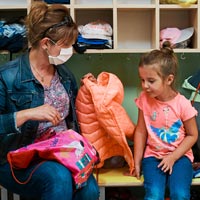 It’s also great if you and your child have already visited the school previously, for example during an open day or evening.
 As a parent, you’ll need to know where to go and at what time. That’s the case for both drop-off and pick-up. Ensure you know whether the first day is going to be the same as a ‘normal’ day.
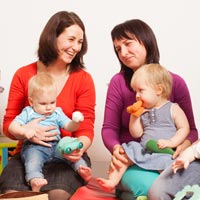 Going from living a life at home with the family to suddenly being thrust into a new environment full of strangers would be daunting enough for anyone. It’s especially true, though, for under-fives starting at nursery or pre-school. So, the key is to prepare children for the change and, of course, for the nursery/pre-school to be very welcoming and accommodating. Here, we’ll take a look at some of the things that will help toddlers and preschoolers transition as smoothly as possible.
 Once you’ve selected
  Helping toddlers with toilet training, personal hygiene, speaking, communicating, following rules, tidying up after themselves, hanging up their coat, fastening shoes, packing their backpack and suchlike will also help them with their self-confidence once they start nursery. If they are a little more independent and able when they start, they will naturally also be a little more self-confident and relaxed at the new setting.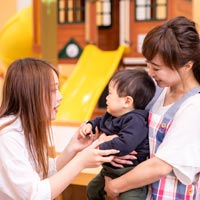
 Our childcare professionals have many years of childcare experience, so helping children settle in is second nature to us. Rest assured, we will ensure that your child has fun, feels relaxed and is safe at all times. We will ensure that this milestone in their lives goes as smoothly as possible and that their time at the nursery/pre-school is a resounding success.
 In short, allowing a young child the tools, time and guidance to play regularly will help them with many elements of their learning and development — and that’s critical. Indeed, that’s why good nurseries, pre-schools and childcare settings encourage children to learn in large part through play.
 Firstly, it’s fun for them and is an essential part of a happy childhood;
 Play also keeps children mentally fit as it stimulates their senses, brains and sense of adventure;
 All in all, play fosters both physical development and mental development in children. Doing so sets them up with improved physical and cognitive abilities as well as incredibly important life skills. Combined, this also sets under-fives up beautifully for school-readiness when they leave pre-school.









 Willesden and other north-west London areas close by feature regularly in the long-running BBC mystery crime drama Jonathan Creek. This popular series stars actor and comedian Alan Davies as the main protagonist. Other occasional stars who appeared in the series included Griff Rhys Jones, Rik Mayall, Jack Dee (who we’ll hear more about below), Bill Bailey, Nigel Planer and even Bob Monkhouse.
 Actor and dead-pan comedian Jack Dee co-wrote and starred in ‘Lead Balloon’, a BBC4 comedy series that first ran on British TV from 2006 to 2011. The first episode actually achieved the highest ever ratings for a comedy on the channel at the time and the series later aired on BBC2 and to audiences on BBC HD. There were three series in total, with the first two being filmed in and around Willesden. Indeed, the main characters Rick (played by Jack Dee) and his partner Mel (played by Raquel Cassidy) live in a house located in Willesden. A café called ‘Michael’s Café’ in series one and two is, in reality, ‘Gracelands Café’, which is located just a stone’s throw from Willesden in Kensal Green.
 Willesden also features in the British TV comedy-drama ‘Minder’ that was extremely popular on ITV/Thames Television from late 1979 through to the mid-90s. One of the two key protagonists, Arthur Daley (played by George Cole), kept a lock-up garage in Willesden and this is where he kept all his merchandise. He also did many of his deals in and around the area. One episode of Minder was even called ‘Willesden Suite’. No less than 10 series aired in total, making George Cole and Dennis Waterman into household names.
 ‘The Last Detective’ was another extremely popular British TV drama that ran for 4 series between 2003 and 2007. The main protagonist was ‘Dangerous Davies’, a Detective Constable played by Peter Davison. ‘Dangerous Davies’ was, in fact, the series of books upon which the TV drama was based. Filming of episodes often took place in Willesden, Harlesden and other parts of north/north-west London. Indeed, episode 4 (s.3) was called ‘Willesden Confidential’ and episode 3 (s.4) was called ‘A Funny Thing Happened on the Way to Willesden’.
 Zomba was widely accepted to be the most successful independent music company (The Zomba Music Corporation sold for literally billions eventually). Along the way, Zomba bought legendary music company Rough Trade and itself eventually became owned by BMG, then later Sony Music Entertainment under the RCA/Jive Label Group umbrella and later still its artists moved across to Epic Records. One of the original founders of Zomba is a certain Mutt Lange, who became a legendary producer (later marrying Shania Twain) who has worked with Def Leppard, The Boomtown Rats, Huey Lewis and the News, Britney Spears, Nickelback, Maroon 5, Bryan Adams, Celine Dion, The Corrs, Billy Ocean, Lady Gaga, Muse, AC/DC, Foreigner, Tina Turner, Backstreet Boys, The Cars and many more. Music genres cover everything from rap and hip-hop to pop and rock. From humble beginnings, this Willesden company influenced music and culture around the entire world.
 ‘Morgan Studios’ was another very influential and successful music company that started life in Willesden, pre-dating Zomba, back in the 1960s. They went on to work with huge names like Free, Blind Faith, Led Zeppelin, Supertramp, Paul McCartney, Wings, Rod Stewart, Yes, Black Sabbath, Jethro Tull, Cat Stevens, Pink Floyd, Carly Simon, Alice Cooper, Lou Reed, The Who, The Jam, The Cure, The Stone Roses, Thin Lizzy, The Kinks (more about them below), Squeeze, Gary Moore, Peter Gabriel, Bonnie Tyler, Elton John, and many more household names. The recording studios were based at 169-171 High Road, Willesden, being owned originally by Barry Morgan, the drummer in successful bands like ‘Blue Mink’ and others. Interestingly, in 1980, Morgan Studios were sold half to Zomba (see above) and half to Robin Millar CBE who, four years later, produced the seminal album ‘Diamond Life’ by Sade. He is also a legendary music executive, who worked with many other huge names including Eric Clapton, Sting, Herbie Hancock, Elvis Costello, Bruce Hornsby, Malcolm McLaren and Alison Moyet to name just a few.

 guidance and links. Your child will fall into one of 4 possible categories:
 Socio-economic background matters too:
 Last month, we mentioned what a huge topic formula milk is. So, in this post, we thought we’d explore all the different types of milk available to infants in the UK.
 Baby and infant formula milk comes ready-made in liquid form or as a powder that needs to be carefully and hygienically made up. The liquid variety is usually the more expensive of the two and needs to be used sooner, due to its shorter shelf life. Whichever is used, labels should be carefully checked to ensure suitability for the age of the particular baby/infant in question.
 Comfort Formula is another type of formula milk based on cows’ milk, but the milk proteins it contains are already partially broken down (partially hydrolysed). It is marketed as being easier for the infant to digest and, as such, a formula milk that will reduce the chance of constipation or colic. However, there is no evidence to back up such claims. It’s suitable from birth but parents should ask for advice from their Health Visitor or midwife before giving their baby this type of milk, and certainly not use it if their infant is allergic to cows’ milk.
 From the age of 1: your baby can move onto drinking whole pasteurised cows’ milk as their main drink (or alternatively sheeps’ or goats’ milk so long as it’s also pasteurised) as part of a healthy, balanced diet. It should not be given to children before they’re one because it does not contain enough iron.
 More and more parents are bringing up youngsters as vegetarians these days, so we thought we’d put together a rough guide to raising babies, toddlers and preschoolers as vegetarians. When doing so, certain considerations will need to be made, including ensuring that meals are nutritious, containing all the necessary food groups, vitamins and minerals needed by the very young.
 The good news is that formula milk that’s suitable for vegetarians is available. Parents may ask their midwife or health professional for any recommendations in regard to types or brands, particularly if one formula milk disagrees with the baby. However, whichever brand and type is chosen, the formula milk must be formulated for the baby’s specific age. This is usually obvious on the product label.
 From around the age of 6 months, your baby will usually start the process of weaning off of milk and begin to eat solid foods, albeit given in puréed or liquidised form initially. This is when parents then need to be mindful of their child’s nutritional needs and this is even more pertinent when bringing up a child as a vegetarian.
 Well, tofu and other soya products will contain good quantities of protein.
 Iron is essential for growing children and can be found in many of the foods mentioned above. That said, it’s worth mentioning that some foods block the absorption of iron. Such foods include tea as well as whole grains and legumes containing ‘phytates’, dairy products containing ‘casein’ and eggs and dairy products that contain particular forms of calcium. The simple solution to many of these is as follows: