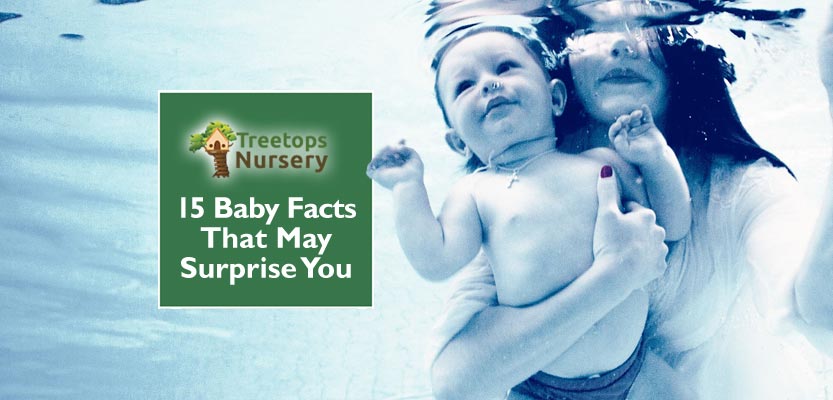
 Today we take a look at some amazing baby facts, many of which may come as a surprise. Human babies are incredible in so many ways, but you may not be aware of just how incredible they really are …
1. One Born Every Minute?
That’s not even close! Did you know that, on average, a staggering 4.44 babies are born, somewhere in the world, every second? That equates to over 383,000 new babies coming into the world every single day and over 140 million new babies every year.
2. Babies Favour September
 Studies suggest that more babies are born in September than in any other month. In fact, the top four birth days are all in September with 9th September seeing the most babies born, followed in order by 19th, 12th and 17th September. With September being the first term of the year in the UK, it may come as no surprise that those September babies, being the oldest in the class, tend to be the smartest in their peer groups.
3. Short People Live Longer
Another study suggests that shorter people live longer than taller people, on average. With females being statistically shorter than males, it makes sense, then, that male babies will have lower life expectancies than females.
4. Foetuses have Gills, Fur & a Tail
While they’re foetuses, babies have fur, a tail and gills at certain stages of their development. The gills are slits found in the neck, called pharyngeal arches. These eventually develop into ear and jaw bones before the baby is born. Meanwhile, the tail becomes the child’s coccyx. In regard to having fur, some babies will lose theirs by the time they are born but others may shed it within the first few weeks following birth.
5. A Unique Smile
 Humans are just one species within a group of 200 primates that includes monkeys, apes and lemurs. Did you know, however, that baby humans are the only primate babies that smile at their parents? That’s unless other primates use some other way of smiling that’s unknown to us, of course — it’s possible!
6. Amazing Brain Growth
Just in the first year, babies’ brains will grow to twice the size, going on to triple from their birth size by the time the child reaches the age of 5. Scientists believe that as many as a million new brain connections are made every single second when you interact with your baby and up to three-quarters of every meal goes towards building the infant’s brain. It does not actually stop developing fully until the age of about 21.
7. Taste Super Powers
 While adults have about 10,000 taste buds on their tongues, new born babies have a staggering 30,000. What’s more, these are spread over their tongues, tonsils, the back of their throat and on the sides and roofs of their mouths. Despite this, it’s not until they’re around 4 months old that they begin to taste salt.
8. Babies Have Nearly 100 More Bones than Adults
While adults have 206 bones, babies are born with an incredible 300. This leads naturally to the question what happens to the missing 94?. Well, they don’t go missing, exactly. Instead, some of them fuse together to form a single bone by the time the individual is an adult. A good example is those that make up the skull, being made up of several separate bones when the child is born, but fusing into a single bone by the time they reach adulthood.
9. Are Babies Born Without Kneecaps?
 Well, kind of — they don’t have a bone kneecap when they’re born, but they do have one of sorts, made of cartilage. This hardens to form bony kneecaps by the time the child reaches between 2 and 6 years of age.
Such differences help make the baby more flexible and easier to pass through the birth canal when they’re born.
10. Newborns are Short-Sighted
 When babies are first born, they are short-sighted, only being able to focus on an area eight to fourteen inches away. This is great for seeing their mum, of course, but they have to rely on peripheral vision for more distant visual cues. In time, though, their distance vision will deepen and improve.
11.No Teardrops
Have you ever noticed that new babies don’t produce tears in their first few weeks? They may still ‘cry’ but it’s a tearless version until they’re roughly one month old.
12. Newborns Instinctively Hold Their Breath Underwater
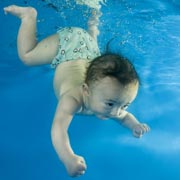 For obvious reasons don’t test this but, until they’re about six months old, babies have an automatic ability and instinct to hold their breath when under water. They even automatically adjust their pulse rate and outer blood vessels while they’re submerged.
13. Surprising Gestation Statistics
It’s not clear why, but there are some interesting statistics around the gestation period for different groups. Indian babies apparently stay in the womb for 6 days longer, on average, than white babies. And, in turn, white babies stay 5 days longer, on average, than black babies. That correlates to Indian babies spending an incredible 11 days longer in the womb than black babies. Another interesting statistic is that female babies spend a day longer in the womb than males.
14. The Origins of Memory
What’s your earliest memory? How old were you in that memory? Generally, people don’t recall anything before the age of three. It’s unclear whether this is because their memory synapses were not fully formed until then, or because they were not fluent from a language perspective until about that age.
15. The Wonders of Breast Milk
 Did you know that breast milk adapts itself to perfectly suit the infant drinking it? As the baby grows, the milk composition changes automatically, providing the exact calorific content that the infant needs.
What’s more, natural breast milk has all manner of additional benefits over formula milk. Incredibly, it reduces the risk of SIDS (Sudden Infant Death Syndrome) by an incredible 50% when taken for a minimum of two months. It also reduces the chances of babies and infants developing a range of diseases and allergies as well as passing on antibodies to the child.
The Highest Quality Childcare in Willesden
Treetops Nursery is a perfect choice if you are looking for outstanding nurseries or pre-schools in Harlesden, Willesden or Kensal Green.
 Treetops is graded by Ofsted as a Good Nursery — in every category. So, your baby, toddler or preschooler will be exceptionally well catered for at the childcare setting. Our nursery and pre-school is located in Willesden, London NW10 but is also conveniently near to Harlesden, Kensal Green and Willesden Green. So, if you live, work or require weekday childcare in any of those locations, you should consider Treetops for your childcare provision. We really give every child the very best start in life at this crucially important time in their lives. We do everything we can to nurture them so that they’re the very best version of themselves in readiness for school by the time they leave us at the age of five.
Please contact us if you’d like to register your child for a place at the nursery, or if you’ve like to visit the setting. We’re also always happy to answer any questions:
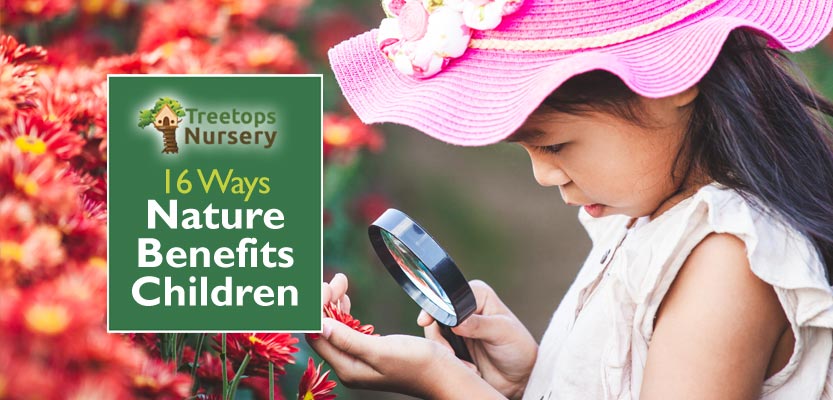
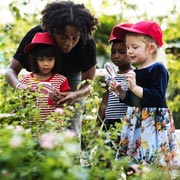 At the time of writing, spring is just around the corner and snowdrops and daffodils are already sprouting out of the ground. Soon, it’ll start to feel warmer and we’ll be more likely to venture outdoors again. With that in mind, we thought the time was perfect for a post all about the benefits of nature to children, particularly in their early years. If you’re a parent/carer and your children don’t usually get much exposure to nature, take a look at these benefits and consider encouraging them to get out more. The natural world and everything it offers will enrich their young lives in a myriad of natural ways.
 Nature is good for both mind & spirit. Many studies have shown that time spent with nature is very healthy for mental wellbeing and you only have to spend time in the Great Outdoors to know that this is true. There is something instinctively calming about spending time outdoors, surrounded by flora and fauna, and this is very beneficial for mental health, including relieving stress, anxiety and even depression.
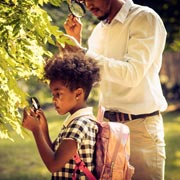 Spending time in the natural environment, surrounded by nature and everything that it brings, allows children to get a better perspective on life. Once they see the enormity of the ‘bigger picture’, small issues they may be facing will become insignificant and they will learn what’s really important and what’s not.
 The natural world is vast so, with suitable adult supervision, allows children to feel much more free than they ever can indoors or in the confines of a playground. They can run around over larger areas, across different terrains and a myriad of different types of natural environment. It’s no wonder you see children putting their arms out like wings when they’re out in the natural world — they feel so free it makes them feel like they could almost fly!
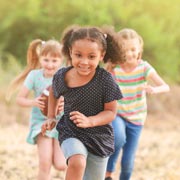 With the space to run around, explore, climb and build, nature helps children to become stronger and fitter in the most natural of ways. Another good thing about it is that it doesn’t even feel like they’re consciously ‘exercising’ when they’re having fun out in nature — it’s totally natural.
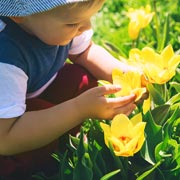 Nature is also an absolute feast for potentially all of the senses, giving children ample opportunity to see, touch, smell, hear and (under suitable supervision) even taste. Vestibular (movement) and proprioception (body position) senses are also amply stimulated in the Great Outdoors. Stimulation of the senses is incredibly important for children, particularly in their early years, helping in the generation of new brain pathways and synapses that are part of the essential building foundations of children’s lives.
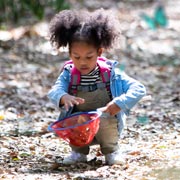 Nature supports many of
  The many benefits of nature are fully supported at Treetops Nursery in Willesden.
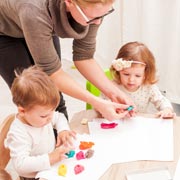 Treetops Nursery adheres to the Early Years Foundation Stage (‘EYFS’) framework. This is a structured approach to learning and development for under-fives and is prescribed, by the UK Government, for childcare settings such as ours. It covers 7 key areas of focus for learning and development, which are explained concisely on
  Goals for Communication & Language, a prime area of focus within the EYFS framework, include performance against benchmarks for attentive listening, responding appropriately to what they’ve heard, speaking skills, good use of English and self-expression skills.
 Goals for physical development, the third of the prime focus areas of the EYFS, centre around gross and fine motor skills. For their gross motor skills, goals are set for skills like negotiation around spaces and obstacles, appropriate movement skills for doing so, suitable balance, strength and coordination skills. With regard to fine motor skills, goals are set around things like the ability to appropriately hold and use writing instruments and tools, and demonstrating accuracy when doing so.
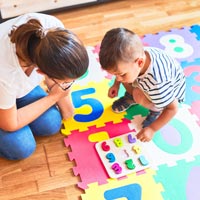 These include understanding numbers, counting, recognising patterns within numbers and number systems, comparison and comprehension of quantities, recalling number bonds and recognition of odds, evens, etc.
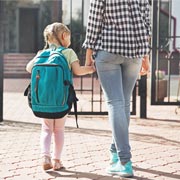 Many new parents ask themselves whether they should send their baby, toddler or under-five child to nursery/pre-school. What exactly are the benefits to the child? Well, studies have shown that there are clear benefits for children if they attend a good nursery or pre-school in their early years. That good aspect is crucial, though, and as a good nursery ourselves (
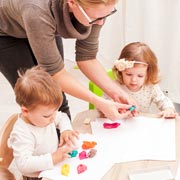 First, though, let’s clarify what makes a good nursery superior to a mediocre one. To give just a few examples, a good nursery will educate children under their care — they don’t simply babysit them because parents are at work. They’ll nurture children’s wellbeing, their learning and their development. They’ll create a learning and development programme that’s tailored to the strengths, weaknesses and interests of each individual child. A good nursery will set personal goals and continually assess the child’s progress, actually in partnership with parents. They’ll help every child to achieve personal bests in every area of a good Early Years curriculum. They’ll also do everything they can to help each child become school-ready by the time they leave, so they can move on seamlessly to Reception Year at primary school. Along the way, a good nursery, like Treetops, will help children in a huge number of ways, becoming more able, more self-confident, more independent, well-mannered, knowledgeable, aware of what’s right and wrong, able to socialise with others in an appropriate way — and so much more.
 When a child gets a good educational grounding during their early years, their behaviour around others is also seen to improve, with better self-regulation, less problems with peers and fewer emotional issues. A 2002 study (Sammons et al.) found that the benefits could be seen from as young as two.
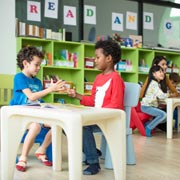 The most far-reaching benefits of a good early years education were found to be for children from disadvantaged backgrounds. The 2020 impact study by the DfE found the following:
 Benefits for Families & the Nation
 Did you know that you can grow vegetables, salads and herbs at home, almost free of cost? You don’t need seeds and you don’t even need a garden! Today we’ll explain how you and your child can help the household with an almost endless supply of potentially free, home-grown fresh produce, all year round. Children will have enormous fun with this amazing activity, whilst learning new skills and gaining important knowledge along the way. Even better — you all get to eat the produce once the home-grown ‘crops’ are ready! And it should save money for the household.
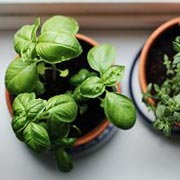 One of the many beauties of this activity is that you don’t need to buy any seeds or plants specifically for the task. You are going to show your child how to regrow small off-cuts of vegetables and herbs that you would already have bought as part of your weekly shop. To explain, some of the parts that you’d normally discard can actually be used to grow new vegetables — lettuce, for example. And, for herbs, there’s an easy and free way to grow new plants from small cuttings of shop-bought herbs that you may have purchased anyway (basil or parsley, for example). Using this approach, you could grow your own vegetables, salads and herbs and, in theory, never have to buy any again! We’ll explain later, in more detail. First, we’ll look at what you and your child will need for your plants to grow in.
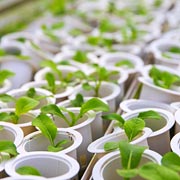 If your household already has flower pots or seed trays, then great. If not, there’s not even any need to buy them if you simply recycle things like empty egg cartons, used yoghurt pots, margarine tubs, the plastic trays from ready meals and suchlike. So long as they’ll hold some earth/compost and some holes are pierced in the bottom for drainage (this is best if done by an adult, for safety), then you’re almost good to go.
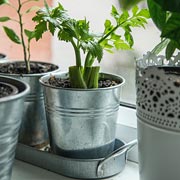 Now for the really clever, fun part! Instead of throwing away the ‘root’ part — that you’d normally cut off and discard — from the bottom of vegetables like onions, celery, garlic cloves, beetroot and lettuce, your child should save them, because that’s the part that will regrow if you encourage it. Show your child how to safely cut off and save a section about an inch deep, containing that ‘root’ section, from the bottom of used vegetables from your ordinary, weekly shop. Green onions, spring onions, lemon grass, various types of lettuce, Swiss chard and carrots are all additional examples of vegetables that have this bottom root section that can be harvested for later regrowth. Ginger too, but this takes significantly longer to regrow.
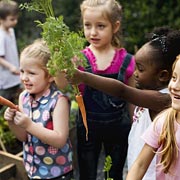 The compost should be kept moist as the vegetable regrows into another one that can, again, be harvested to eat as part of a healthy meal.
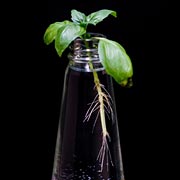 Herbs like basil, coriander, parsley, rosemary are also easy to regrow. When you’ve used most of them from your weekly shop for meals, save a few clippings from left-over stems. Clipping length will be different depending on the herb used. For example, basil clippings should be about 4 inches (100mm) long and rosemary clippings should be 2 to 3 inches (50-75mm) long. You may need to experiment a bit at first, so save a few different lengths if unsure initially.
 Another way to regrow shop-bought vegetables is to see if they have seeds inside. Tomatoes and peppers are great examples of these. So, when you’re next using them up for meals, get your child to save the seeds from things like peppers (you’d normally discard these anyway) and some seeds from a tomato — each one contains many. These too can be used to grow brand new plants and vegetables for next to nothing. It’s a little more advanced and they need more room, though. The best time to harvest tomato seeds is between summer and autumn, then plant them in spring if they’re intended for the garden.
 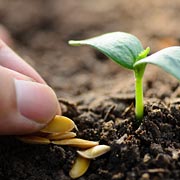 It’s similar for marrows, courgettes, pumpkins and squashes, although those need significant space (they’ll want to spread out), so may be more suitable outside once they begin to grow significantly.
 Today, we look at another condition that can affect children: dyscalculia. This is a brain-related learning difficulty that affects both children and adults. Somewhere between 3 and 6 percent of the UK population is affected and some may also have other conditions like
  The Diagnostic & Statistical Manual of Mental Disorders (DSM-5), as used by psychiatric professionals in the U.S., describes how those with developmental dyscalculia have problems making sense of numbers, memorising arithmetic facts and making fluent and accurate maths calculations. Clearly, such limitations can have a profound effect, including in terms of education because maths affects so many learning topics.
 They may be more prone to continue using their fingers to count, long after their peers have moved onto mental arithmetic.
 Use of lined or graph paper can sometimes help too, so as to keep corresponding numbers in line and steps more clear.
 A: Dyspraxia is a condition that impairs a person’s ability to fully control motor functions, for example coordinating movement and physical activity. Children with dyspraxia may therefore appear ‘clumsy’. It can be anything from mild to more severe and obviously the mildest variety is hardest for parents to spot. Dyspraxia is classified as a type of Developmental Co-ordination Disorder (‘DCD’) and indeed healthcare professionals may use this terminology for the condition. They may also refer to it as a Specific Developmental Disorder of Motor Function, or ‘SDDMF’ for short.
 A: Dyspraxia can be something people were simply born with (that’s the developmental kind) or, for others, it was acquired through brain trauma, for example because of an injury or stroke. In this post, however, we’ll concentrate on developmental dyspraxia in relation to children.
 Children with dyspraxia may also have difficulty:
 A: Due to its nature and particularly in regard to its negative effect on sports and active play skills, dyspraxia can lead to children becoming less naturally fit, with all the ramifications that brings.
 A: Once diagnosed, tailored help is available for children with dyspraxia/DCD, from a variety of specialists. Support may be needed throughout childhood, including at pre-school and school, to help optimise ability around physical tasks and processes. As every child’s challenges will be unique, a support plan will be customised for each. Support may involve a variety of professionals who will aim to help the child overcome their difficulties as far as possible and to build their confidence, self-esteem, abilities etc. The specialists involved may include paediatric occupational therapists, paediatricians, clinical psychologists, educational psychologists or a mixture of several. All will work in tandem, of course, with childcare professionals, teachers, parents and guardians.
 A: Dyslexia is categorised as a Specific Learning Difficulty (‘SpLD’) in the UK. Most notably, it adversely affects a person’s ability to read because of a general difficulty in learning or interpreting letters, words, and often other symbols. Indeed, it was originally referred to as word blindness. There are other ways dyslexia affects people, though, and we’ll come to those in more detail later.
 A: As it’s a genetic issue, people are born with the condition. Symptoms may begin to show as a child matures during early learning and beyond. As it is something that’s inherent in their physiology, it is not something people can ‘grow out’ of. It is a lifelong issue. It can be managed, of course, with various approaches available to mitigate its effects as far as possible.
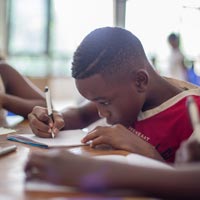 They may also have trouble remembering words.
 A: Being unable to easily read will hold children back. If they have trouble reading, they will have trouble reading text books for any of the topics at school. Some classroom and test situations will become more stressful for them as a result.
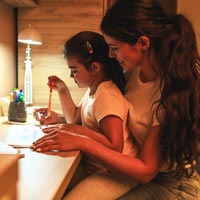 One-to-one help from a teacher, teaching assistant or specialist;
 A: Childcare professionals will be on the look-out for any signs of possible dyslexia (see the list of possible signs earlier in this article). Parents can do the same and, because the condition is thought to be inherited, this is particularly important if one or more of the child’s parents is dyslexic. Signs can be hard to spot, but the earlier the condition is recognised, the sooner the child can be helped. If any signs of possible dyslexia are suspected, supervising adults and childcare professionals can initially monitor the child’s progress going forwards. They can also assess the child against benchmarks for the same age or peer group in case it’s just a temporary blip in their learning progress.
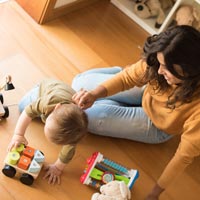 In short, allowing a young child the tools, time and guidance to play regularly will help them with many elements of their learning and development — and that’s critical. Indeed, that’s why good nurseries, pre-schools and childcare settings encourage children to learn in large part through play.
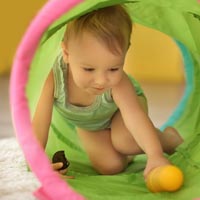 Firstly, it’s fun for them and is an essential part of a happy childhood;
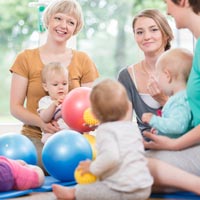 Play also keeps children mentally fit as it stimulates their senses, brains and sense of adventure;
 All in all, play fosters both physical development and mental development in children. Doing so sets them up with improved physical and cognitive abilities as well as incredibly important life skills. Combined, this also sets under-fives up beautifully for school-readiness when they leave pre-school.