One of the first things people should look at before settling on a nursery for their children is the latest Ofsted Report for the setting. After all, it’s wise to check the professional and independent feedback that such reports contain. On this note, parents and carers considering Treetops Nursery for their baby or child will be pleased to know that we passed with flying colours in its most recent Ofsted Report. Although it’s been a while since that report, we thought we’d share the outcome so that parents can see for themselves just how good a nursery Treetops is. In fact, we were rated as a good nursery in every single category and we’ll cover that in more detail below.
Treetops Nursery passed with flying colours
First, though, we’ll explain a little about Ofsted and what they checked for during the most recent inspection.
Ofsted
Ofsted is the UK’s official “Office for Standards in Education, Children’s Services and Skills”. As such, they inspect services providing education and skills and regulate services that care for children and young people. This includes childcare settings, nurseries and pre-schools throughout the UK. Ofsted inspections and the resulting reports are part of this governance.
 What they checked
- The Ofsted Inspector observed the quality of the teaching during various activities, both inside and outdoors. They then appraised the impact of this on the children’s learning.
- During the inspection, the Inspector talked with both staff and children, at appropriate moments throughout her visit, to further her insight.
- Joint observations were also undertaken by the Ofsted Inspector, in tandem with the nursery manager and room leaders.
- Meetings were also held with the nursery manager and area manager.
- Documentation was checked by the Inspector. This included ensuring that nursery staff were checked in terms of suitability, training and qualifications for the jobs they were undertaking. These checks would also, of course, ensure that all staff had been checked and deemed suitable for working with children.
- The Inspector also spoke with parents during her visit as well as reading through written feedback supplied by them. All such comments and feedback were taken into consideration when putting together the final Ofsted Report.
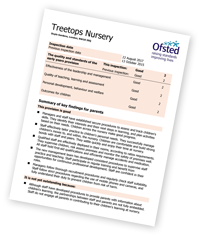
Glowing feedback indeed! The Ofsted Report goes on to look at each one in more detail and we take a look at the lovely feedback below:
“Effectiveness of the leadership and management is good”
As you can see by the Report’s findings, our new management at the time of the last Inspection had already had a good, positive impact on the nursery and the quality of the services delivered. Here’s what Ofsted reported:
“ Staff, parents and children’s voices form an integral part of the nursery’s improvement plans, which include the support from the local authority. Qualified staff show a good capacity to continuously improve the services for children. Parents and staff praise the positive impact on children, following the immediate changes made by the new management. All children, including those who have special educational needs and/or disabilities, are safe and make rapid progress.”
It’s good to see Ofsted recognising the rapid progress made by children with special educational needs and/or disabilities at the setting.
On safety and safeguarding of children under our care, the report says:
“The arrangements for safeguarding are effective. Staff take part in ongoing safeguarding training and confidently promote the child protection policy. They know the possible signs of abuse and the procedures to follow for the referrals of concerns.”
“Quality of teaching, learning and assessment is good”
The high quality of staff, teaching activities (both indoors and outside), learning resources and the overall educational programme were all applauded in the Ofsted Report:
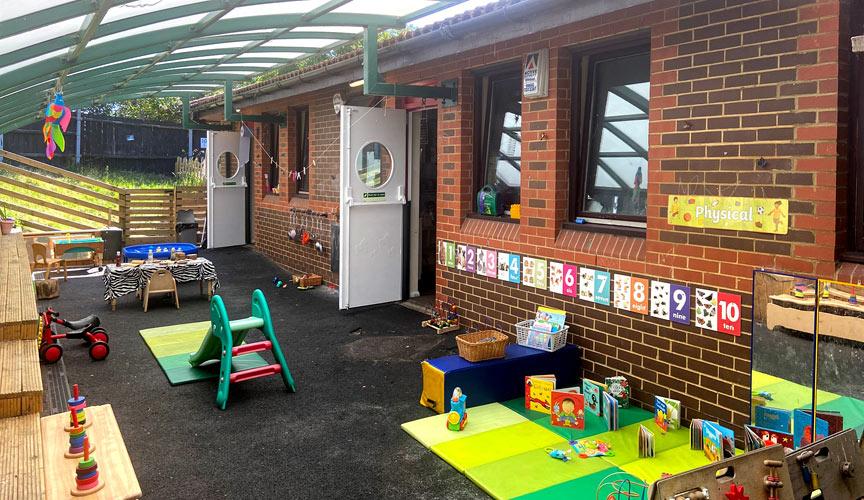
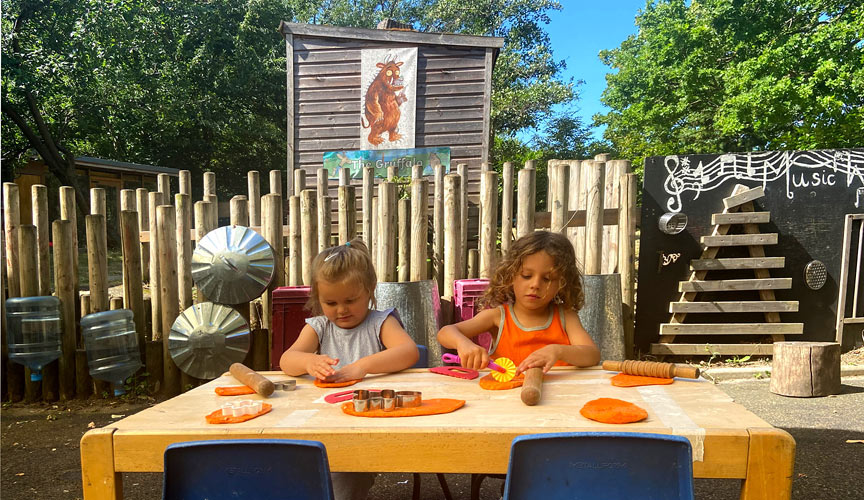
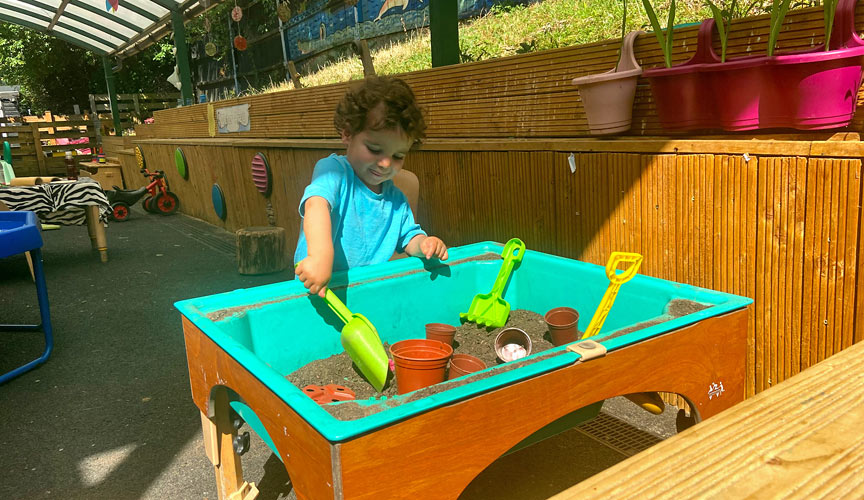
“Qualified staff confidently promote the areas of learning across the nursery and children access resources to start their own play. Children also enjoy a good balance of adult-led activities, which effectively promotes their learning needs and interests. Younger children love singing and confidently request their favourite songs, using simple language, props and the song cards created by staff. Staff plan well-targeted educational programmes for children with plenty of indoor and outdoor learning opportunities. Older children find natural resources in the ‘secret garden’. They are challenged by staff to describe and research the resources in books.”
Their final conclusion in this part of the report was that “Teaching is good and children progress well”, which is a great result.
“Personal development, behaviour and welfare are good”
The Ofsted Report also praised the nursery staff in regard to the way they handle children’s personal needs, also encouraging good manners and behaviours:
“Staff obtain detailed information from parents about children’s personal requirements and maintain close partnerships with them to promote their ongoing needs … They engage parents to support their emotional needs.” Also they said children themselves “are independent and learn to manage their [own] personal needs.”
The Inspector also recognised that children at the setting are accepting of others and well-behaved. The Ofsted Report states: “Staff are good role models and teach children to be polite and accepting of others” … also saying … “Children are praised and behave well … Children learn about each other and explore the varied cultures across their community.”
In regard to healthy eating and healthy lifestyles, the report said: “Staff effectively promote children’s health. Meals are nutritious and children enjoy plenty of outdoor play and exercise every day.” It’s great to see our work in this regard recognised officially.
“Outcomes for children are good”
A good outcome for every baby or child is, perhaps, the most important goal any nursery or childcare setting can achieve. So, it’s great to see that the good outcomes for children under our care have been officially recognised by Ofsted. The Report says:
“Children learn through play. They are enthusiastic and motivated to learn, fully enjoying the exciting activities available to them. For example, younger children enjoy playing with plastic balls. They learn to name colours, count and roll the balls to their peers while saying their names. Older children collect objects of different sizes from the garden and try to balance them on scales. They are confident communicators and use sophisticated mathematical language to describe what they are doing. They are effectively challenged to develop their skills across all areas of learning. Children make good progress, given their starting points, and gain the necessary skills to successfully start school.”
Gaining the necessary skills to successfully start school is also a key goal for any good nursery. It’s therefore great to see Ofsted recognising how well Treetops Nursery prepares children so they are ‘school-ready’ by the time they leave us.
The Next Ofsted Report
Generally speaking, Ofsted inspections and reports tend to happen every four years or so. This means that Treetops is due a new one in the near future, although it may be held up a little due to the COVID-19 restrictions in place at time of writing. Gov.uk’s Ofsted page reports that, for now, inspections will be carried out remotely until after the February half term although, of course, that could change. We’ll keep you posted with an update, though, the moment any new Ofsted Report becomes available. With the nursery’s goal of continual improvement, we are aiming to do even better next time. So, watch this space!
A Nursery Place for your Child in Willesden, NW10
If you are searching for high quality nurseries in Willesden or a good nursery near Willesden Green, Harlesden or Kensal Green, please do consider Treetops Nursery. As you can see from the most recent Ofsted Report, we offer very high quality childcare for babies and young children. If you’d like to explore the possibility of your baby or child attending Treetops Nursery, please get in touch via one of the following options. We’ll be happy to help further.

 Healthy, Balanced Meals for Children
 The Benefits of Healthy Eating for Children
 What Should Children be Eating & Drinking?
 Portion Sizes
 Healthy Eating at the Nursery

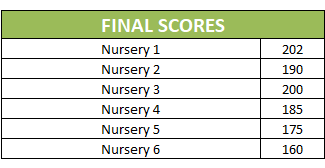 We’ve split the handy checklist into a handful of appropriate sections. Sections covered include location, convenience, fees, whether the nurseries accept Government-funded childcare schemes or vouchers, what’s included in the price, facilities and equipment, an appraisal of the nursery itself and staff,
 The Adverse Effects of Too Little Sleep
 You can see that they require a little less sleep as they grow progressively older.
 A Peaceful, Quiet, Bedroom Set-up
 Stimulants should be avoided before bedtime. Drinks containing caffeine will keep children awake, so none should be given any time after lunch time, ideally. Caffeine can be found in some fizzy drinks and energy drinks, as well as in tea and coffee. Warm milk, in contrast, will be non-stimulating and actually quite soothing. Be careful not to give drinks too close to bedtime, though, and remember to get the child to visit the loo before going to bed, otherwise they may need to wake up in the night to pay a visit.
 Children Visiting in the Night
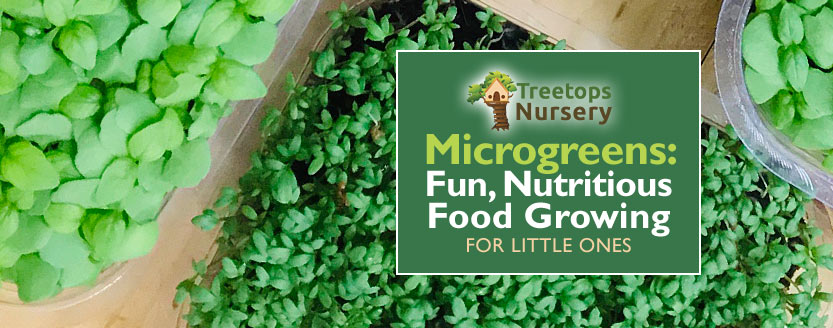
 There is one class of edible plant that can be grown all year round and is perfect for kids to grow indoors, for example on a windowsill. Some types of this food will sprout in as little as a week. What’s more, it’s tasty and highly nutritious. Growing it is super-easy and a perfect way to keep kids entertained, educated about nature and eating healthily. It’ll also be a welcome addition to mealtimes for the whole household.
 Here are just a few examples of plants that make suitable microgreens and can easily be grown by children indoors:
 Fennel — just 10 days after first sprouting, leaves from young fennel seedlings will give a pleasant aniseed tang to dishes like pasta salads, risottos, soups and even stuffing.
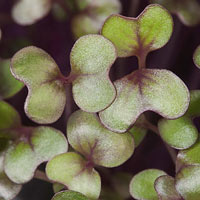 Red Cabbage micro leaves have one of the highest Vitamin C concentrations of any microgreen. They also contain Vitamin K, potassium, beta-carotene, calcium, magnesium and antioxidants. As with many of the microgreens, many top chefs use them as an attractive and tasty garnish. They can be sprinkled over soups, salads, grilled vegetables, stews and cooked meats. After sowing, they take only days to appear.
 Your child will need to fill the chosen containers with compost, not quite to the top. Tap it to level the soil, then pat it down just a little to firm it. Some gardeners also indent the compost where the seeds will go. The seeds then need to be carefully placed or lightly sprinkled into the indented areas. It’s important that your child spaces the seeds out so there is no clumping, otherwise significant problems can occur (the crop might get diseased or even completely fail). The seeds don’t need to be covered but a light dusting of sieved compost will keep them in place while allowing light to get through. The seeds then need to be lightly watered. It’s best for your child to do this part outside, just to avoid potential mess indoors, taking care not to over-water nor to wash the seeds away. A way to water them indoors is to simply stand the vessels in some shallow water for 30 to 60 minutes, so the compost naturally draws up the moisture.
 Once rinsed, the tender young micro leaves can be enjoyed in meals by the whole family. They’ll add often exquisite tastes and textures to meals as well as adding much-needed vitamins and minerals to the family diet. That’s even more important for growing toddlers and preschoolers, of course. And, throughout the growing journey, the children will absolutely love seeing the new shoots grow into young plants. They will have learnt new skills, had great fun getting to know more about nature and have a real sense of achievement. Chances are, too, that they will love the taste of the micro leaves.


 claiming Universal Credit, tax credits³ or Tax-Free Childcare;
 Have you heard about the free childcare funding that’s available for eligible 2-year-olds? Do you want to learn more? If you are a parent who is looking to work, or perhaps to get back into work after starting a family, then this could be a perfect solution for you and your toddler. Under a Government scheme, approved nurseries, pre-schools and childcare providers in England can supply up to 15 hours per week of childcare for eligible 2-year-olds. It’s an absolute no-brainer, so we thought we’d put together this comprehensive guide to tell you everything you need to know.


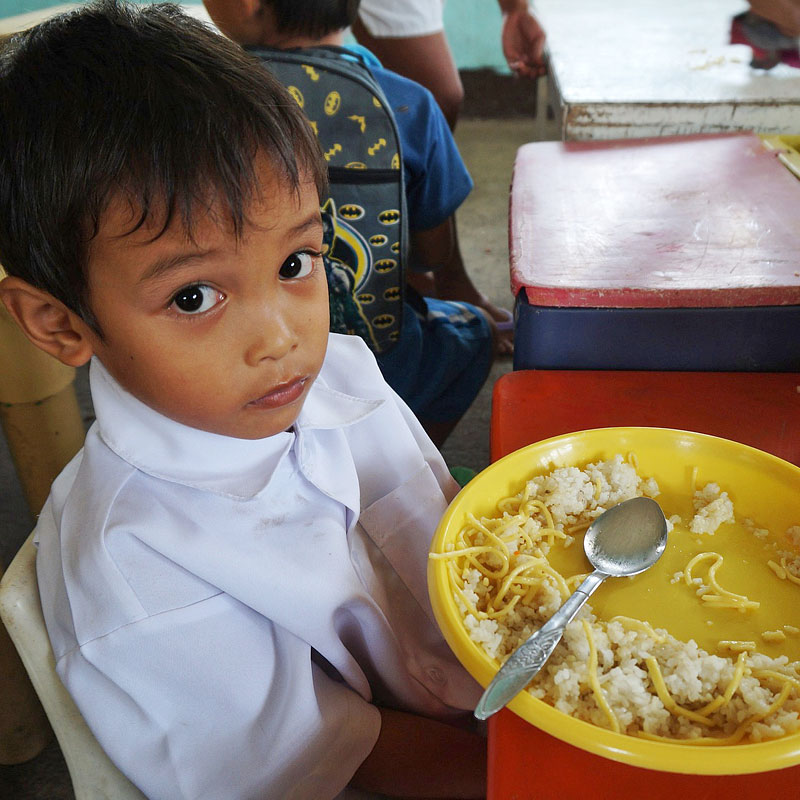 If your child’s refusal to eat certain foods is making you stressed, take a moment to realise that this is perfectly normal. Indeed, many toddlers go through such a phase in their earliest years. If they’ve recently been breastfeeding, they will have become accustomed to a sweet-tasting diet. When they are weaned onto solids and suddenly become mobile, it’s natural for them to be wary of eating just anything — it’s so new to them. In fact, refusing some foods is an instinctive survival mechanism. It’ll take time for them to become accustomed to new tastes and textures.
 Involving children in planning meals, shopping for food and even preparing the food can encourage them to eat more food types. For example, they could help when picking vegetables or have a say in how food is displayed on the plate. You’ll also be teaching them new things along the way.
 Using positive phases like yummy, tasty and so good when eating will help to build positivity around food. Talking about how food was prepared or how an item of fruit or vegetable grew in the garden may spark an extra level of interest in the child. Making food sound generally positive is a good approach. Remind the child how good the food will make them feel, how it will recharge them and make them energised and ready for the day’s tasks. For example, you could explain how they will have lots of energy for the swings, or park or when playing ball etc.
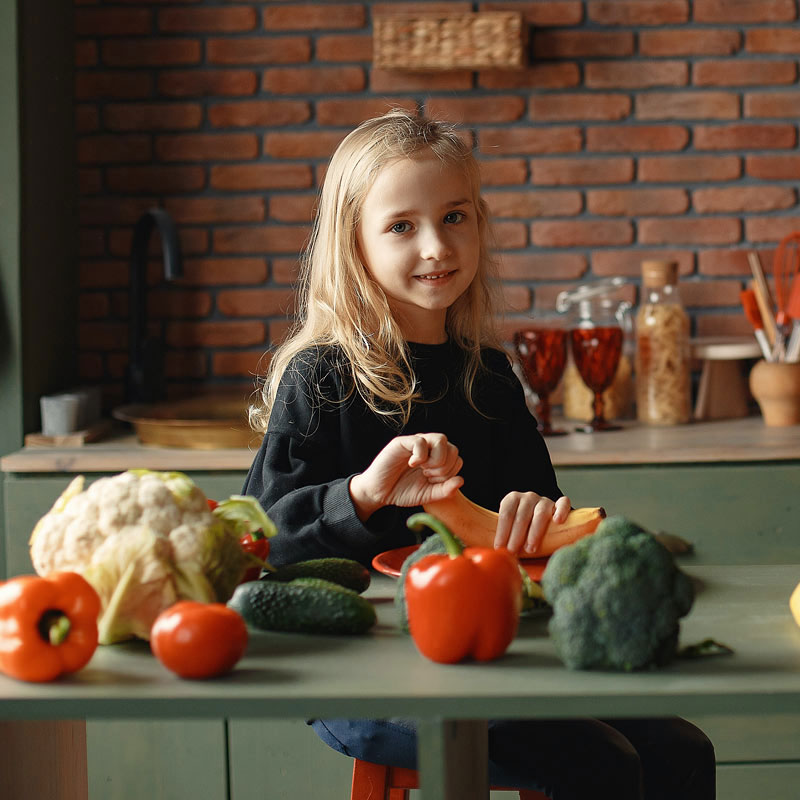 We confess that we’ve been known to employ a few of the tips above at the nursery! Healthy eating is very much in our DNA at Treetops Nursery in Willesden, NW10, so we do all we can to ensure that our under-fives are getting the right sized portions, healthy food and a good dietary balance. Our in-house chef prepares tasty meals using only the best, most fresh ingredients. All special dietary needs are catered for, including vegetarian and vegan options when required. Children attending all day will receive three high quality meals plus a snack in the morning and another in the afternoon. Drinking water is available on tap all day. All food and drink is covered within our standard fees.