

 In this, the first of two new posts relating to the very youngest of children, we’re looking at teething, including when it usually happens and what to do about it as a parent or carer. Teething can be stressful for parents and a painful time for babies, so it’s important to read the signs correctly and act accordingly.
Teeth in Humans
Let’s start at the beginning. Humans usually have two sets of teeth during their lives:
- First, children get their Milk Teeth at a very early age (more details follow below). These are also sometimes referred to as Baby Teeth, Primary Teeth or Deciduous Teeth. We’ll stick with Milk Teeth for the purpose of this article.
- Later, on average by the age of twelve, come the more permanent adult teeth. These are known as the Permanent Teeth or Secondary Teeth. We’ll refer to them simply as adult teeth in this article.
Fun fact: some reptiles grow thousands of new teeth in their lifetimes. Not so for humans, though!
Apart from their two sets of teeth, humans do not ‘grow’ further teeth as they are lost or fall out. This is common to most mammals.
Milk Teeth
 Most babies are born with no teeth showing at all. However, there are exceptions and it’s reasonably common to be born with one or more milk teeth already visible. In total, babies will have a total of 20 milk teeth; 10 in the upper jaw and 10 in the lower. These are already there at birth as they will have grown during the embryonic stage. However, they are hidden within the gums in most cases.
Teething
On average, babies’ teeth start to ‘erupt’ (protrude through the gums) at the age of about 6 months. The process of erupting is known as teething. The order of appearance of milk teeth usually goes something like this:
| Age c. 6-10 months | The lower central incisors appear |
| Age c. 8-12 months | The upper central incisors appear |
| Age c. 9-13 months | The top lateral incisors appear |
| Age c. 10-16 months | The bottom lateral incisors appear |
| Age c. 13-19 months | The 1st upper molars appear |
| Age c. 14-18 months | The 1st lower molars appear |
| Age c. 16-22 months | The upper canines appear |
| Age c. 17-23 months | The lower canines appear |
| Age c. 23-31 months | The lower 2nd molars appear |
| Age c. 25-33 months | The upper 2nd molars appear |
The milk teeth have usually all appeared through the gums by the age of 2½ to 3 although, as with everything, some cases may differ.
Teething lasts for about 8 days for each of the teeth erupting. Half of that is before the tooth appears and the other half is once it’s first appeared through the gum. In between, a bluey-grey colouration may be visible on the gum where the tooth is about to erupt. This is known as an ‘eruption cyst’ and is quite normal, usually disappearing on its own. As the largest of the teeth, molars tend to cause the most discomfort for babies/toddlers when coming through.
Symptoms of Teething
 Teething can cause babies pain and discomfort during the 8 days in which each tooth moves from under the gum to erupting through it. Apart from the obvious signs of the tooth erupting and perhaps a bluey-grey eruption cyst colouration in the gums, symptoms of teething include:
- drooling (dribbling);
- sore-looking gums where teeth are moving to the surface;
- possible flushing of the cheeks;
- a tendency for the baby to chew things more than usual (including biting their own hands, toys etc.);
- the baby may also rub their ears;
- the baby might be more tearful than usual.
If you are at all concerned about the health and wellbeing of your child, consult a doctor or call the NHS on 111
How to Help Babies Through Teething
 There are a number of ways parents and carers can help babies and toddlers through their teething. One or more of the following may help:
- Teething rings are available commercially and little ones may find some comfort from chewing on them. At the very minimum, they will distract from any pain and discomfort. Some may suggest cooling the rings in the fridge (never the freezer) but it’s important to follow instructions and keep safety considerations to the fore at all times — for example never tie a teething ring around a child’s neck.
- Once they reach the age of 6 months or more, try giving them healthy fruit like apple or carrot pieces to chew on. The NHS also suggests breadsticks and crusts of bread but they should only chew any of these things under close adult supervision, to ensure that they are staying safe and not choking.
- Distraction can also be a useful tactic, so playing with your baby/toddler or comforting them will help.
- Using a clean finger, gently massaging their gums can also be of some comfort.
- Also ensure that you wipe your child’s face if they have been drooling. This will help to prevent rashes and soreness.
An Important Word About Teething Gels
 According to the NHS, there is no evidence that commercially-available teething gels (including homeopathic ones) are effective, so they recommend that non-medical options like those above should be tried first.
However, they say that should parents/carers decide to try teething gels anyway, they should ensure that they are specifically made for young children and are licensed for use in the UK. Teething gels should really be purchased through pharmacies (ideally not the Internet*), who may be able to give further advice. The NHS also states that, “General oral pain relief gels are not suitable for children”.
* The NHS states that:
“Some unlicensed homeopathic gels advertised on the internet have been linked to serious side effects.”
More information on the NHS warnings is available here.
Teeth Brushing & Registering with a Dentist
As soon as the first tooth has come through, parents or carers should begin to the process of regularly brushing and should also register the child with a local dentist. It is quite a big topic in itself, so we have written a separate guide all about brushing children’s teeth (here).
Shedding Milk Teeth
 When the time is right (usually by the age of 6) the milk teeth will start to shed. Normally, this is done in a particular order: first the two lower front teeth and the two upper front teeth will fall out (these are called the central incisors). Next to fall are the lateral incisors, then the first molars, the canines and finally the second molars.
By the age of twelve, most people will have shed all of their milk teeth although some people retain one or more right into adulthood (usually a molar if so). Adults have a total of 32 adult teeth, comprising 8 incisors, 4 canines, 8 premolars and 12 molars (4 of which are the Wisdom Teeth). Each of these has a particular shape and function, although we’ll not delve further in view this article is primarily about infant teeth. It’s worth noting, however, that adult teeth are less white than milk teeth as they have thicker enamel and the ‘dentin’ layer beneath it is yellow in colour.
We hope this guide to teething has been useful to you and look forward to following up with more articles and guides in the near future. Perhaps bookmark this article or our main blog page and feel free to share on social media (share buttons can be found below this article).
Searching for Nurseries in Willesden, Willesden Green, Kensal Green, Harlesden, or NW10?
If you are looking for nurseries in Willesden, or near Willesden Green, Kensal Green or Harlesden around the London NW10 area, we might be able to help. Treetops Nursery offers high quality childcare for babies, toddlers and under-fives in Doyle Gardens in Willesden, London NW10. We’ll be happy to discuss a nursery place for your baby or child while a few places are still available. Please choose a contact method below if this is of interest:
 The Adverse Effects of Too Little Sleep
 You can see that they require a little less sleep as they grow progressively older.
 A Peaceful, Quiet, Bedroom Set-up
 Stimulants should be avoided before bedtime. Drinks containing caffeine will keep children awake, so none should be given any time after lunch time, ideally. Caffeine can be found in some fizzy drinks and energy drinks, as well as in tea and coffee. Warm milk, in contrast, will be non-stimulating and actually quite soothing. Be careful not to give drinks too close to bedtime, though, and remember to get the child to visit the loo before going to bed, otherwise they may need to wake up in the night to pay a visit.
 Children Visiting in the Night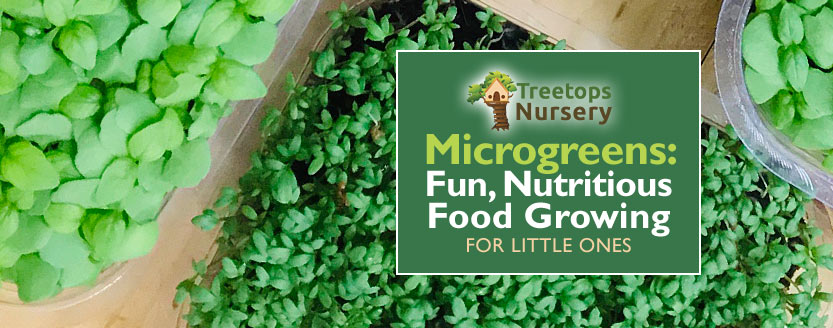
 There is one class of edible plant that can be grown all year round and is perfect for kids to grow indoors, for example on a windowsill. Some types of this food will sprout in as little as a week. What’s more, it’s tasty and highly nutritious. Growing it is super-easy and a perfect way to keep kids entertained, educated about nature and eating healthily. It’ll also be a welcome addition to mealtimes for the whole household.
 Here are just a few examples of plants that make suitable microgreens and can easily be grown by children indoors:
 Fennel — just 10 days after first sprouting, leaves from young fennel seedlings will give a pleasant aniseed tang to dishes like pasta salads, risottos, soups and even stuffing.
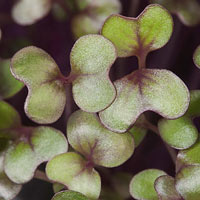 Red Cabbage micro leaves have one of the highest Vitamin C concentrations of any microgreen. They also contain Vitamin K, potassium, beta-carotene, calcium, magnesium and antioxidants. As with many of the microgreens, many top chefs use them as an attractive and tasty garnish. They can be sprinkled over soups, salads, grilled vegetables, stews and cooked meats. After sowing, they take only days to appear.
 Your child will need to fill the chosen containers with compost, not quite to the top. Tap it to level the soil, then pat it down just a little to firm it. Some gardeners also indent the compost where the seeds will go. The seeds then need to be carefully placed or lightly sprinkled into the indented areas. It’s important that your child spaces the seeds out so there is no clumping, otherwise significant problems can occur (the crop might get diseased or even completely fail). The seeds don’t need to be covered but a light dusting of sieved compost will keep them in place while allowing light to get through. The seeds then need to be lightly watered. It’s best for your child to do this part outside, just to avoid potential mess indoors, taking care not to over-water nor to wash the seeds away. A way to water them indoors is to simply stand the vessels in some shallow water for 30 to 60 minutes, so the compost naturally draws up the moisture.
 Once rinsed, the tender young micro leaves can be enjoyed in meals by the whole family. They’ll add often exquisite tastes and textures to meals as well as adding much-needed vitamins and minerals to the family diet. That’s even more important for growing toddlers and preschoolers, of course. And, throughout the growing journey, the children will absolutely love seeing the new shoots grow into young plants. They will have learnt new skills, had great fun getting to know more about nature and have a real sense of achievement. Chances are, too, that they will love the taste of the micro leaves.


 claiming Universal Credit, tax credits³ or Tax-Free Childcare;
 Have you heard about the free childcare funding that’s available for eligible 2-year-olds? Do you want to learn more? If you are a parent who is looking to work, or perhaps to get back into work after starting a family, then this could be a perfect solution for you and your toddler. Under a Government scheme, approved nurseries, pre-schools and childcare providers in England can supply up to 15 hours per week of childcare for eligible 2-year-olds. It’s an absolute no-brainer, so we thought we’d put together this comprehensive guide to tell you everything you need to know.


 Back in July, we wrote a detailed article about
  hat’s incredible when you bear in mind that the children studied were, on average, just 3¼ years old. An 8 month skills boost is therefore equivalent to an extra fifth of their entire lives! Such an impact, at a time when they’re right in the middle of their pre-school years, is incredibly important for them. After all, this is a critical time in their learning and development — and one that will have a profound impact on the rest of their lives.


 Research has repeatedly proved that parents have an enormous impact on their children’s education, particularly if they’re involved right from the early years. That impact can be hugely positive if the parents get it right. In this article, we explore the many benefits of parental involvement in children’s education, how parents can support their children from nursery to university, improve their success, maximise their personal and career potentials and thereby give children the very best start in life. That is priceless.
 Benefits for the child include:
 Better prospects:
 Modern curriculum-based text books are extremely good these days, so many parents will be able to pick even unfamiliar topics up and guide a child if they’ve not been able to find their way on a particular homework task or piece of research.
 Like most nurseries and educational settings, Treetops Nursery hosts parent evenings which allow nursery staff and parents to discuss the child’s learning and development in detail. It’s also a great opportunity to make sure all parents are up to date on everything happening at the nursery, in particular in regard to their own children. Parent evenings typically happen twice a year but, at Treetops, we’re always available to speak to parents, so please don’t feel you have to wait until a parent evening to discuss anything about your child.