Most people have heard of dyslexia, however the disorder known as dyspraxia is less well known. If you are a parent with children, dyspraxia is something to be aware of, so that you can look out for the possible signs. Today we’ll answer commonly asked questions about the disorder.
Q: What is Dyspraxia?
 A: Dyspraxia is a condition that impairs a person’s ability to fully control motor functions, for example coordinating movement and physical activity. Children with dyspraxia may therefore appear ‘clumsy’. It can be anything from mild to more severe and obviously the mildest variety is hardest for parents to spot. Dyspraxia is classified as a type of Developmental Co-ordination Disorder (‘DCD’) and indeed healthcare professionals may use this terminology for the condition. They may also refer to it as a Specific Developmental Disorder of Motor Function, or ‘SDDMF’ for short.
The condition affects four times as many males as it does females and can also sometimes be found in those with ADHD, dyslexia and autism. However, as with dyslexia, dyspraxia has nothing to do with the level of a person’s intelligence.
Q: What Causes Dyspraxia?
 A: Dyspraxia can be something people were simply born with (that’s the developmental kind) or, for others, it was acquired through brain trauma, for example because of an injury or stroke. In this post, however, we’ll concentrate on developmental dyspraxia in relation to children.
The reasons for developmental dyspraxia are unclear, however children who were born prematurely or underweight are more prone to the disorder. There is also some evidence to suggest that it can be inherited within families who are prone to the condition. Sadly, children are also more likely to have the disorder if their mothers drank alcohol or took illegal drugs during pregnancy.
Q: What Are the Signs of Dyspraxia?
A: Children with dyspraxia may appear clumsier than their peers. They may also be less naturally good at sport and indeed may even avoid it. Picking up other skills may also be a challenge. Concentration and attention spans can be adversely affected. Following instructions can be a challenge.
Babies may exhibit unusual body positions and have trouble learning to roll or sit. Toddlers under one may adopt strange postures. Infants may be slower at learning to crawl too.
 Children with dyspraxia may also have difficulty:
- independently dressing, buttoning clothes and tying laces;
- walking, jumping, skipping and running;
- using writing instruments to draw and write;
- mastering the use of cutlery to feed themselves;
- catching, kicking and throwing balls;
- stacking objects and playing with some toys;
- carrying out everyday physical tasks and activities in the most appropriate order.
All of this is because they are less able to coordinate movements and physical actions as well as they would without the condition.
One knock-on effect of this is that they may not reach their development milestones as soon as others in their age group. Indeed, this can be an indicator to watch out for. However, DCD/dyspraxia is often hard to diagnose until children are at least 4 to 5 years of age.
Q: What Are the Knock-On Effects of Dyspraxia?
 A: Due to its nature and particularly in regard to its negative effect on sports and active play skills, dyspraxia can lead to children becoming less naturally fit, with all the ramifications that brings.
The effects of dyspraxia can also make children less able to make new friends. This may make them feel a bit left out, ‘different‘ and therefore feel rather isolated. This can, in turn, also lead to lower self-esteem, reduced confidence, frustration and even behavioural problems.
Q: How is Dyspraxia Professionally Diagnosed?
A: If you think your child may be dyspraxic, contact your GP to ensure the problem is not caused by something entirely different. Also liaise with the Special Educational Needs Co-ordinator (‘SENCo’) at your child’s childcare setting, pre-school or school, for advice and support. The GP or SENCo may refer your child to a specialist healthcare professional, for example an occupational therapist and/or paediatrician. Assessment and diagnosis is often carried out by both. Learn more about diagnosing dyspraxia and DCD in children here.
Q: Is there a Cure for Dyspraxia?
A: Although a tiny number of children who are deemed to be a little clumsy may grow out of it, there is no cure for dyspraxia for the vast majority. Some children’s challenges will improve with age, however the earlier symptoms are spotted, the sooner parents, carers, guardians and professionals can help the affected child.
Q: How Can We Help Children with Dyspraxia?
 A: Once diagnosed, tailored help is available for children with dyspraxia/DCD, from a variety of specialists. Support may be needed throughout childhood, including at pre-school and school, to help optimise ability around physical tasks and processes. As every child’s challenges will be unique, a support plan will be customised for each. Support may involve a variety of professionals who will aim to help the child overcome their difficulties as far as possible and to build their confidence, self-esteem, abilities etc. The specialists involved may include paediatric occupational therapists, paediatricians, clinical psychologists, educational psychologists or a mixture of several. All will work in tandem, of course, with childcare professionals, teachers, parents and guardians. Learn more about treatment for dyspraxia here.
Q: How Does Treetops Nursery Help Dyspraxic Children?
A: As well as looking out for possible first signs of dyspraxia/DCD — and any other disorder — we will work with any specialists to play our part in any tailored support plans for affected children under our care. This may involve task- and process-oriented activities to help children overcome difficulties. As well as working with any guidance from the specialists it will, of course, involve strategic cooperation with parents, carers or guardians involved in the child’s care. In this way, everyone will be working to the same aims, using the same, shared support plans. Our Special Educational Needs Co-Ordinator (‘SENCo’) will also be a crucial part of formulating this plan and, indeed, one of their key roles is to promote equality of opportunity irrespective of any special educational needs or disorders (‘SEND’). In ensuring this, every child achieves personal bests in every area, becoming the very best version of themselves.
Looking for Outstanding Nurseries in Willesden, Near Harlesden, Kensal Green or Willesden Green?
 Treetops Nursery School is a popular nursery and pre-school in Willesden, NW10 (near Harlesden, Kensal Green and Willesden Green). We offer outstanding childcare for babies and children aged up to 5, Monday to Friday. To express an interest, ask a question, book a tour or pre-register for a place, please get in touch:
 A: Dyslexia is categorised as a Specific Learning Difficulty (‘SpLD’) in the UK. Most notably, it adversely affects a person’s ability to read because of a general difficulty in learning or interpreting letters, words, and often other symbols. Indeed, it was originally referred to as word blindness. There are other ways dyslexia affects people, though, and we’ll come to those in more detail later.
 A: As it’s a genetic issue, people are born with the condition. Symptoms may begin to show as a child matures during early learning and beyond. As it is something that’s inherent in their physiology, it is not something people can ‘grow out’ of. It is a lifelong issue. It can be managed, of course, with various approaches available to mitigate its effects as far as possible.
 They may also have trouble remembering words.
 A: Being unable to easily read will hold children back. If they have trouble reading, they will have trouble reading text books for any of the topics at school. Some classroom and test situations will become more stressful for them as a result.
 One-to-one help from a teacher, teaching assistant or specialist;
 A: Childcare professionals will be on the look-out for any signs of possible dyslexia (see the list of possible signs earlier in this article). Parents can do the same and, because the condition is thought to be inherited, this is particularly important if one or more of the child’s parents is dyslexic. Signs can be hard to spot, but the earlier the condition is recognised, the sooner the child can be helped. If any signs of possible dyslexia are suspected, supervising adults and childcare professionals can initially monitor the child’s progress going forwards. They can also assess the child against benchmarks for the same age or peer group in case it’s just a temporary blip in their learning progress.
 Going from living a life at home with the family to suddenly being thrust into a new environment full of strangers would be daunting enough for anyone. It’s especially true, though, for under-fives starting at nursery or pre-school. So, the key is to prepare children for the change and, of course, for the nursery/pre-school to be very welcoming and accommodating. Here, we’ll take a look at some of the things that will help toddlers and preschoolers transition as smoothly as possible.
 Once you’ve selected
  Helping toddlers with toilet training, personal hygiene, speaking, communicating, following rules, tidying up after themselves, hanging up their coat, fastening shoes, packing their backpack and suchlike will also help them with their self-confidence once they start nursery. If they are a little more independent and able when they start, they will naturally also be a little more self-confident and relaxed at the new setting.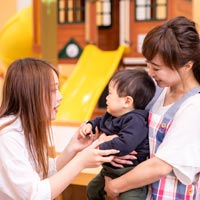
 Our childcare professionals have many years of childcare experience, so helping children settle in is second nature to us. Rest assured, we will ensure that your child has fun, feels relaxed and is safe at all times. We will ensure that this milestone in their lives goes as smoothly as possible and that their time at the nursery/pre-school is a resounding success.