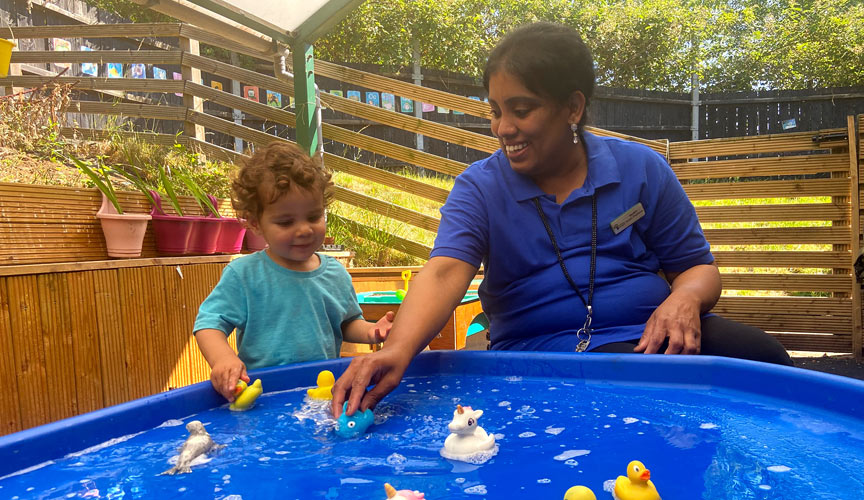

The Benefits of Exercise
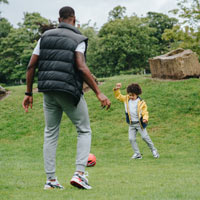
In this article, we’ll look at the benefits of regular exercise to children and why it’s so essential, particularly for children under five. Exercise is shown to have a huge range of benefits to humans, and this is especially true for children, as we’ll see.
Students who are physically active tend to have better grades, school attendance, cognitive performance (e.g., memory), and classroom behaviours.2
Some additional benefits of exercise — including a few that may surprise you — are:
 Less likelihood of developing cardiovascular disease including hyperlipidemia1;
- Less likelihood of strokes1;
- Less likelihood of developing high blood pressure1;
- Less likelihood of developing cancer (including breast, colon, endometrial and lung cancer)1;
- Less likelihood of developing glucose intolerance and insulin resistance1;
- Less likelihood of developing Type 2 diabetes1;
- Less likelihood of developing low bone density and subsequent osteoporosis1;
- Less likelihood of becoming obese1;
- An improvement to the symptoms of depression and anxiety;
- Stronger muscles and bones;
- Improved physical fitness;
- Maintenance of a healthier weight;
- The creation of nerve connections in the developing brain, which aids learning;
- Improved social skills and peer relationships through communal exercise and sport activities;
- Healthier levels of self-confidence;
- Improved coordination and motor skills;
- A better quality of sleep.
Last but not least, exercise and physical activity can be great fun! Indeed, that is the key to encouraging children to exercise. Exercise doesn’t have to be a dull, repetitive chore. In contrast, it can and should be thoroughly good fun and great entertainment if approached in the right way. For example, as part of a game, sport activity or physical ‘challenge’.
Higher physical activity and physical fitness levels are associated with improved cognitive performance (e.g., concentration, memory) among students.3
With the NHS reporting that one in every five UK children are overweight or — worse — obese before they even start school, exercise is a critically important issue. If we can get children into good exercise and healthy eating habits in their early years, they’re statistically more likely to maintain healthy weights and to generally be more healthy as they grow towards adulthood.
Exercise Recommendations for Toddlers & Preschoolers
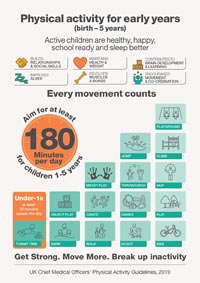 UK chief medical officers and the NHS each recommend4 a minimum of 3 hours (180 minutes) of physical activity every day for toddlers (1 to 2) and preschoolers (aged 3 to 4). The three hours should be spread over the course of the day and the NHS suggest a mixture of both light activity and more energetic physical activity, both indoors and outdoors (weather conditions permitting). A useful infographic4 can be downloaded via the thumbnail image shown.
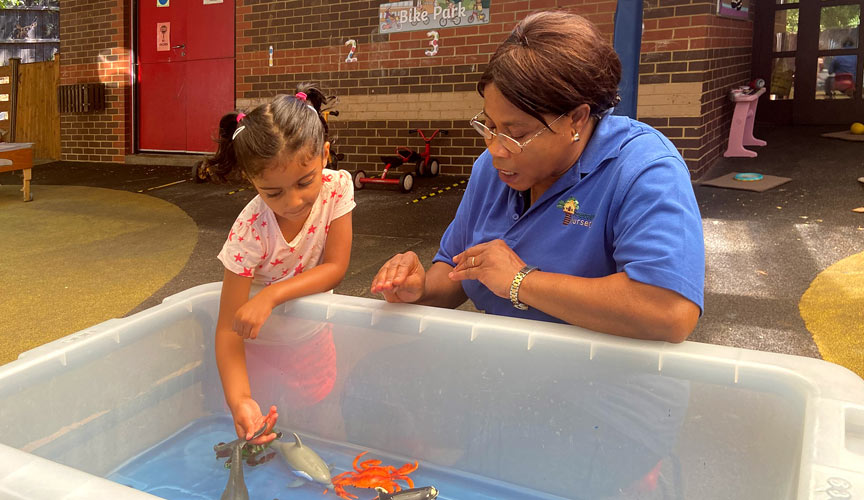
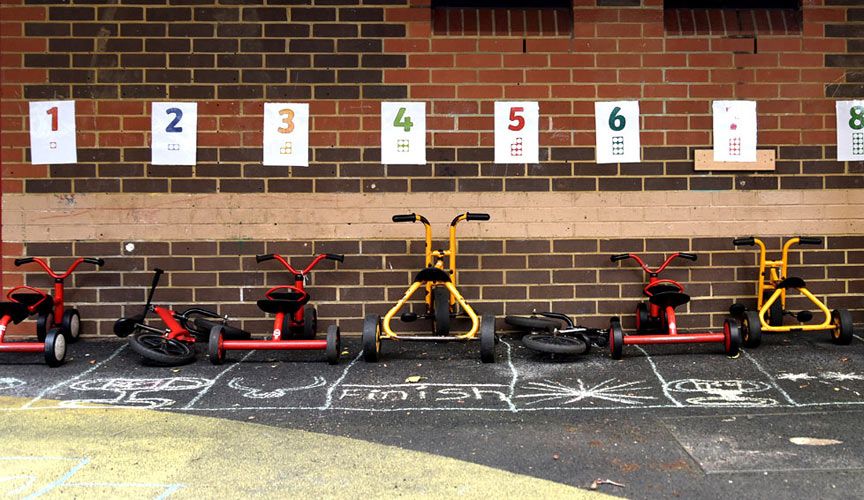
Toddler exercise can include light activities such as standing up and generally moving around, rolling around and playing. Skipping, hopping, jumping and running activities would be suitable as the more energetic types of exercise from time to time each day. Active play can include climbing, cycling, ball games and playing in water. Supervised closely, of course.
Preschoolers aged 3 to just under 5 can do any of the above but it can be a little more vigorous, at times, as they’re a little more sure-footed and coordinated by that age.
Exercise for Babies
Parents, childcare professionals and carers should encourage babies to be active at periods throughout the day. Crawling is good (supervised and safe, of course). If they haven’t yet mastered crawling, they can move about on the floor as best they can (again under close supervision), moving limbs around, pushing, pulling, reaching, grasping and so on. The UK Chief Medical Offices’ guidelines suggest at least 30 minutes spread across the day.
There is now a large body of evidence that the amount of physical activity in the Under-5 period influences a wide range of both short-term and long-term health and developmental outcomes.4
Exercise & Physical Activity at Treetops Nursery, Willesden
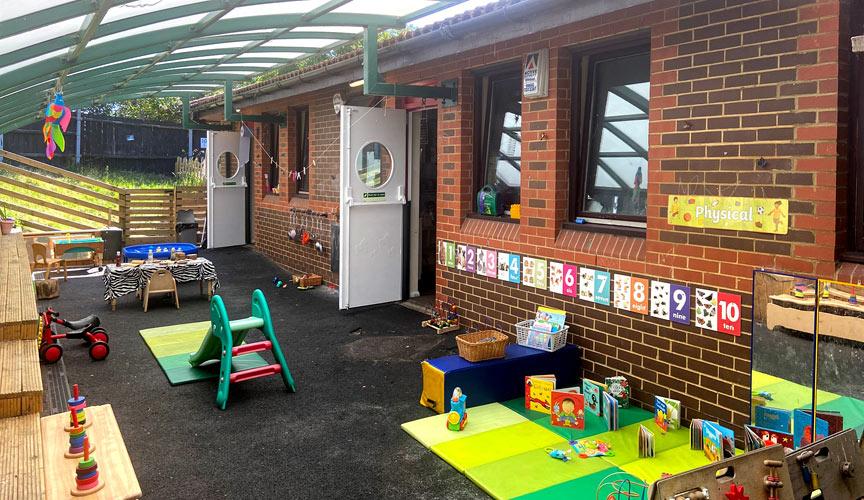
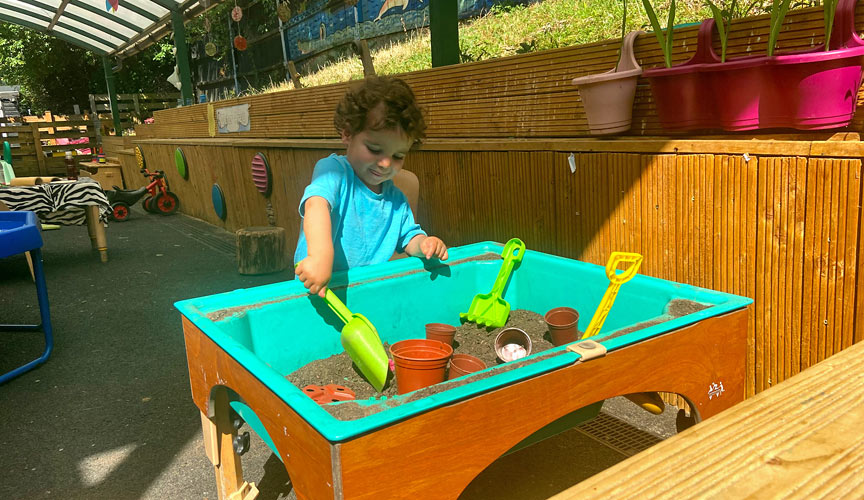
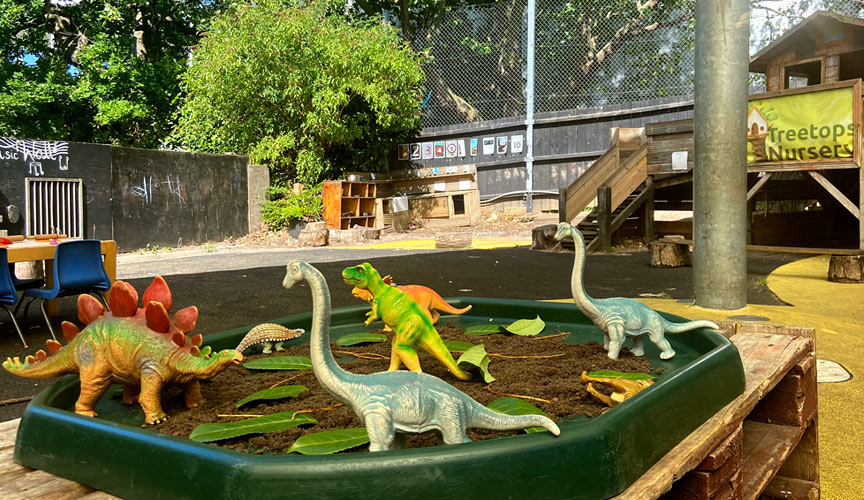
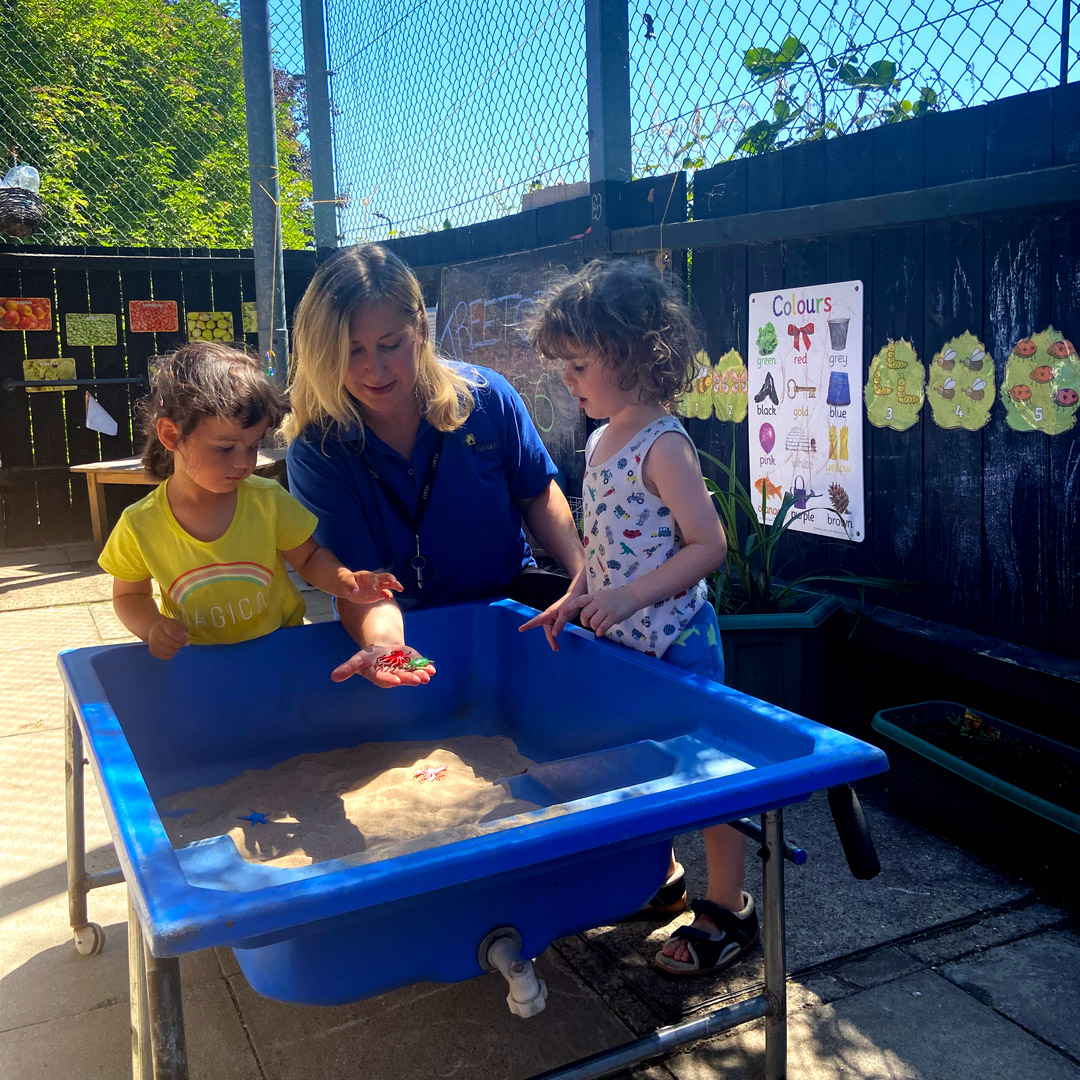
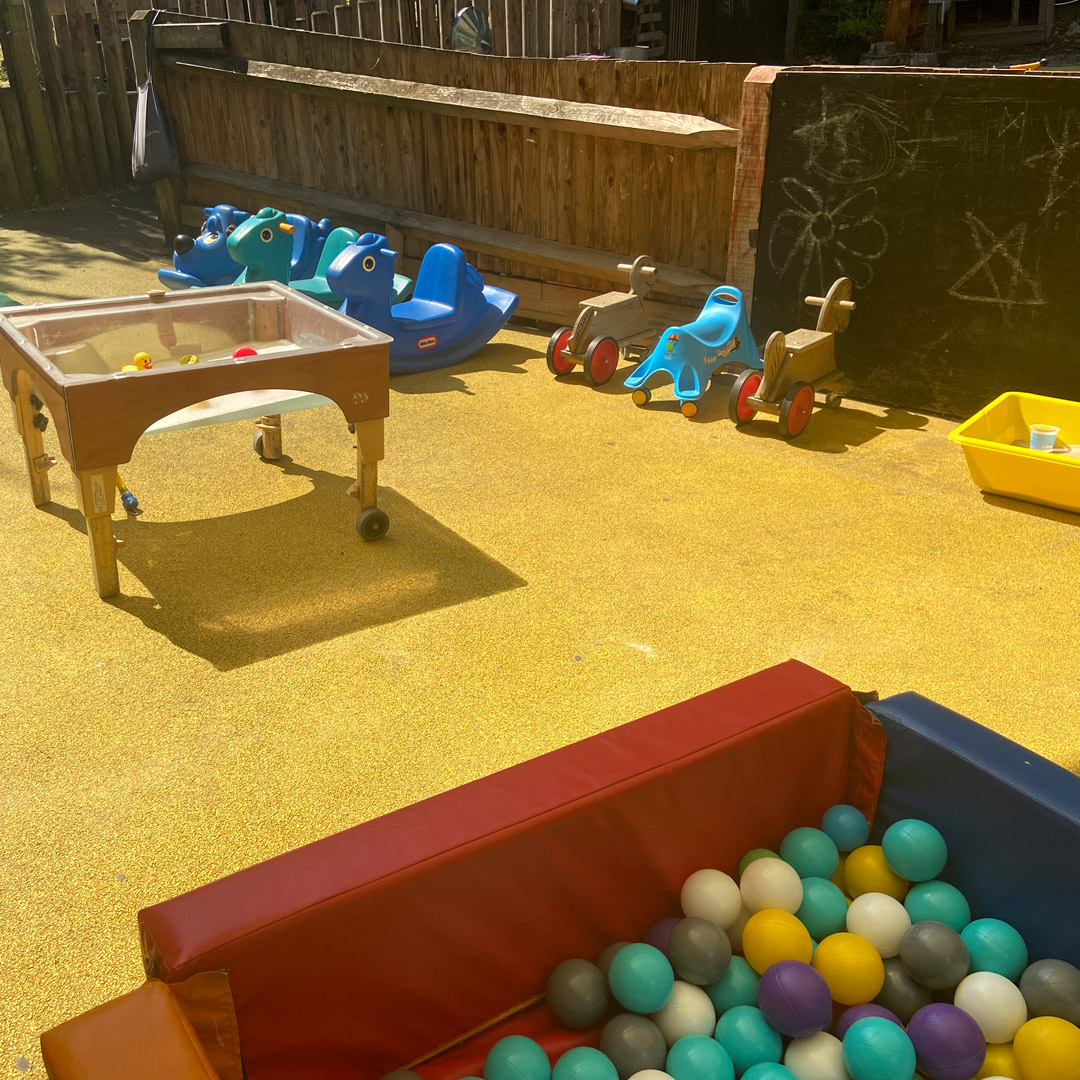
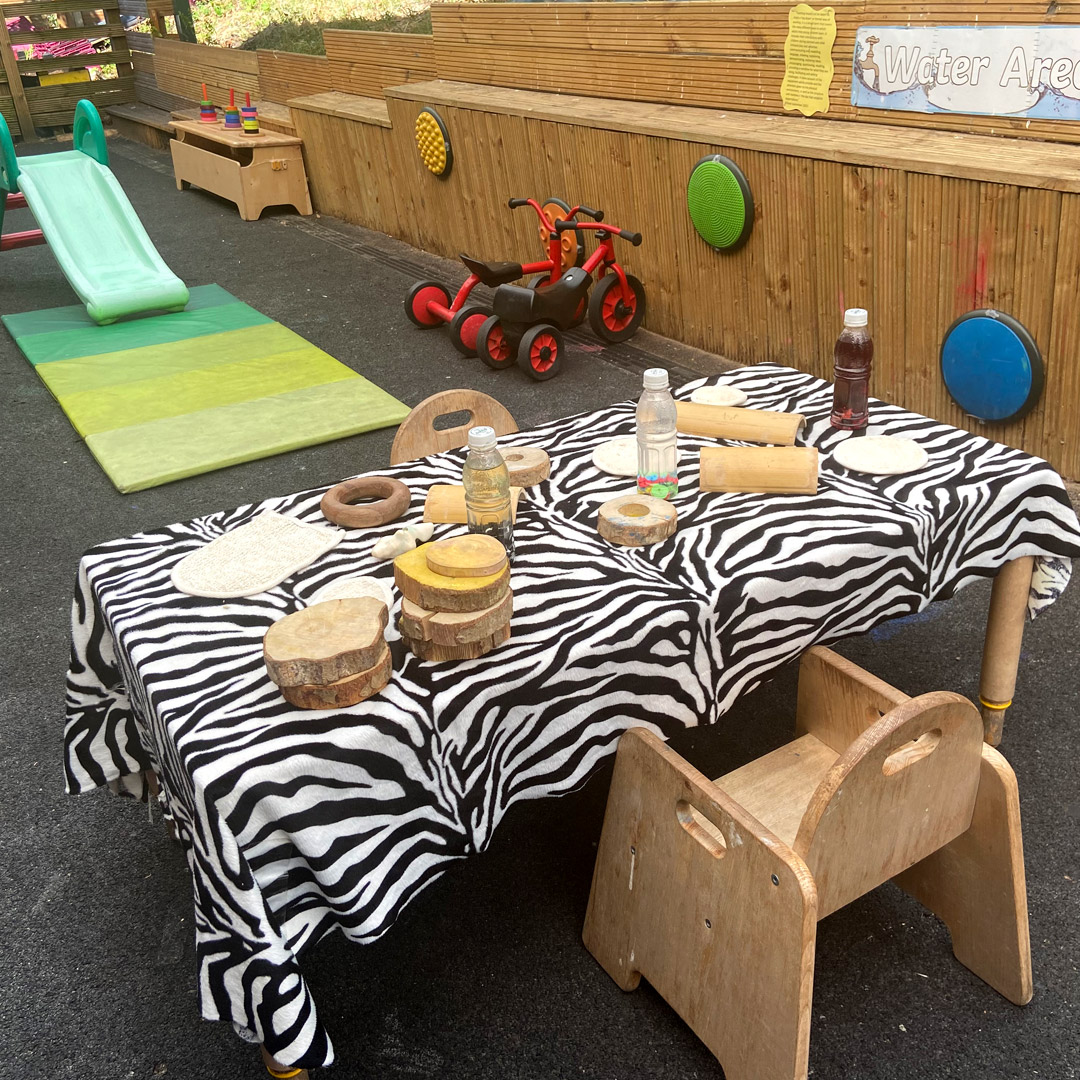
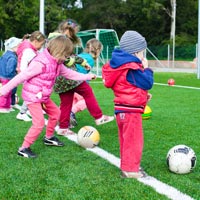 Knowing how important it is, we take exercise very seriously at Treetops Nursery in Willesden. However, we ensure that it’s always fun and exciting, so that children enjoy it, naturally. Physical movement and active play are all part of the nursery’s EYFS curriculum, in fact. As well as carefully planned physical activities, active play, games and challenges tailored to the needs and abilities of each individual child, the nursery has a huge range of toys, games, equipment and interactive facilities. Together, these naturally encourage physical movement and exercise. The programme is pre-planned by staff and a ‘Key Person’ allocated to each child. In this way, every child accomplishes an optimal early years education and well-rounded developmental opportunities, achieving personal bests along the way in readiness for the time when they’ll move on to school.
Are you Looking for Nursery Places in Willesden, Harlesden, Kensal Green or NW10?
At time of writing we have a few places available at Treetops Nursery in Willesden, near Harlesden and Kensal Green in London’s NW10. Do get in touch while they’re still available if you are looking for the highest quality childcare for babies, toddlers and under-five children in those areas. We’ll be happy to discuss nursery places with you …
References:
1. Physical Activity Guidelines Advisory Committee. 2018 Physical Activity Guidelines Advisory Committee Scientific Report. Washington, DC: US Dept of Health and Human Services; 2018.
2. Centres for Disease Control and Prevention. The Association Between School-Based Physical Activity, Including Physical Education, and Academic Performance. Atlanta, GA; Centres for Disease Control and Prevention, US Department of Health and Human Services; 2010.
3. Michael SL, Merlo C, Basch C, et al. Critical connections: health and academics. Journal of School Health. 2015;85(11):740–758.
4. UK Chief Medical Officers’ Physical Activity Guidelines, September 2019.

 If you are living in England and are bringing up one or more children there, you are usually eligible to receive Child Benefit. This is a payment made by the Government to help with the costs associated with bringing up children. It’s made to those responsible for bringing up children up to 16 or, if they’re still in approved education or training, 20 years of age. This guide will go through the key facts around what you’re entitled to and eligibility.
 Additional Benefits of Child Benefit
 Reasons You May Not Be Eligible
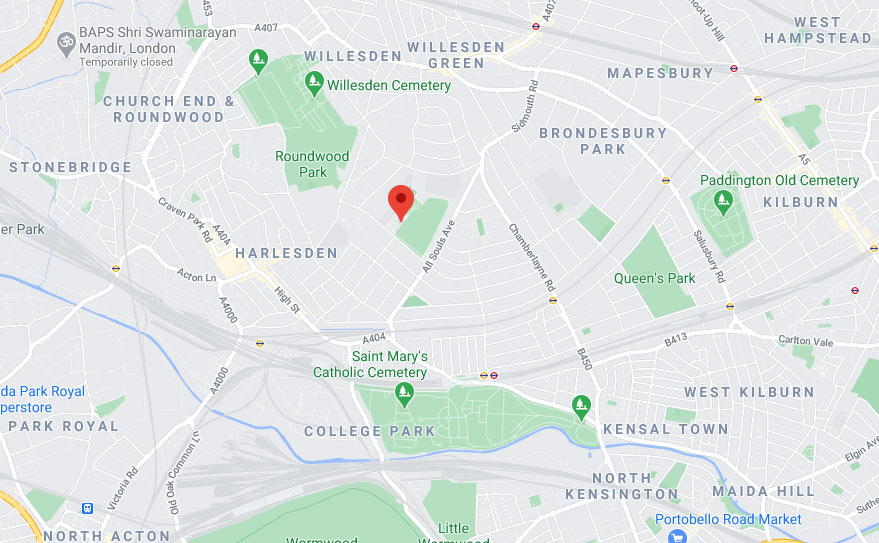
 Childcare in Willesden, near Willesden Green, Harlesden & Kensal Green, NW10
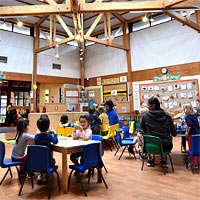
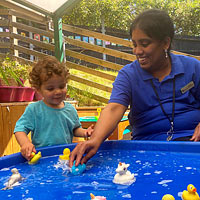 Equipment and facilities at the nursery are excellent, both indoors and outside. An excellent
 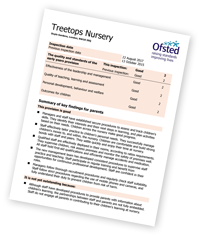 A Good Ofsted Report
 Children’s individual needs, including for those with special needs, are well catered-for at Treetops Nursery, Willesden. In fact, a learning and development programme is tailored to the needs, strengths, weaknesses and interests of each individual child. A ‘Key Person’ is also assigned to each child and this staff member continually monitors their progress, making changes to the tailored programme as appropriate as time goes by. Parents and carers are kept fully informed of children’s progress, including via a journal that is kept for each child. Parents are also free to add notes to the progress journal so a more complete picture is maintained for every child.

 Healthy, Balanced Meals for Children
 The Benefits of Healthy Eating for Children
 What Should Children be Eating & Drinking?
 Portion Sizes
 Healthy Eating at the Nursery
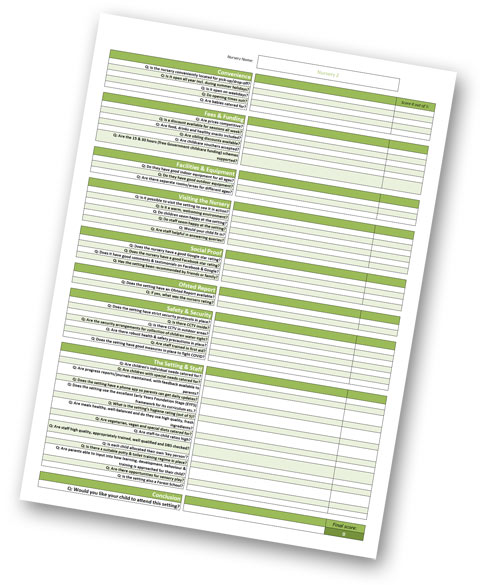
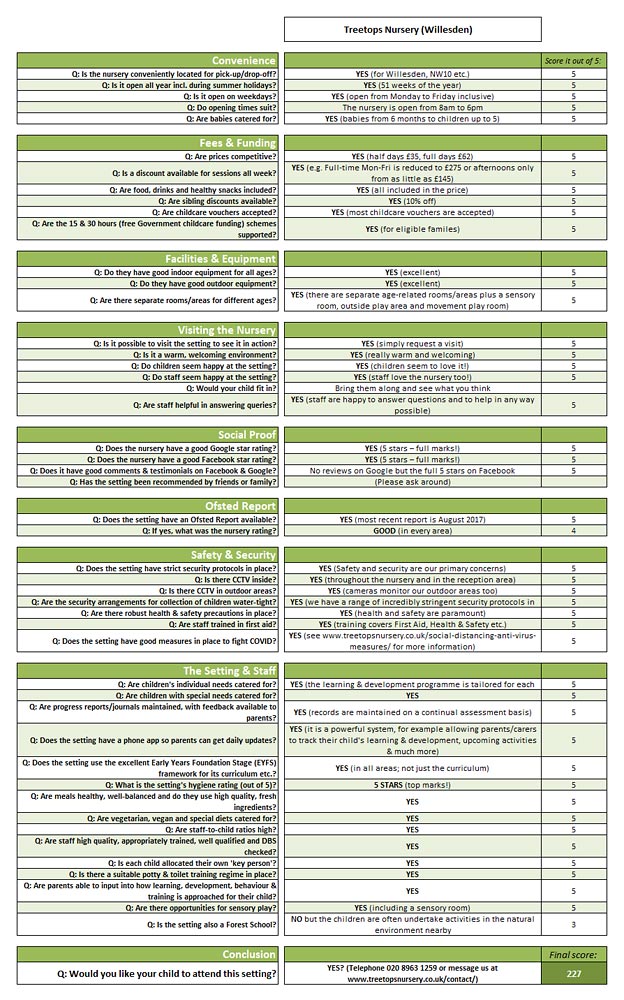
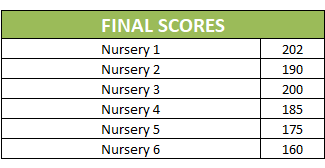 We’ve split the handy checklist into a handful of appropriate sections. Sections covered include location, convenience, fees, whether the nurseries accept Government-funded childcare schemes or vouchers, what’s included in the price, facilities and equipment, an appraisal of the nursery itself and staff,
 The Adverse Effects of Too Little Sleep
 You can see that they require a little less sleep as they grow progressively older.
 A Peaceful, Quiet, Bedroom Set-up
 Stimulants should be avoided before bedtime. Drinks containing caffeine will keep children awake, so none should be given any time after lunch time, ideally. Caffeine can be found in some fizzy drinks and energy drinks, as well as in tea and coffee. Warm milk, in contrast, will be non-stimulating and actually quite soothing. Be careful not to give drinks too close to bedtime, though, and remember to get the child to visit the loo before going to bed, otherwise they may need to wake up in the night to pay a visit.
 Children Visiting in the Night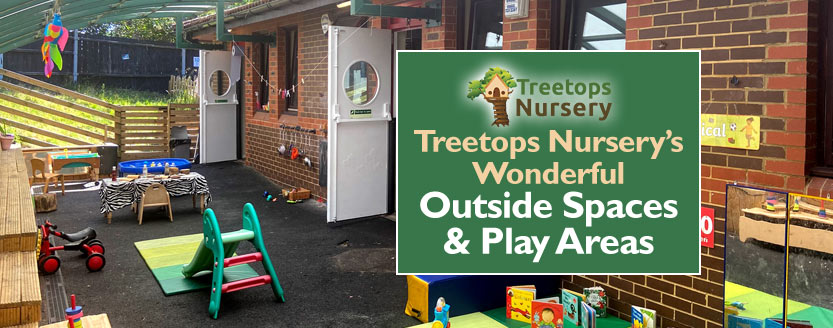
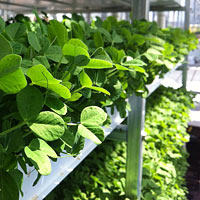 There is one class of edible plant that can be grown all year round and is perfect for kids to grow indoors, for example on a windowsill. Some types of this food will sprout in as little as a week. What’s more, it’s tasty and highly nutritious. Growing it is super-easy and a perfect way to keep kids entertained, educated about nature and eating healthily. It’ll also be a welcome addition to mealtimes for the whole household.
 Here are just a few examples of plants that make suitable microgreens and can easily be grown by children indoors:
 Fennel — just 10 days after first sprouting, leaves from young fennel seedlings will give a pleasant aniseed tang to dishes like pasta salads, risottos, soups and even stuffing.
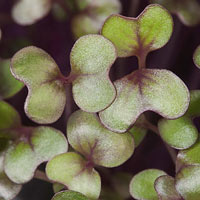 Red Cabbage micro leaves have one of the highest Vitamin C concentrations of any microgreen. They also contain Vitamin K, potassium, beta-carotene, calcium, magnesium and antioxidants. As with many of the microgreens, many top chefs use them as an attractive and tasty garnish. They can be sprinkled over soups, salads, grilled vegetables, stews and cooked meats. After sowing, they take only days to appear.
 Your child will need to fill the chosen containers with compost, not quite to the top. Tap it to level the soil, then pat it down just a little to firm it. Some gardeners also indent the compost where the seeds will go. The seeds then need to be carefully placed or lightly sprinkled into the indented areas. It’s important that your child spaces the seeds out so there is no clumping, otherwise significant problems can occur (the crop might get diseased or even completely fail). The seeds don’t need to be covered but a light dusting of sieved compost will keep them in place while allowing light to get through. The seeds then need to be lightly watered. It’s best for your child to do this part outside, just to avoid potential mess indoors, taking care not to over-water nor to wash the seeds away. A way to water them indoors is to simply stand the vessels in some shallow water for 30 to 60 minutes, so the compost naturally draws up the moisture.
 Once rinsed, the tender young micro leaves can be enjoyed in meals by the whole family. They’ll add often exquisite tastes and textures to meals as well as adding much-needed vitamins and minerals to the family diet. That’s even more important for growing toddlers and preschoolers, of course. And, throughout the growing journey, the children will absolutely love seeing the new shoots grow into young plants. They will have learnt new skills, had great fun getting to know more about nature and have a real sense of achievement. Chances are, too, that they will love the taste of the micro leaves.

 claiming Universal Credit, tax credits³ or Tax-Free Childcare;