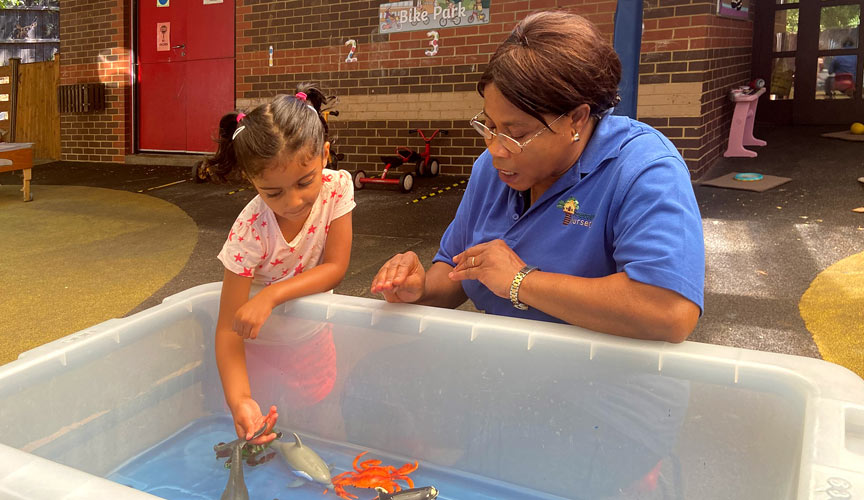
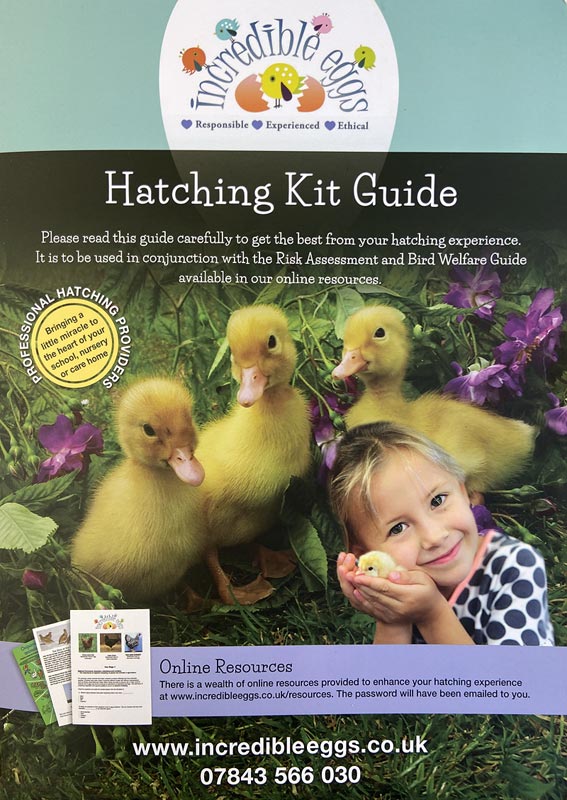
 You know both Spring and Easter have arrived when eggs and fluffy, new-born ducklings can be seen at Treetops Nursery. To explain, the nursery took delivery of a duckling ‘hatching kit’ in late March and children at this Willesden nursery have had an absolutely magical time ever since. Over the course of ten days, the children and staff watched as the little duck eggs were incubated, using specialist equipment, right in the heart of the nursery. After just a few hours, fluffy yellow ducklings had hatched, much to the delight of everyone who saw them. More details follow below …
Background — Incredible Eggs
Let’s start at the beginning. A group of 7 small, family-run farms runs a programme called Incredible Eggs. It provides education in the form of chick-hatching experiences for settings like childcare nurseries, schools and care homes across the UK. As part of this, it helps with wildlife conservation too, breeding several rare and pure poultry breeds to safeguard biodiversity and avoid losing some of the breeds forever.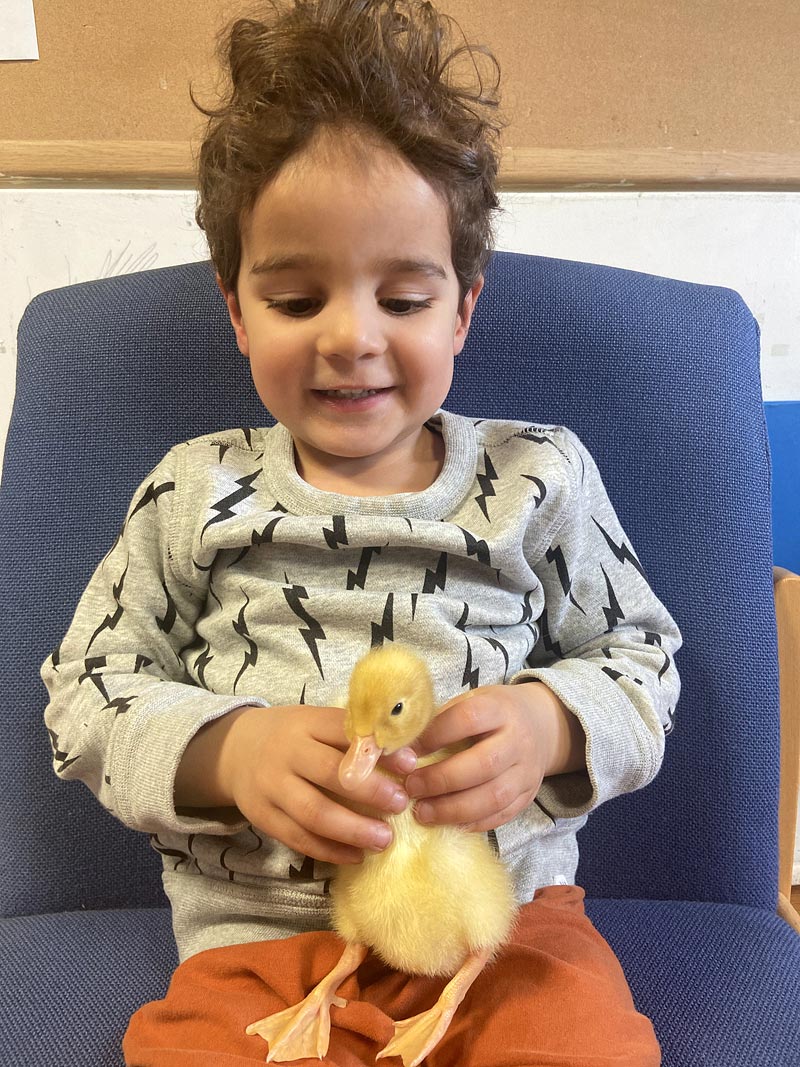 This also includes breeding and releasing the endangered ‘Grey Partridge’ back into the wild as part of the overall programme. Incredible Eggs also supports several charities and social enterprises. Animal welfare is a top priority and the programme aims to give every bird “a good life, and a life worth living.”
The Hatching Experience at Treetops Nursery
The team from Incredible Eggs arrived at the nursery, bringing with them all the equipment we would need, along with the precious duck eggs, of course. They professionally set up the equipment for us and explained to nursery staff everything we needed to know for the days ahead. Printed hatching guides, information sheets, posters and instructions were all supplied, so staff were fully briefed as to what to expect and what they would need to do to ensure the welfare, safety and health of the new arrivals once they came.
 The Little Miracles Arrived
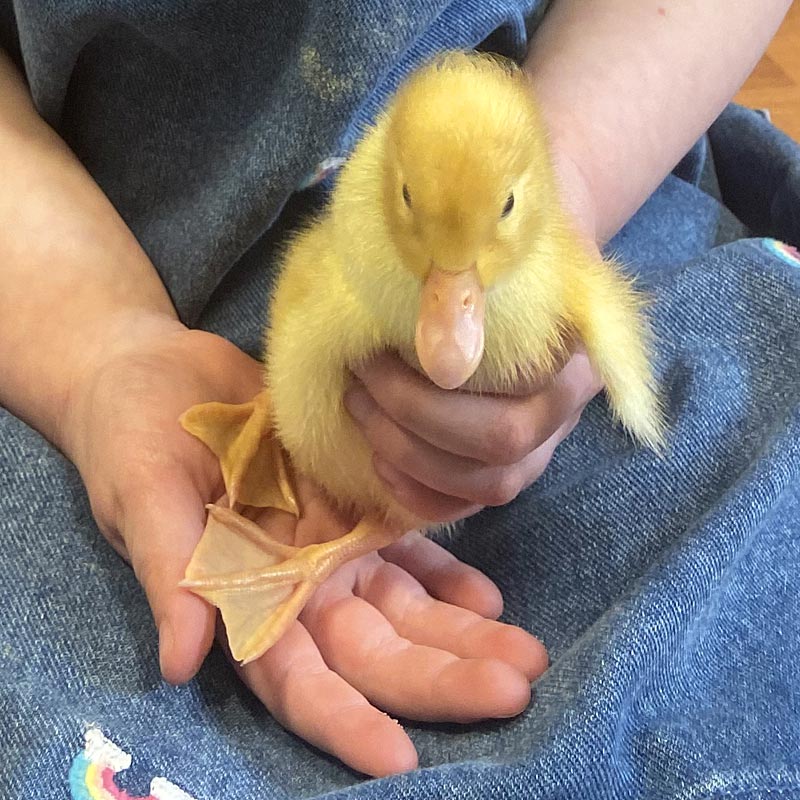
The eggs had already been partly incubated while at the farm, so in no time at all, tiny ‘cheeping’ noises could be heard from the eggs as they began pecking away at the egg shells, from the inside. It was absolutely magical for the nursery children and staff to witness the little ducklings gradually break free and enter the world for the first time.
A Magical Experience for Children & Staff
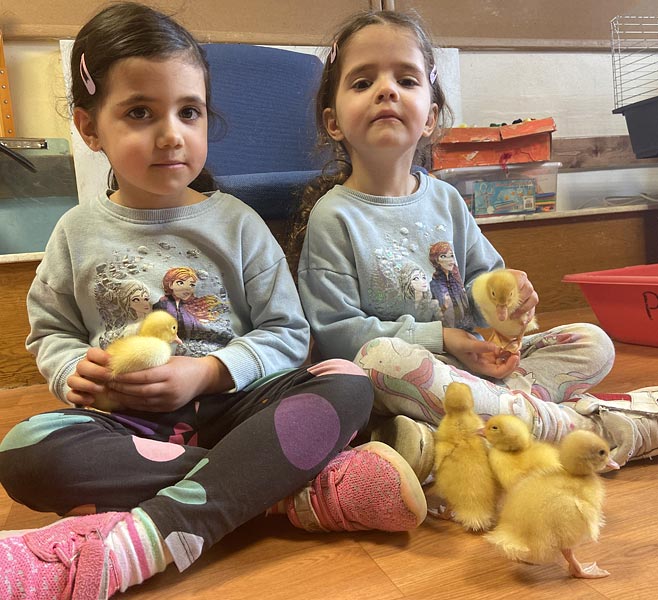
Once hatched, the ducklings were gently moved into a ‘brooding’ unit, a lovely warm area where they could dry out, gather their strength and rest for a couple of days. They settled in comfortably and were cared for, fed and watered by knowledgeable staff — all under the watchful eye of the delighted children. Once they were strong enough and adorning their beautifully soft, fluffy yellow plumage, the nursery children were allowed to gently handle the ducklings under close, adult supervision, of course. The children were told to stay calm and quiet and to avoid sudden movements, so as not to scare the ducklings. It was a dream come true for many children and their delight was clear to see. They loved seeing the ducklings learning to eat and drink in their lovely warm brooding unit. It was also fun to see them get excited when staff or children gently scratched around at their food, making them run over to peck it.
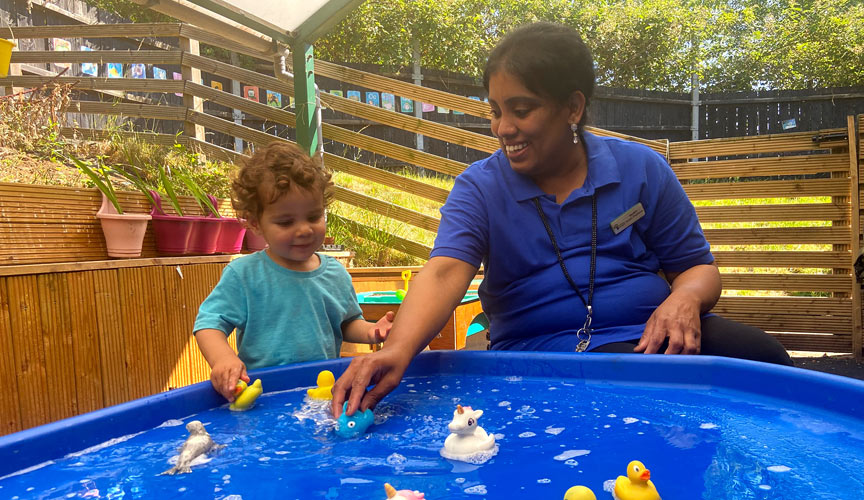
 One of the joys of having ducklings this time (the nursery had hen chicks a couple of years ago) was that ducklings absolutely love swimming! Containers of water or a paddling pool can be set up and ducklings are able to take to the water within just a couple of days of hatching. It’s great fun to watch them learn to dive and to dart around — and it’s super cute!
An Educational Experience
As well as getting to know the beautiful little creatures, the hatching experience was an educational one, touching on several areas of the EYFS curriculum. This includes, primarily, the key area of Understanding the World including learning about nature, living creatures, life and the world around the children. Learning about how animals come into the world and about how they all have their own individual needs and feelings is incredibly important.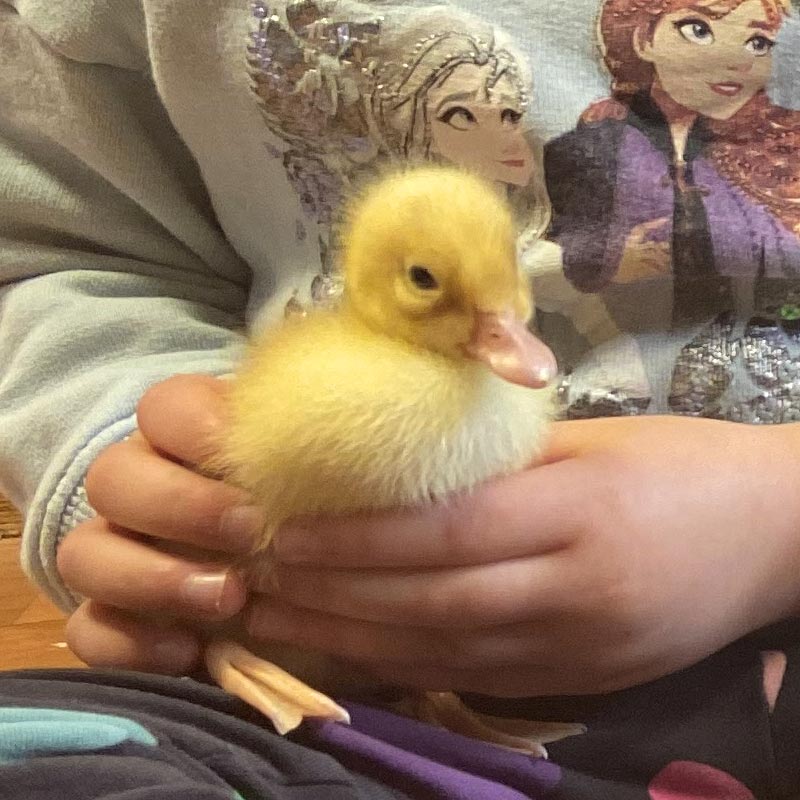 So the hatching experience also teaches children respect for nature and may even grow a long-term love of nature and the natural world within them.
“If children grow up not knowing about nature and appreciating it, they will not understand it, and if they don’t understand it, they won’t protect it, and if they don’t protect it, who will?” (Sir David Attenborough)
Returning Ducklings to the Farm
 On April 1st, the ducklings will leave Treetops Nursery and go to live back at the farm. It will be very sad to see them go, but it was always a part of the plan and, in any case, the farm is set up to care for them very well as they grow into adulthood. Looking after any creature is a huge responsibility, so it’s good to know that the ducklings will be in just the right environment and will be cared for by professionals. The nursery looks forward, however, to next year, when we hope to do it all over again and watch with the children as more magical lives begin.
A Place for your Baby or Child at our Nursery in Willesden
Are you interested in nursery places for babies and children in Willesden, or near Willesden Green, Kensal Green or Harlesden? If so, Treetops Nursery may be able to help. We’re a high quality childcare setting in Willesden, London NW10 and would be happy to discuss a possible place for your child here, while a few spaces remain available. If this is of potential interest, please contact us using one of the buttons below:


 Less likelihood of developing cardiovascular disease including hyperlipidemia1;
 Higher physical activity and physical fitness levels are associated with improved cognitive performance (e.g., concentration, memory) among students.3
 Knowing how important it is, we take exercise very seriously at Treetops Nursery in Willesden. However, we ensure that it’s always fun and exciting, so that children enjoy it, naturally. Physical movement and active play are all part of
 If you are living in England and are bringing up one or more children there, you are usually eligible to receive Child Benefit. This is a payment made by the Government to help with the costs associated with bringing up children. It’s made to those responsible for bringing up children up to 16 or, if they’re still in approved education or training, 20 years of age. This guide will go through the key facts around what you’re entitled to and eligibility.
 Additional Benefits of Child Benefit
 Reasons You May Not Be Eligible
 Childcare in Willesden, near Willesden Green, Harlesden & Kensal Green, NW10

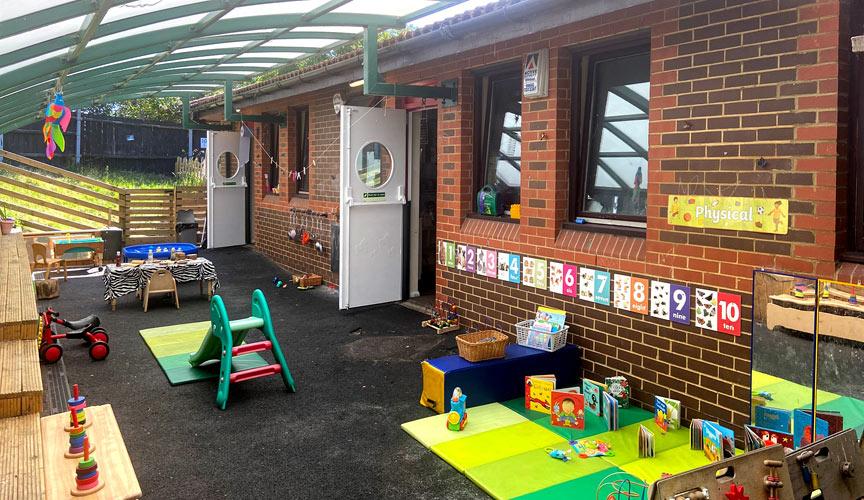
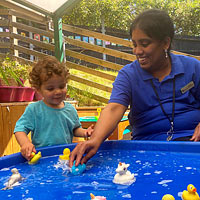 Equipment and facilities at the nursery are excellent, both indoors and outside. An excellent
 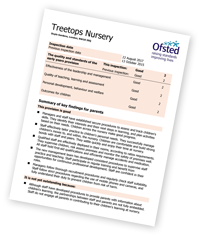 A Good Ofsted Report
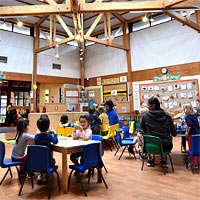 Children’s individual needs, including for those with special needs, are well catered-for at Treetops Nursery, Willesden. In fact, a learning and development programme is tailored to the needs, strengths, weaknesses and interests of each individual child. A ‘Key Person’ is also assigned to each child and this staff member continually monitors their progress, making changes to the tailored programme as appropriate as time goes by. Parents and carers are kept fully informed of children’s progress, including via a journal that is kept for each child. Parents are also free to add notes to the progress journal so a more complete picture is maintained for every child.


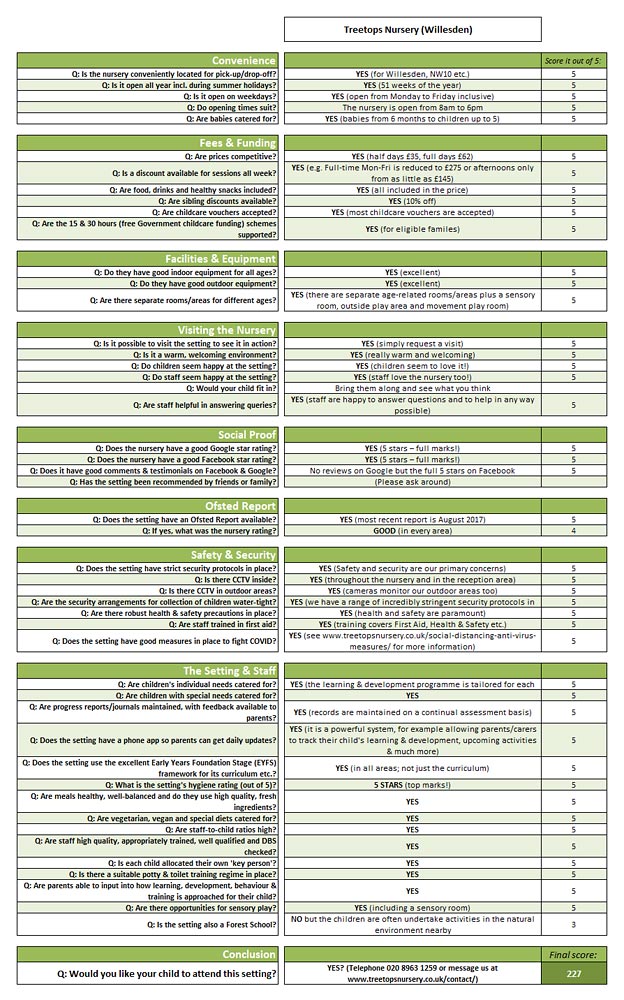
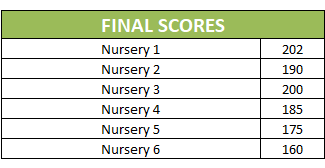 We’ve split the handy checklist into a handful of appropriate sections. Sections covered include location, convenience, fees, whether the nurseries accept Government-funded childcare schemes or vouchers, what’s included in the price, facilities and equipment, an appraisal of the nursery itself and staff,
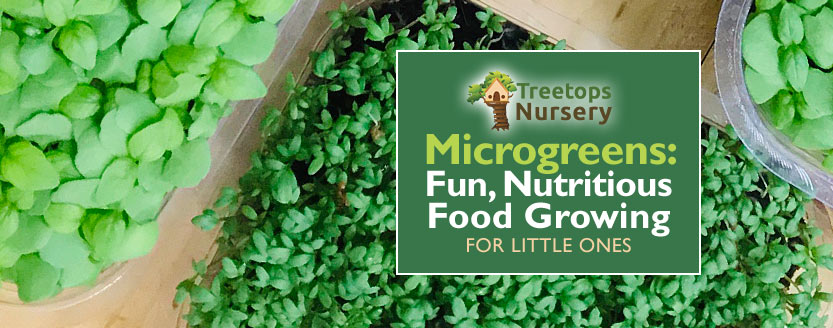
 There is one class of edible plant that can be grown all year round and is perfect for kids to grow indoors, for example on a windowsill. Some types of this food will sprout in as little as a week. What’s more, it’s tasty and highly nutritious. Growing it is super-easy and a perfect way to keep kids entertained, educated about nature and eating healthily. It’ll also be a welcome addition to mealtimes for the whole household.
 Here are just a few examples of plants that make suitable microgreens and can easily be grown by children indoors:
 Fennel — just 10 days after first sprouting, leaves from young fennel seedlings will give a pleasant aniseed tang to dishes like pasta salads, risottos, soups and even stuffing.
 Red Cabbage micro leaves have one of the highest Vitamin C concentrations of any microgreen. They also contain Vitamin K, potassium, beta-carotene, calcium, magnesium and antioxidants. As with many of the microgreens, many top chefs use them as an attractive and tasty garnish. They can be sprinkled over soups, salads, grilled vegetables, stews and cooked meats. After sowing, they take only days to appear.
 Your child will need to fill the chosen containers with compost, not quite to the top. Tap it to level the soil, then pat it down just a little to firm it. Some gardeners also indent the compost where the seeds will go. The seeds then need to be carefully placed or lightly sprinkled into the indented areas. It’s important that your child spaces the seeds out so there is no clumping, otherwise significant problems can occur (the crop might get diseased or even completely fail). The seeds don’t need to be covered but a light dusting of sieved compost will keep them in place while allowing light to get through. The seeds then need to be lightly watered. It’s best for your child to do this part outside, just to avoid potential mess indoors, taking care not to over-water nor to wash the seeds away. A way to water them indoors is to simply stand the vessels in some shallow water for 30 to 60 minutes, so the compost naturally draws up the moisture.
 Once rinsed, the tender young micro leaves can be enjoyed in meals by the whole family. They’ll add often exquisite tastes and textures to meals as well as adding much-needed vitamins and minerals to the family diet. That’s even more important for growing toddlers and preschoolers, of course. And, throughout the growing journey, the children will absolutely love seeing the new shoots grow into young plants. They will have learnt new skills, had great fun getting to know more about nature and have a real sense of achievement. Chances are, too, that they will love the taste of the micro leaves.


 claiming Universal Credit, tax credits³ or Tax-Free Childcare;

 Research has repeatedly proved that parents have an enormous impact on their children’s education, particularly if they’re involved right from the early years. That impact can be hugely positive if the parents get it right. In this article, we explore the many benefits of parental involvement in children’s education, how parents can support their children from nursery to university, improve their success, maximise their personal and career potentials and thereby give children the very best start in life. That is priceless.
 Benefits for the child include:
 Better prospects:
 Modern curriculum-based text books are extremely good these days, so many parents will be able to pick even unfamiliar topics up and guide a child if they’ve not been able to find their way on a particular homework task or piece of research.
 Like most nurseries and educational settings, Treetops Nursery hosts parent evenings which allow nursery staff and parents to discuss the child’s learning and development in detail. It’s also a great opportunity to make sure all parents are up to date on everything happening at the nursery, in particular in regard to their own children. Parent evenings typically happen twice a year but, at Treetops, we’re always available to speak to parents, so please don’t feel you have to wait until a parent evening to discuss anything about your child.