
 At the time of writing, spring is just around the corner and snowdrops and daffodils are already sprouting out of the ground. Soon, it’ll start to feel warmer and we’ll be more likely to venture outdoors again. With that in mind, we thought the time was perfect for a post all about the benefits of nature to children, particularly in their early years. If you’re a parent/carer and your children don’t usually get much exposure to nature, take a look at these benefits and consider encouraging them to get out more. The natural world and everything it offers will enrich their young lives in a myriad of natural ways.
1. Nature is Good for the Mind & Spirit
 Nature is good for both mind & spirit. Many studies have shown that time spent with nature is very healthy for mental wellbeing and you only have to spend time in the Great Outdoors to know that this is true. There is something instinctively calming about spending time outdoors, surrounded by flora and fauna, and this is very beneficial for mental health, including relieving stress, anxiety and even depression.
2. Imagination Stimulation
Nature stimulates the creative mind in children. The natural world is a place of absolute wonder, when you think about it — particularly for the very young. So, spending time outdoors sets their minds working to create adventures, build, perhaps draw, create dens, collect flowers, invent games and so much more. Nature is an almost limitless source for children’s imaginations!
3. Nature Gives Children Perspective
 Spending time in the natural environment, surrounded by nature and everything that it brings, allows children to get a better perspective on life. Once they see the enormity of the ‘bigger picture’, small issues they may be facing will become insignificant and they will learn what’s really important and what’s not.
4. Nature Promotes Profound Thinking
Children also get to think bigger thoughts and ask bigger questions when they spend time out in nature. For example, “Where do I fit into the world?” … “What is this little creature doing?” … “What is he or she thinking?” … “How do those little seeds grow in the wild?” … “What is life?” … “How did we all get here?” … “Where does planet Earth fit into the bigger picture?” … and so on.
5. Nature Gives Children Greater Freedom
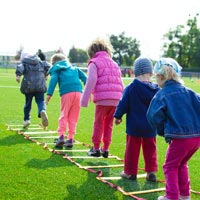
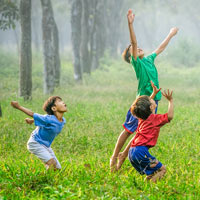
 The natural world is vast so, with suitable adult supervision, allows children to feel much more free than they ever can indoors or in the confines of a playground. They can run around over larger areas, across different terrains and a myriad of different types of natural environment. It’s no wonder you see children putting their arms out like wings when they’re out in the natural world — they feel so free it makes them feel like they could almost fly!
6. Nature Facilitates Personal & Social Skills
The freedom and opportunities that children get from being out in nature help them to improve and build many skills. Playing and having adventures outdoors with other children will help them to improve language, social skills, self-confidence, teamwork skills, leadership skills, the ability to assess risk, responsibility, cooperation and so much more. What’s more, it also helps children to form closer bonds and friendships.
7. Nature Helps Children Focus
Children with ADHD particularly benefit from time spent out in the natural environment because it helps them to focus. Studies back this up as well as confirming that short-term memory can improve and mental energy increase for any child after a spell out in the natural world. Indeed, research shows that children’s attainment and engagement levels are higher in the classroom if they recently spent time in the natural environment.
8. Nature Improves Fitness
 With the space to run around, explore, climb and build, nature helps children to become stronger and fitter in the most natural of ways. Another good thing about it is that it doesn’t even feel like they’re consciously ‘exercising’ when they’re having fun out in nature — it’s totally natural.
9. It Nurtures a Healthy Lifestyle
Time spent in the Great Outdoors as a child can often build a deep appreciation of nature, a natural tendency to keep fit, to eat a healthy diet and generally lead a healthier lifestyle as they grow older.
10. Nature Helps Improve Motor Skills
With the myriad of physical activities on offer in the natural world, children will improve both gross motor skills and fine ones without even trying. From running, jumping, balancing and coordination to finer skills like holding, fashioning, tying and hand-eye coordination, nature gives children an incredible range of opportunities to hone physical skills.
11. Nature is a Sensory Feast
 Nature is also an absolute feast for potentially all of the senses, giving children ample opportunity to see, touch, smell, hear and (under suitable supervision) even taste. Vestibular (movement) and proprioception (body position) senses are also amply stimulated in the Great Outdoors. Stimulation of the senses is incredibly important for children, particularly in their early years, helping in the generation of new brain pathways and synapses that are part of the essential building foundations of children’s lives.
12. Nature Helps Children Appreciate the Environment
Spending time in the natural world also helps children to appreciate the flora and fauna that it contains. It’s a magical world, when you think about it, and every living thing has its own specific needs. Recognising this helps children to become more environmentally conscious and to build skills like empathy, responsibility, self-control and to understand the importance of caring for others.
13. Nature Helps Children Sleep Soundly
Time spent in nature, with everything it brings, helps infants sleep more soundly at night too — and that can only be a good thing. Studies back this up.
14. Nature Supports the EYFS
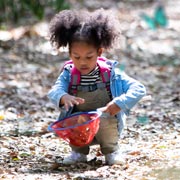 Nature supports many of the goals of the EYFS (Early Years Foundation Stage, an important framework that guides the learning and development of under-fives in England). Allowing children access to nature and the natural environment will help them with Understanding the World as they explore and discover, Physical Development as they play and move around in the outdoors, and both Communication & Language and Personal, Social & Emotional Development as they interact naturally with friends and supervising adults. That’s at least four of the 7 key areas of the EYFS.
15. Nature Improves Academic Performance
Numerous studies have concluded that the benefits of time spent in the natural environment help children to perform better academically. Improvements can even be seen in areas like reading, writing and mathematics.
16. Nature Gives Children Perspective
Spending time in the natural environment, surrounded by nature and everything that it brings, allows children to get a better perspective on life. Once they see the enormity of the ‘bigger picture’, they will learn what’s really important and, perhaps, what’s not.
Nature at Treetops Nursery, Willesden
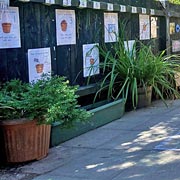 The many benefits of nature are fully supported at Treetops Nursery in Willesden. Our wonderful outdoor areas even include plant-growing area and other play areas where children can enjoy the fresh air and explore natural materials and textures. The nursery/pre-school is also adjacent to the King Edward VII Park, so it feels very ‘green’ since it is surrounded by trees and natural vegetation. Roundwood Park is also only a stone’s throw away, with its flower garden, wildlife area and aviary. It’s a formal Victorian park, with English Heritage grade two listed status and holder of a Green Flag Award, for the high standard of the park and green spaces within it. Children at Treetops Nursery — and their families — therefore have easy access to nature and natural things all around.
Weekday Childcare Services in Willesden, near Kensal Green & Harlesden, NW10
 Treetops Nursery is officially a ‘good’ nursery, located in Willesden, NW10 and also close by if you are looking for nurseries or pre-schools near Harlesden, Kensal Green or Willesden Green. Please get in touch if you’d like to bring your baby or child along for a visit, apply for a nursery place or simply ask any questions you may have:
 A: Dyspraxia is a condition that impairs a person’s ability to fully control motor functions, for example coordinating movement and physical activity. Children with dyspraxia may therefore appear ‘clumsy’. It can be anything from mild to more severe and obviously the mildest variety is hardest for parents to spot. Dyspraxia is classified as a type of Developmental Co-ordination Disorder (‘DCD’) and indeed healthcare professionals may use this terminology for the condition. They may also refer to it as a Specific Developmental Disorder of Motor Function, or ‘SDDMF’ for short.
 A: Dyspraxia can be something people were simply born with (that’s the developmental kind) or, for others, it was acquired through brain trauma, for example because of an injury or stroke. In this post, however, we’ll concentrate on developmental dyspraxia in relation to children.
 Children with dyspraxia may also have difficulty:
 A: Due to its nature and particularly in regard to its negative effect on sports and active play skills, dyspraxia can lead to children becoming less naturally fit, with all the ramifications that brings.
 A: Once diagnosed, tailored help is available for children with dyspraxia/DCD, from a variety of specialists. Support may be needed throughout childhood, including at pre-school and school, to help optimise ability around physical tasks and processes. As every child’s challenges will be unique, a support plan will be customised for each. Support may involve a variety of professionals who will aim to help the child overcome their difficulties as far as possible and to build their confidence, self-esteem, abilities etc. The specialists involved may include paediatric occupational therapists, paediatricians, clinical psychologists, educational psychologists or a mixture of several. All will work in tandem, of course, with childcare professionals, teachers, parents and guardians.
 In short, allowing a young child the tools, time and guidance to play regularly will help them with many elements of their learning and development — and that’s critical. Indeed, that’s why good nurseries, pre-schools and childcare settings encourage children to learn in large part through play.
 Firstly, it’s fun for them and is an essential part of a happy childhood;
 Play also keeps children mentally fit as it stimulates their senses, brains and sense of adventure;
 All in all, play fosters both physical development and mental development in children. Doing so sets them up with improved physical and cognitive abilities as well as incredibly important life skills. Combined, this also sets under-fives up beautifully for school-readiness when they leave pre-school.
 Even newborn babies should be encouraged to be active, in order to learn and develop their abilities through interaction and play. At this age, this is achieved largely through activities known collectively as Tummy Time. This is an incredibly important tool for their early development. Tummy Time pretty much describes the essence of the activities — i.e. time spent awake and active on their tummies during their first year.
 It helps them to build physical strength, particularly in their upper body, and helps them achieve various developmental milestones.
 Another important benefit of Tummy Time is that it helps babies avoid conditions like positional plagiocephaly (otherwise known as ‘flat head syndrome’) and positional torticollis (i.e. a twisted neck) because it allows them to change position more often.
 You can lie the baby on their tummy (while awake of course) on a soft blanket or rug on the floor. Get down low so you can interact with them and play games like peek-a-boo at their level.
 Encourage the baby to support their own weight on their hand and arms (almost like a ‘push-up’ kind of position) for short periods. This can initially be done by helping to support them with a hand, lifting them under their chest or tummy. They’ll soon catch on and help to push themselves up and support their own head more and more.
 guidance and links. Your child will fall into one of 4 possible categories:
 Socio-economic background matters too:
 Less likelihood of developing cardiovascular disease including hyperlipidemia1;
 Higher physical activity and physical fitness levels are associated with improved cognitive performance (e.g., concentration, memory) among students.3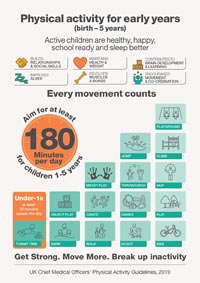
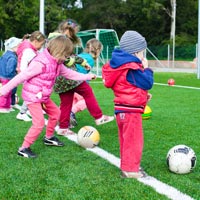 Knowing how important it is, we take exercise very seriously at Treetops Nursery in Willesden. However, we ensure that it’s always fun and exciting, so that children enjoy it, naturally. Physical movement and active play are all part of