
Dyspraxia Q&A

Most people have heard of dyslexia, however the disorder known as dyspraxia is less well known. If you are a parent with children, dyspraxia is something to be aware of, so that you can look out for the possible signs. Today we’ll answer commonly asked questions about the disorder.
Q: What is Dyspraxia?
 A: Dyspraxia is a condition that impairs a person’s ability to fully control motor functions, for example coordinating movement and physical activity. Children with dyspraxia may therefore appear ‘clumsy’. It can be anything from mild to more severe and obviously the mildest variety is hardest for parents to spot. Dyspraxia is classified as a type of Developmental Co-ordination Disorder (‘DCD’) and indeed healthcare professionals may use this terminology for the condition. They may also refer to it as a Specific Developmental Disorder of Motor Function, or ‘SDDMF’ for short.
The condition affects four times as many males as it does females and can also sometimes be found in those with ADHD, dyslexia and autism. However, as with dyslexia, dyspraxia has nothing to do with the level of a person’s intelligence.
Q: What Causes Dyspraxia?
 A: Dyspraxia can be something people were simply born with (that’s the developmental kind) or, for others, it was acquired through brain trauma, for example because of an injury or stroke. In this post, however, we’ll concentrate on developmental dyspraxia in relation to children.
The reasons for developmental dyspraxia are unclear, however children who were born prematurely or underweight are more prone to the disorder. There is also some evidence to suggest that it can be inherited within families who are prone to the condition. Sadly, children are also more likely to have the disorder if their …

 A: Dyslexia is categorised as a Specific Learning Difficulty (‘SpLD’) in the UK. Most notably, it adversely affects a person’s ability to read because of a general difficulty in learning or interpreting letters, words, and often other symbols. Indeed, it was originally referred to as word blindness. There are other ways dyslexia affects people, though, and we’ll come to those in more detail later.
 A: As it’s a genetic issue, people are born with the condition. Symptoms may begin to show as a child matures during early learning and beyond. As it is something that’s inherent in their physiology, it is not something people can ‘grow out’ of. It is a lifelong issue. It can be managed, of course, with various approaches available to mitigate its effects as far as possible.
 Following up from our post last month about
  Have you sat down with your child and forewarned them what’s going to happen, when, how and why? Put their mind at rest so they’re mentally well-prepared, ahead of time.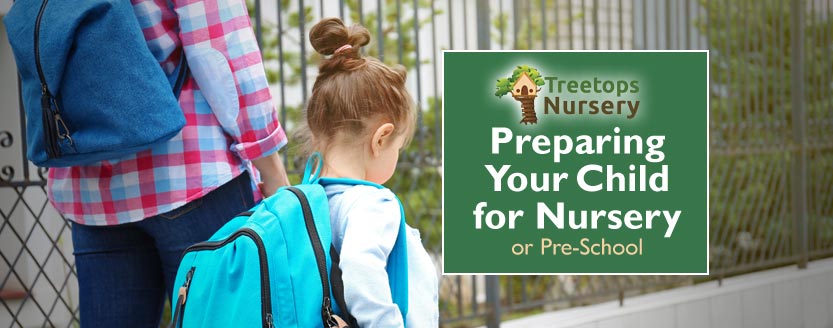
 Going from living a life at home with the family to suddenly being thrust into a new environment full of strangers would be daunting enough for anyone. It’s especially true, though, for under-fives starting at nursery or pre-school. So, the key is to prepare children for the change and, of course, for the nursery/pre-school to be very welcoming and accommodating. Here, we’ll take a look at some of the things that will help toddlers and preschoolers transition as smoothly as possible.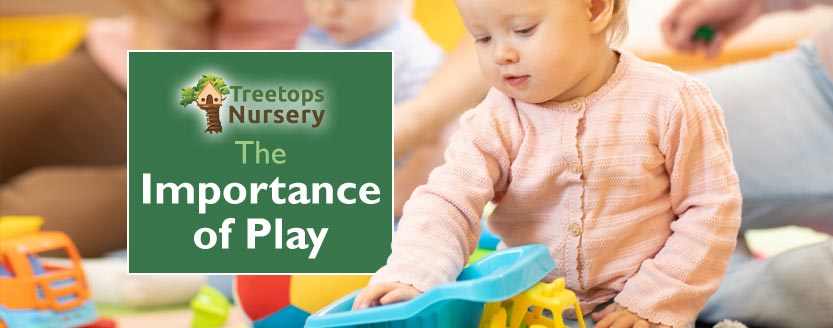
 In short, allowing a young child the tools, time and guidance to play regularly will help them with many elements of their learning and development — and that’s critical. Indeed, that’s why good nurseries, pre-schools and childcare settings encourage children to learn in large part through play.
 Firstly, it’s fun for them and is an essential part of a happy childhood;
 Even newborn babies should be encouraged to be active, in order to learn and develop their abilities through interaction and play. At this age, this is achieved largely through activities known collectively as Tummy Time. This is an incredibly important tool for their early development. Tummy Time pretty much describes the essence of the activities — i.e. time spent awake and active on their tummies during their first year.
 It helps them to build physical strength, particularly in their upper body, and helps them achieve various developmental milestones.


 Willesden and other north-west London areas close by feature regularly in the long-running BBC mystery crime drama Jonathan Creek. This popular series stars actor and comedian Alan Davies as the main protagonist. Other occasional stars who appeared in the series included Griff Rhys Jones, Rik Mayall, Jack Dee (who we’ll hear more about below), Bill Bailey, Nigel Planer and even Bob Monkhouse.
 Actor and dead-pan comedian Jack Dee co-wrote and starred in ‘Lead Balloon’, a BBC4 comedy series that first ran on British TV from 2006 to 2011. The first episode actually achieved the highest ever ratings for a comedy on the channel at the time and the series later aired on BBC2 and to audiences on BBC HD. There were three series in total, with the first two being filmed in and around Willesden. Indeed, the main characters Rick (played by Jack Dee) and his partner Mel (played by Raquel Cassidy) live in a house located in Willesden. A café called ‘Michael’s Café’ in series one and two is, in reality, ‘Gracelands Café’, which is located just a stone’s throw from Willesden in Kensal Green.

 guidance and links. Your child will fall into one of 4 possible categories:
 Breast milk is nature’s totally natural food for newborns and little ones, containing nothing artificial or added.