Most people have heard of dyslexia, however the disorder known as dyspraxia is less well known. If you are a parent with children, dyspraxia is something to be aware of, so that you can look out for the possible signs. Today we’ll answer commonly asked questions about the disorder.
Q: What is Dyspraxia?
 A: Dyspraxia is a condition that impairs a person’s ability to fully control motor functions, for example coordinating movement and physical activity. Children with dyspraxia may therefore appear ‘clumsy’. It can be anything from mild to more severe and obviously the mildest variety is hardest for parents to spot. Dyspraxia is classified as a type of Developmental Co-ordination Disorder (‘DCD’) and indeed healthcare professionals may use this terminology for the condition. They may also refer to it as a Specific Developmental Disorder of Motor Function, or ‘SDDMF’ for short.
The condition affects four times as many males as it does females and can also sometimes be found in those with ADHD, dyslexia and autism. However, as with dyslexia, dyspraxia has nothing to do with the level of a person’s intelligence.
Q: What Causes Dyspraxia?
 A: Dyspraxia can be something people were simply born with (that’s the developmental kind) or, for others, it was acquired through brain trauma, for example because of an injury or stroke. In this post, however, we’ll concentrate on developmental dyspraxia in relation to children.
The reasons for developmental dyspraxia are unclear, however children who were born prematurely or underweight are more prone to the disorder. There is also some evidence to suggest that it can be inherited within families who are prone to the condition. Sadly, children are also more likely to have the disorder if their mothers drank alcohol or took illegal drugs during pregnancy.
Q: What Are the Signs of Dyspraxia?
A: Children with dyspraxia may appear clumsier than their peers. They may also be less naturally good at sport and indeed may even avoid it. Picking up other skills may also be a challenge. Concentration and attention spans can be adversely affected. Following instructions can be a challenge.
Babies may exhibit unusual body positions and have trouble learning to roll or sit. Toddlers under one may adopt strange postures. Infants may be slower at learning to crawl too.
 Children with dyspraxia may also have difficulty:
- independently dressing, buttoning clothes and tying laces;
- walking, jumping, skipping and running;
- using writing instruments to draw and write;
- mastering the use of cutlery to feed themselves;
- catching, kicking and throwing balls;
- stacking objects and playing with some toys;
- carrying out everyday physical tasks and activities in the most appropriate order.
All of this is because they are less able to coordinate movements and physical actions as well as they would without the condition.
One knock-on effect of this is that they may not reach their development milestones as soon as others in their age group. Indeed, this can be an indicator to watch out for. However, DCD/dyspraxia is often hard to diagnose until children are at least 4 to 5 years of age.
Q: What Are the Knock-On Effects of Dyspraxia?
 A: Due to its nature and particularly in regard to its negative effect on sports and active play skills, dyspraxia can lead to children becoming less naturally fit, with all the ramifications that brings.
The effects of dyspraxia can also make children less able to make new friends. This may make them feel a bit left out, ‘different‘ and therefore feel rather isolated. This can, in turn, also lead to lower self-esteem, reduced confidence, frustration and even behavioural problems.
Q: How is Dyspraxia Professionally Diagnosed?
A: If you think your child may be dyspraxic, contact your GP to ensure the problem is not caused by something entirely different. Also liaise with the Special Educational Needs Co-ordinator (‘SENCo’) at your child’s childcare setting, pre-school or school, for advice and support. The GP or SENCo may refer your child to a specialist healthcare professional, for example an occupational therapist and/or paediatrician. Assessment and diagnosis is often carried out by both. Learn more about diagnosing dyspraxia and DCD in children here.
Q: Is there a Cure for Dyspraxia?
A: Although a tiny number of children who are deemed to be a little clumsy may grow out of it, there is no cure for dyspraxia for the vast majority. Some children’s challenges will improve with age, however the earlier symptoms are spotted, the sooner parents, carers, guardians and professionals can help the affected child.
Q: How Can We Help Children with Dyspraxia?
 A: Once diagnosed, tailored help is available for children with dyspraxia/DCD, from a variety of specialists. Support may be needed throughout childhood, including at pre-school and school, to help optimise ability around physical tasks and processes. As every child’s challenges will be unique, a support plan will be customised for each. Support may involve a variety of professionals who will aim to help the child overcome their difficulties as far as possible and to build their confidence, self-esteem, abilities etc. The specialists involved may include paediatric occupational therapists, paediatricians, clinical psychologists, educational psychologists or a mixture of several. All will work in tandem, of course, with childcare professionals, teachers, parents and guardians. Learn more about treatment for dyspraxia here.
Q: How Does Treetops Nursery Help Dyspraxic Children?
A: As well as looking out for possible first signs of dyspraxia/DCD — and any other disorder — we will work with any specialists to play our part in any tailored support plans for affected children under our care. This may involve task- and process-oriented activities to help children overcome difficulties. As well as working with any guidance from the specialists it will, of course, involve strategic cooperation with parents, carers or guardians involved in the child’s care. In this way, everyone will be working to the same aims, using the same, shared support plans. Our Special Educational Needs Co-Ordinator (‘SENCo’) will also be a crucial part of formulating this plan and, indeed, one of their key roles is to promote equality of opportunity irrespective of any special educational needs or disorders (‘SEND’). In ensuring this, every child achieves personal bests in every area, becoming the very best version of themselves.
Looking for Outstanding Nurseries in Willesden, Near Harlesden, Kensal Green or Willesden Green?
 Treetops Nursery School is a popular nursery and pre-school in Willesden, NW10 (near Harlesden, Kensal Green and Willesden Green). We offer outstanding childcare for babies and children aged up to 5, Monday to Friday. To express an interest, ask a question, book a tour or pre-register for a place, please get in touch:
 There is one class of edible plant that can be grown all year round and is perfect for kids to grow indoors, for example on a windowsill. Some types of this food will sprout in as little as a week. What’s more, it’s tasty and highly nutritious. Growing it is super-easy and a perfect way to keep kids entertained, educated about nature and eating healthily. It’ll also be a welcome addition to mealtimes for the whole household.
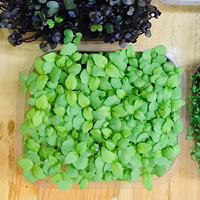 Here are just a few examples of plants that make suitable microgreens and can easily be grown by children indoors:
 Fennel — just 10 days after first sprouting, leaves from young fennel seedlings will give a pleasant aniseed tang to dishes like pasta salads, risottos, soups and even stuffing.
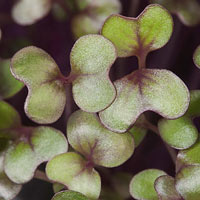 Red Cabbage micro leaves have one of the highest Vitamin C concentrations of any microgreen. They also contain Vitamin K, potassium, beta-carotene, calcium, magnesium and antioxidants. As with many of the microgreens, many top chefs use them as an attractive and tasty garnish. They can be sprinkled over soups, salads, grilled vegetables, stews and cooked meats. After sowing, they take only days to appear.
 Your child will need to fill the chosen containers with compost, not quite to the top. Tap it to level the soil, then pat it down just a little to firm it. Some gardeners also indent the compost where the seeds will go. The seeds then need to be carefully placed or lightly sprinkled into the indented areas. It’s important that your child spaces the seeds out so there is no clumping, otherwise significant problems can occur (the crop might get diseased or even completely fail). The seeds don’t need to be covered but a light dusting of sieved compost will keep them in place while allowing light to get through. The seeds then need to be lightly watered. It’s best for your child to do this part outside, just to avoid potential mess indoors, taking care not to over-water nor to wash the seeds away. A way to water them indoors is to simply stand the vessels in some shallow water for 30 to 60 minutes, so the compost naturally draws up the moisture.
 Once rinsed, the tender young micro leaves can be enjoyed in meals by the whole family. They’ll add often exquisite tastes and textures to meals as well as adding much-needed vitamins and minerals to the family diet. That’s even more important for growing toddlers and preschoolers, of course. And, throughout the growing journey, the children will absolutely love seeing the new shoots grow into young plants. They will have learnt new skills, had great fun getting to know more about nature and have a real sense of achievement. Chances are, too, that they will love the taste of the micro leaves.